- 24 Hour Emergency Services
- Servicing Sydney's North Shore
- View On Map

-
Mail Us On
info@lsblocksmiths.com.au
-
Make a Call
0411 700 072
- View On Map
- 24 Hour Emergency Services
- Servicing Sydney's North Shore
- View On Map
-
Mail Us On
info@lsblocksmiths.com.au
-
Make a Call
0411 700 072
- Contact Us
Hornsby Cabinet Lock Repair: Expert Fixes 2026

Lock, Stock & Barrel Locksmiths
On July 18, 2026
A cabinet lock usually picks the worst possible moment to stop cooperating. It happens when a file needs to be pulled before a meeting, when the spare house keys are inside a sideboard drawer, or when an old timber cabinet in the study suddenly won't budge no matter how gently the key is turned.
Around Hornsby and the North Shore, a lot of these jobs aren't dramatic security failures. They're ordinary wear-and-tear problems in older furniture, filing cabinets, desk pedestals, and storage cupboards. The trick is knowing the difference between a lock that's tight, dirty, or under pressure, and one that's on the verge of being damaged by the next DIY attempt.
That Stuck Cabinet Lock a Common Annoyance
A jammed cabinet lock is one of those faults that looks simple from the outside and becomes frustrating fast. The key goes in but won't turn. Or it turns a fraction and stops. Sometimes the drawer feels locked solid, even though the lock itself isn't completely failed.
In Hornsby homes, that often means an older cabinet in a spare room, garage, or study. In small offices, it's usually a filing cabinet that's had years of hard use, overfilled drawers, and keys that have seen better days. The same problem shows up in strata storerooms and reception desks as well. The hardware is small, but the inconvenience isn't.
What catches people out is that they assume force will solve it. A harder twist on the key, a wiggle with pliers, a spray of whatever lubricant happens to be in the cupboard. That's where a minor cabinet lock repair job can turn into a broken key, a damaged cylinder, or a drawer that still won't open.
What usually causes the trouble
Most cabinet lock faults fall into a short list:
- Latch pressure: A full drawer can push against the latch and stop the cylinder from rotating freely.
- Key wear: Burrs, bends, or a tired old key blade can stop the wafers lining up properly.
- Dust and grit: Cabinet locks, especially on office furniture, collect debris in the face of the cylinder.
- Loose fittings: The lock body or retaining nut can work loose over time.
- Misalignment: A strike plate or latch can shift just enough to make locking and releasing awkward.
A stuck cabinet lock is often a mechanical problem, not a disaster. The wrong fix causes more damage than the original fault.
That's why the sensible approach is simple. Check the obvious things first, make a small correction if the problem is minor, and stop before the lock gets chewed up. Good cabinet lock repair is usually about patience and diagnosis, not brute force.
First Things First Diagnosing the Lock Issue
Before any tool comes out, the lock needs a proper look. Most cabinet lock repairs go better when the problem is narrowed down first. That sounds basic, but it saves a lot of unnecessary damage.
Start with the key and the keyway
Look at the key in good light. If the blade is bent, burred, rounded off, or cracked near the shoulder, the lock may be innocent. A worn key can feel like a failed cylinder because it no longer lifts the wafers cleanly.
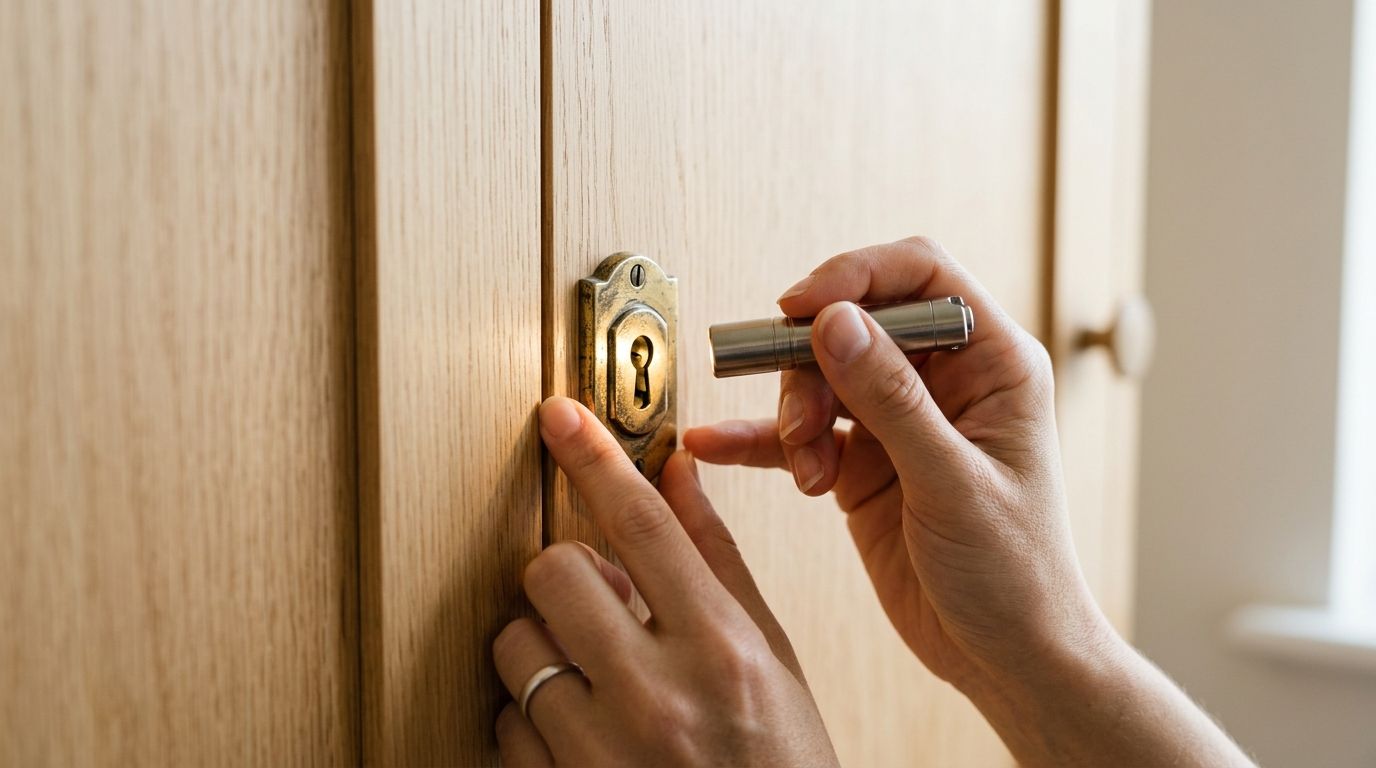
Then check the face of the lock itself. Dirt, fluff, dried residue, and tiny fragments around the keyway can all interfere with movement. A small torch helps. If there's visible rubbish in the opening, the first job is cleaning the face gently so more debris doesn't get pushed inside.
For common wafer cabinet locks, one sensible diagnostic routine is to check the key for bends or burrs, try a spare key if one exists, and clean the lock face before doing anything more invasive, as outlined in guidance on filing cabinet lock issues and key checks.
Check whether the drawer or door is loading the latch
A cabinet lock doesn't work in isolation. The drawer, cam, latch, and cabinet frame all play a part. If the drawer is packed tight or slightly skewed, the key may resist turning because the latch is under side pressure.
Signs of latch pressure include:
- The drawer sits proud: One side looks slightly further out than the other.
- The key turns better when the drawer is pushed in: That usually points to pressure on the locking cam.
- The cabinet is overfilled: Filing cabinets and desk drawers are classic for this.
If the key turns partway but not fully, pressure is often the first suspect.
Two common fault patterns
A quick way to sort the issue is to match what the lock is doing.
| Lock behaviour | Likely cause |
|---|---|
| Key won't enter or feels obstructed | Debris, wrong key, damaged keyway |
| Key enters but won't turn | Worn key, dry wafers, latch pressure |
| Key turns but the drawer stays shut | Cam slip, loose fixing, internal disconnection |
| Cylinder feels loose or wobbly | Retaining nut or fixing clip has loosened |
Australian cabinet codes catch people out
Generic online advice often falls flat because many Australian office cabinets use brand-coded systems, and they're not all the same. According to Australian cabinet key code references, some brands use 3-digit codes such as Homefile, while others use 4-digit codes such as Pinnacle. Without the right brand-code mapping, people often guess, order the wrong key, or try to force the lock and make the repair harder than it needed to be.
That shows up regularly in older North Shore offices, especially where filing cabinets have changed hands over the years and nobody knows which key belongs to what.
Workshop rule: If the code format doesn't match the cabinet brand, stop guessing. A wrong key that almost fits can do more harm than no key at all.
Practical Fixes for Common Cabinet Lock Problems
Once the fault is narrowed down, there are a few repairs that are worth trying. These are the jobs that suit a careful hand and a bit of patience. They're also the jobs most likely to work without turning a small issue into a larger one.
Freeing up a stiff wafer lock
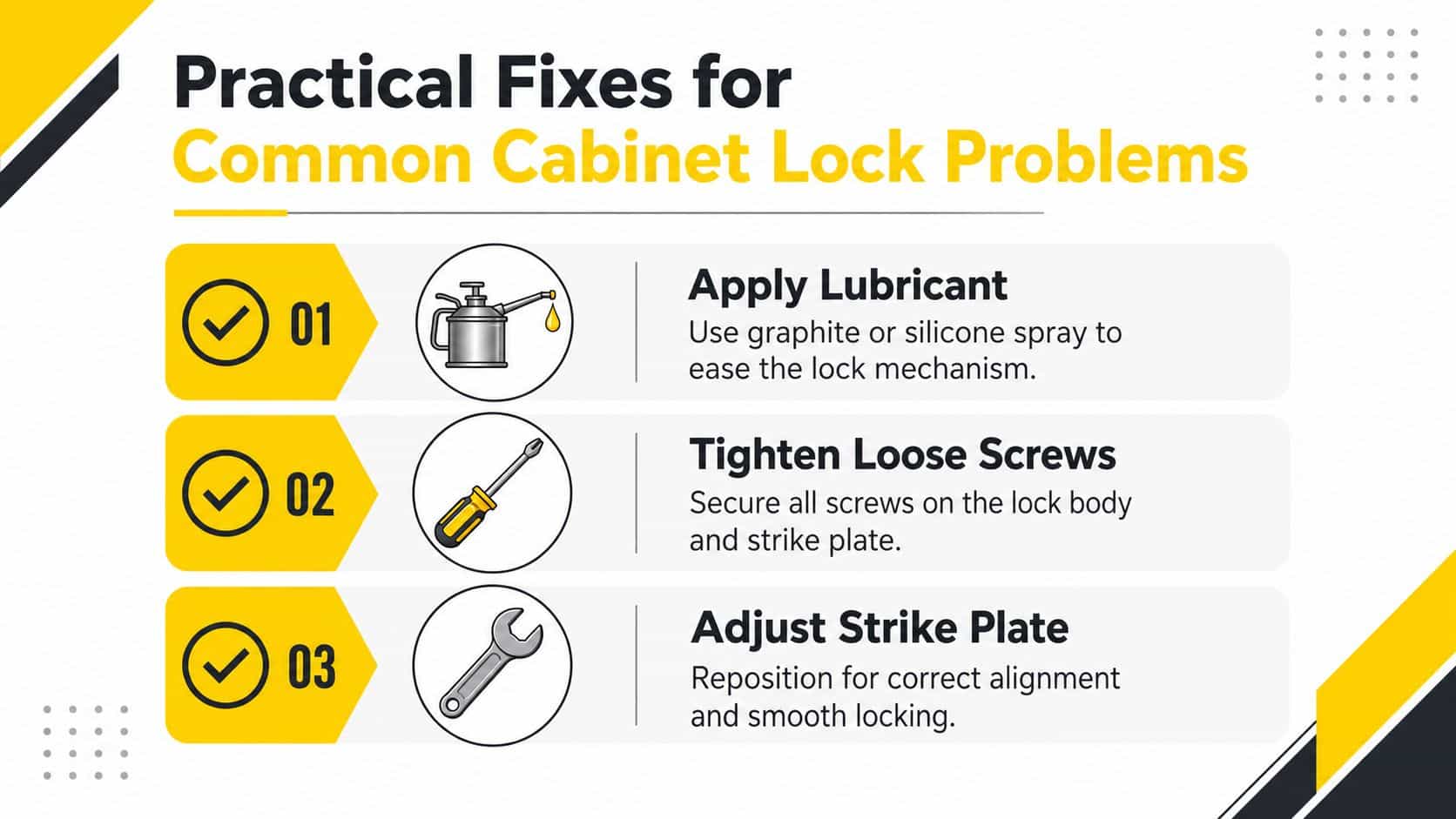
For common wafer-type cabinet locks, the best starting move is mechanical, not chemical. Push the drawer inward firmly to relieve latch pressure, then try turning the key. After that, use a dry lock lubricant, not an oil-heavy spray. Guidance on wafer lock troubleshooting and lubrication is clear on this point. Oil-based products attract grit and can make the lock worse over time.
That matters because cabinet locks don't have much tolerance for sludge. Once dust mixes with an oily spray, the wafers begin sticking rather than sliding cleanly.
Useful products for this sort of job include a graphite powder or a dry silicone lock lubricant made for fine mechanisms. Household oils and general-purpose sprays are the wrong choice.
Push the drawer in before blaming the cylinder. On filing cabinets, that one move often tells whether the problem is pressure or the lock itself.
Tightening a loose lock assembly
Sometimes the lock isn't jammed at all. It's loose. The face may wobble slightly, or the key may turn without feeling properly connected to the latch.
That usually points to a retaining nut, fixing clip, or rear fastening that has shifted over time. On many desk drawers and cabinet doors, access to the back of the lock is possible once a panel or drawer is removed. A small spanner, nut driver, or screwdriver is often enough to snug it back up.
A few practical checks help:
- Hold the front of the cylinder steady: This stops the face scratching while the rear fitting is tightened.
- Don't overtighten: Thin metal drawers and timber panels can deform if the hardware is cranked down too hard.
- Check the cam position: The tailpiece or cam should sit correctly when secured and released.
If the cam has bent or the fixing has stripped out, tightening won't hold for long. That's usually the point where repair becomes parts replacement.
Correcting a misaligned latch or strike
On cupboard doors and lockable timber cabinets, misalignment often shows up as a lock that works fine with the door open but fights back once the door closes. That's usually a strike issue rather than a cylinder issue.
The repair is more about alignment than locksmithing finesse. Loosen the strike plate screws slightly, reposition the strike so the latch lands cleanly, then retighten. On older furniture, even a subtle shift in hinges or timber movement can throw things off.
A practical sequence looks like this:
- Test with the door open: If the key turns freely, the cylinder is probably serviceable.
- Close the door gently without locking: Watch where the latch meets the strike.
- Adjust the strike plate a fraction at a time: Small changes are better than big guesses.
- Retest several times: One smooth turn doesn't prove the fault is gone.
What not to do
The biggest mistakes are usually improvised ones.
- Don't jam in a paperclip or screwdriver if a key has snapped.
- Don't flood the lock with oily spray and hope it frees itself later.
- Don't force a near-match key into an unknown cabinet code.
- Don't start drilling unless the cabinet and lock are already beyond saving.
A careful cabinet lock repair keeps the original hardware working where possible. A rushed one often turns a serviceable lock into scrap.
Should You Repair the Lock or Replace It Entirely
Some cabinet locks deserve a repair. Others are wasting everyone's time. The decision usually comes down to condition, security, and cost.
When repair makes sense
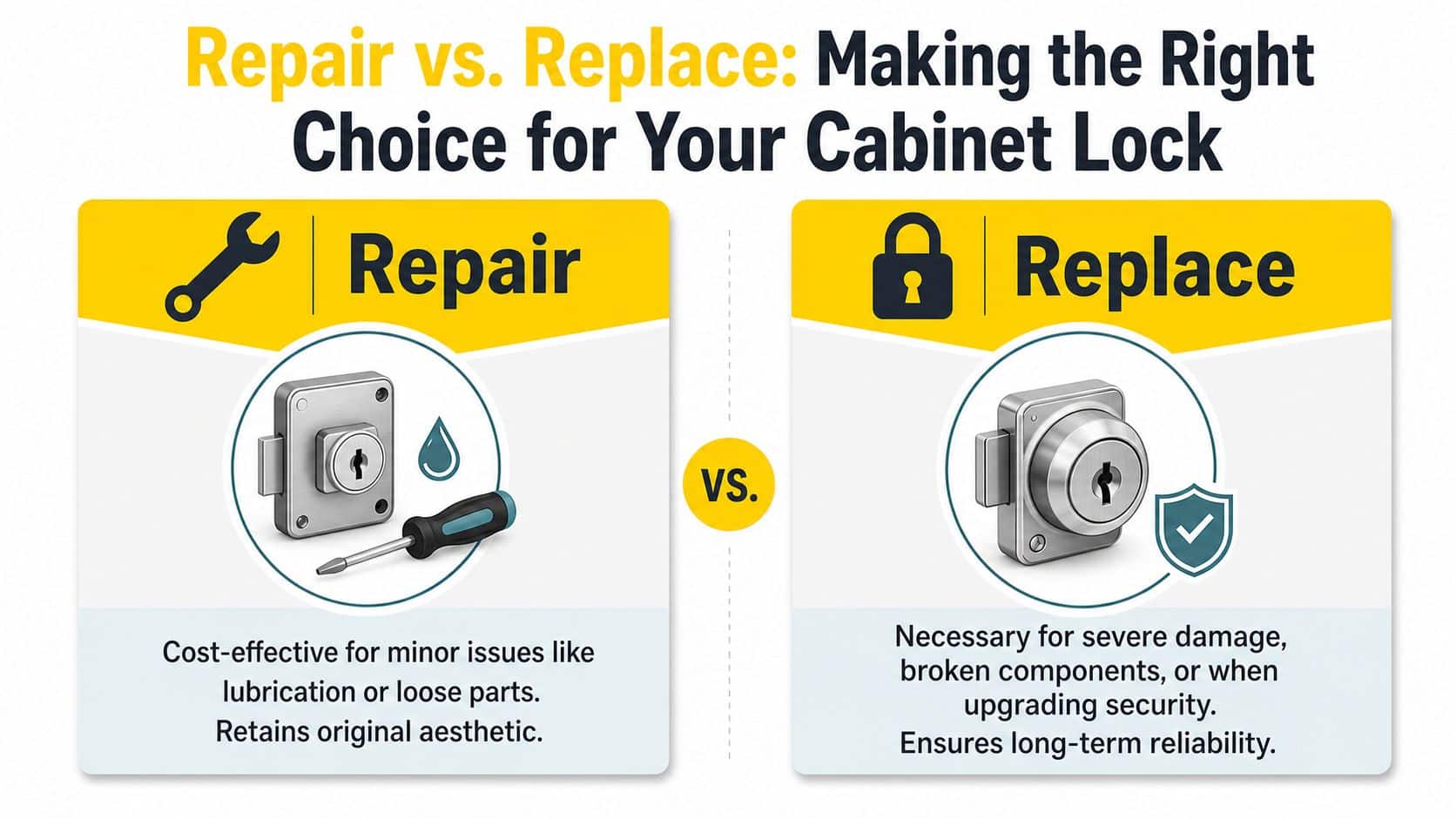
If the core mechanism is still intact, repair is often the smarter move. A lock that's dry, slightly misaligned, or loose in the fixing can usually be returned to service without replacing the whole unit.
There's a practical cost reason for that. In Australia, a basic lock repair may cost between $90 and $120 during business hours, while a full lock replacement typically runs $80–$220 per lock, according to Australian lock repair and replacement pricing. That puts repair in a sensible position when the problem is minor and the original lock is worth keeping.
Repair is usually the better path when:
- The cabinet is in good condition: The lock isn't the only thing holding on by a thread.
- The key still exists: There's no need to rebuild the whole arrangement just to get function back.
- The fault is mechanical and limited: Tightness, mild wear, or minor alignment problems fit this category.
When replacement is the better call
A replacement is often the cleaner answer when the lock has suffered obvious damage, the key is gone and key control matters, or the cabinet stores material that needs a more dependable level of security.
For routine office cabinets with worn locks, simple barrel replacement is often highly successful at restoring access. For cabinets holding sensitive information, the better decision may be broader than a single barrel swap. It can mean reviewing the whole security setup instead of treating the lock as an isolated part.
Worth weighing up: If the cabinet matters more than the original lock, reliability should win over sentiment.
A simple way to decide
| Question | Lean towards repair | Lean towards replacement |
|---|---|---|
| Is the lock complete and mostly functional? | Yes | No |
| Is the problem limited to stiffness or alignment? | Yes | No |
| Has the lock or key been badly damaged? | No | Yes |
| Does the cabinet need stronger or cleaner key control? | No | Yes |
Where people get stuck is trying to save a lock that has already told them it's finished. If the cylinder is sloppy, the keying is inconsistent, or parts are visibly fatigued, replacement often saves time, frustration, and repeat call-outs.
When It's Time to Call a Hornsby Locksmith
There's a clear line between a tidy cabinet lock repair and a job that should be left alone. Once that line is crossed, persistence usually causes damage.
The red flags
A professional should be the next step when any of these show up:
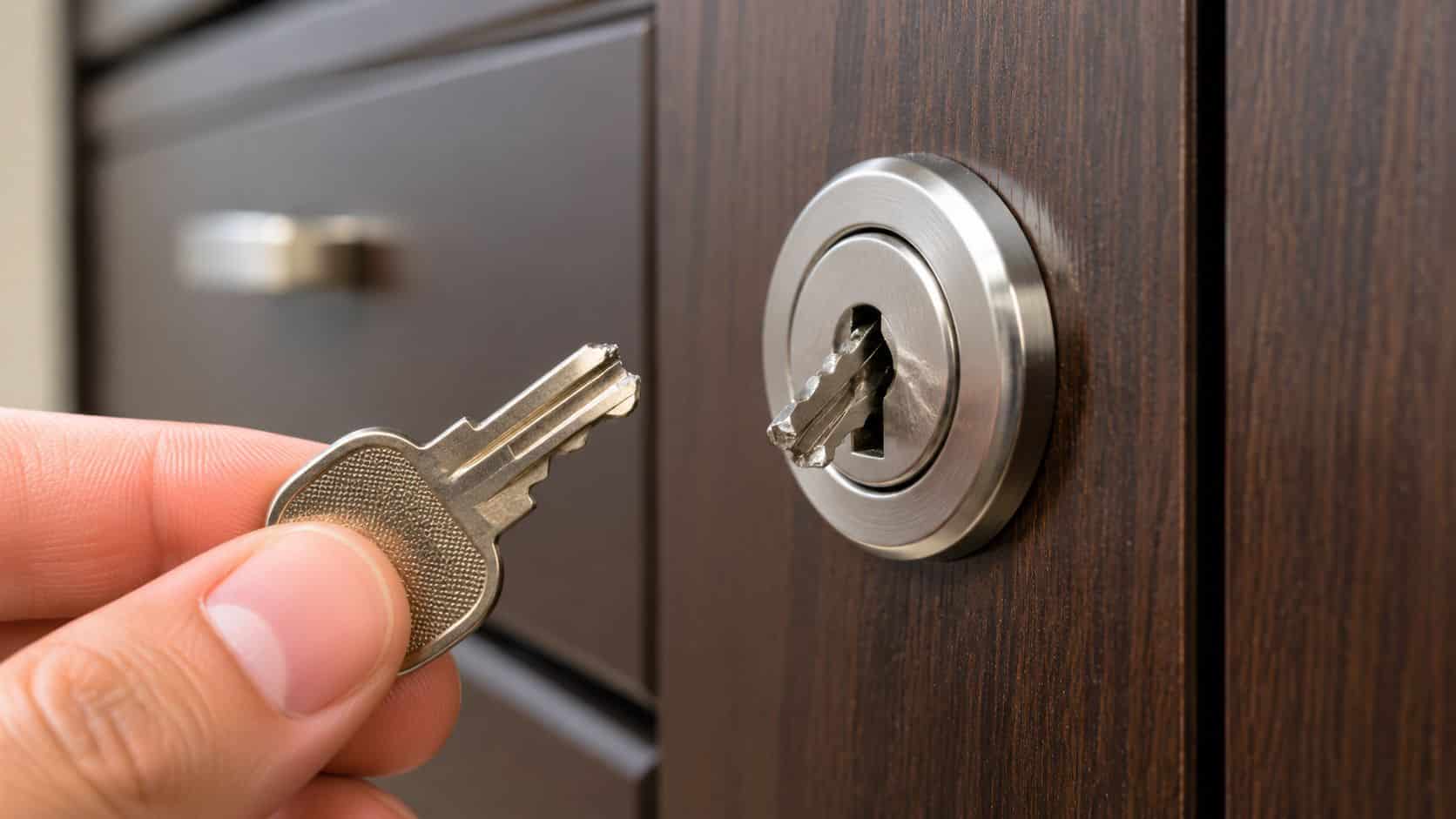
- The key has broken in the lock: Improvised extraction tools often push the fragment deeper.
- The lock needs drilling to gain entry: That's the point where skill and the right tools matter.
- The cabinet holds sensitive files or restricted items: Non-destructive entry and proper replacement become more important.
- The cylinder needs rear manipulation or plug extraction: Wafer locks can be damaged easily if the angle or pressure is wrong.
There are specialist methods for stuck wafer cylinders, including rear manipulation of the plug and controlled extraction so a new cylinder can be fitted without full cabinet disassembly. Done properly, that can restore access cleanly. Done badly, it can ruin wafer alignment and complicate any later rekeying attempt.
Why trade skill matters here
Cabinet locks look simple because they're small. They aren't always simple once they fail. Australia has only 1,125 licensed locksmiths as noted in this Australian locksmith business listing, which says a lot about how specialised the trade is. For the fiddlier cabinet jobs, that matters. The value isn't just getting the drawer open. It's getting it open without wrecking the cabinet, the cylinder housing, or the surrounding hardware.
For Hornsby households, small offices, and strata sites, that often means calling someone who can judge quickly whether the lock should be serviced, rekeyed, replaced, or bypassed with minimal damage. For broader lock repair work, the most relevant place to start is a lock installation and repair service page, and for local coverage it helps to check a North Shore mobile locksmith service area.
Broken keys, unknown cabinet codes, and locks protecting sensitive material are the three moments where DIY usually stops paying off.
If a cabinet lock in Hornsby or elsewhere on Sydney's North Shore has jammed, won't turn, or has a key broken inside it, Lock, Stock & Barrel Locksmiths can help with practical advice, on-site repair, and replacement where needed. Call for a quote or send through a quote request if the job isn't urgent.