- 24 Hour Emergency Services
- Servicing Sydney's North Shore
- View On Map

-
Mail Us On
info@lsblocksmiths.com.au
-
Make a Call
0411 700 072
- View On Map
- 24 Hour Emergency Services
- Servicing Sydney's North Shore
- View On Map
-
Mail Us On
info@lsblocksmiths.com.au
-
Make a Call
0411 700 072
- Contact Us
Expert Guide to Filing Cabinet Locks in St Ives

Lock, Stock & Barrel Locksmiths
On July 5, 2026
A lot of St Ives offices have the same setup. Staff files in one drawer, signed contracts in another, a spare key tucked in the stationery cupboard, and a quiet assumption that the paperwork is secure because the cabinet clicks shut and the key turns.
That assumption causes trouble.
Most filing cabinets are built first for organisation, then for light privacy. They're handy. They keep papers tidy. They stop the wrong person from casually opening the wrong drawer. But for anything sensitive, from HR records to client information, the fundamental question isn't whether the cabinet locks. It's whether the lock holds up when someone wants what's inside.
That Locked Cabinet Might Not Be as Safe as You Think
A common North Shore scenario goes like this. An office manager in St Ives locks the cabinet before leaving for the day and feels that the documents are sorted until morning. From across the room, that sounds reasonable enough. Key in, turn, drawer shut, problem solved.
The weak point is that many filing cabinet locks only deter the casually curious. They aren't built like a proper secure container, and they aren't meant to protect high-value records from a determined person with time, tools, or access to the cabinet itself.
That gap between locked and secure became very hard to ignore after a major Canberra incident. In 2018, two locked filing cabinets containing nearly 10,000 pages of classified Australian government documents were sold at a secondhand store, and the locks were easily drilled open, exposing highly sensitive material, as reported by NPR's coverage of the Australian cabinet files breach.
What that means for a local business
Most small businesses aren't storing state secrets. They are storing payroll details, employee records, lease documents, customer forms, account paperwork, and identity documents. That's more than enough to create a serious privacy problem if the wrong person gets access.
Practical rule: If the contents would cause legal, financial, or reputational trouble if copied, a standard locked cabinet shouldn't be treated as the final layer of protection.
Privacy is not the same as protection
A basic cabinet lock still has a use. It can provide everyday privacy in a shared office. It can stop drawers sliding open. It can keep general paperwork out of sight.
What it often can't do is provide meaningful resistance against forced entry or bypass. That's the difference this topic usually misses. A lock on a filing cabinet may be fine for convenience. It may be a poor choice for real document security.
How to Identify Your Filing Cabinet Lock
Before anyone can judge whether a cabinet needs repair, rekeying, or replacement, the first job is working out what's fitted. Many owners use the wrong name for the wrong part, which leads to buying the wrong replacement barrel, ordering the wrong key blank, or assuming a weak lock is stronger than it is.
Across Australian workplaces, the most common filing cabinet lock mechanisms are standard key locks, cam locks, combination locks, and electronic locks, and the more common cam and standard key locks tend to be the more vulnerable options, according to this overview of common filing cabinet lock types in Australia.
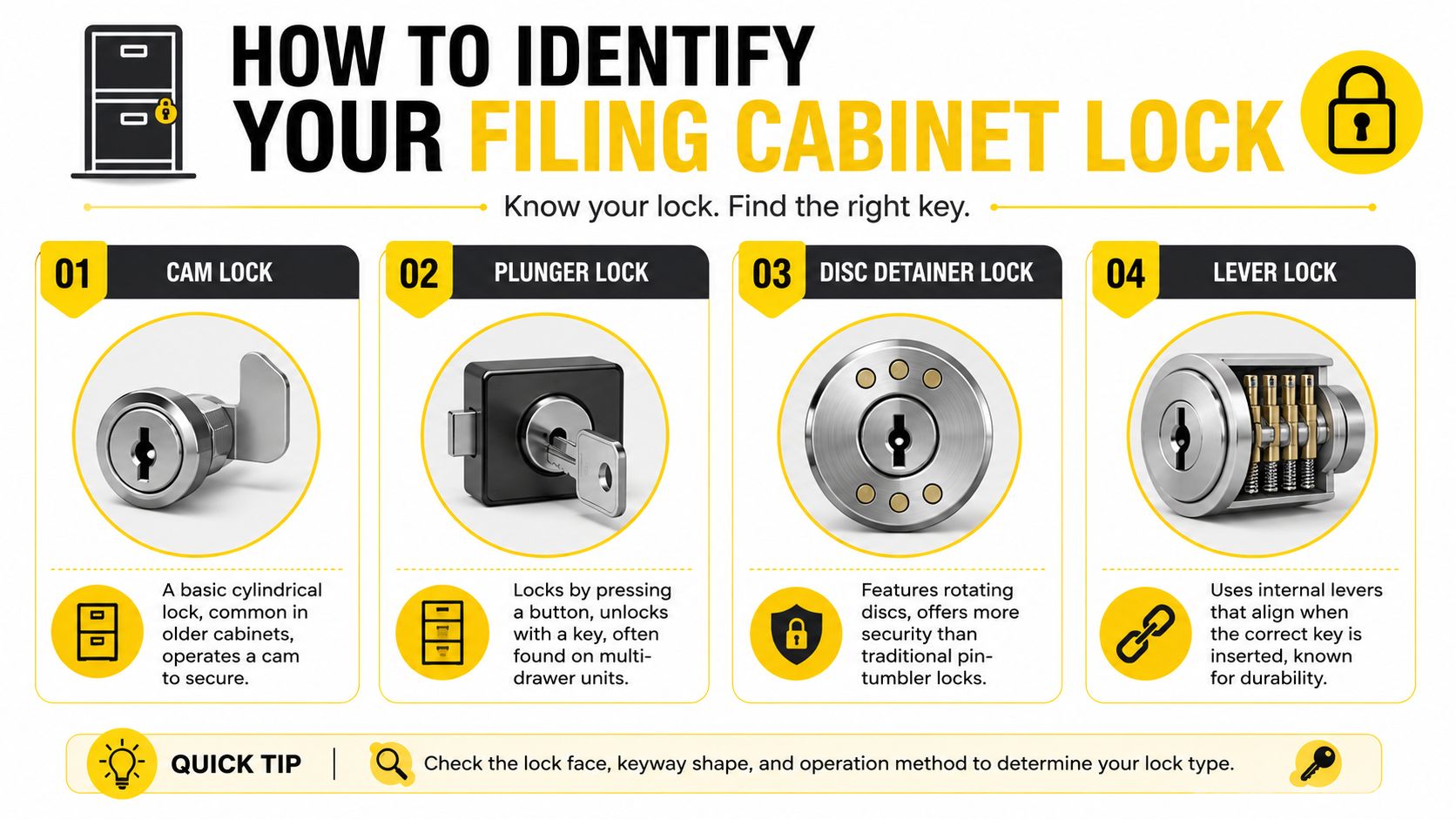
Start with what the front of the cabinet shows
Look at the face of the drawer or the cabinet frame, not just the key itself.
Cam lock
Usually a small round or slightly flattened cylinder on the front of one drawer. Turning the key moves a metal cam behind the face panel. On many cabinets, that cam blocks one point of movement rather than securing the whole body strongly.Plunger style drawer lock
Common on some multi-drawer units. There's often a push-in button or central locking point. Pressing it engages the lock, and the key releases it. These are practical in offices because one action can lock several drawers, but the convenience doesn't automatically mean stronger security.Disc detainer lock
This usually has a more distinctive circular keyway. It's less common on older office furniture but turns up on better hardware and selected upgrade kits. The mechanism is different from a simple wafer or basic key lock and is generally chosen when someone wants a more deliberate security improvement.Lever lock
Less common on standard office filing cabinets, but it appears on some furniture and storage units. These use internal levers rather than a basic pin or wafer arrangement. They can be durable, though the overall cabinet construction still matters.
Quick comparison at a glance
| Lock Type | How It Works | Common Use | Relative Security |
|---|---|---|---|
| Cam lock | Key turns a rear cam or tab | Older drawers and basic office cabinets | Low to moderate |
| Plunger lock | Push to lock, key to release | Multi-drawer office units | Moderate |
| Disc detainer lock | Key aligns rotating discs | Upgraded cabinets and selected secure storage | Higher |
| Lever lock | Key lifts internal levers | Some furniture and storage units | Moderate to higher |
What to check before buying parts
A replacement lock isn't chosen by guesswork. Three details matter:
Face fixing style
Some locks use a retaining clip. Others use a nut behind the panel.Barrel length
A lock that's too short won't seat properly. Too long, and it may bind or sit loose.What the lock drives
One lock may move a simple cam. Another may operate a locking bar that secures several drawers.
A filing cabinet lock should be identified by how it mounts and what it controls, not just by the shape of the key.
If there's uncertainty, the safest approach is to remove the drawer, inspect the back of the lock, and match the mechanism before ordering anything.
Is Your Locked Cabinet Actually Secure
A locked drawer can feel secure because it creates a clear boundary. Key required. Access denied. The problem is that many cabinets only create the appearance of a boundary.
A lot of standard filing cabinet hardware is best understood as a privacy lock. It keeps honest people honest. It doesn't offer much resistance once someone decides to bypass it.
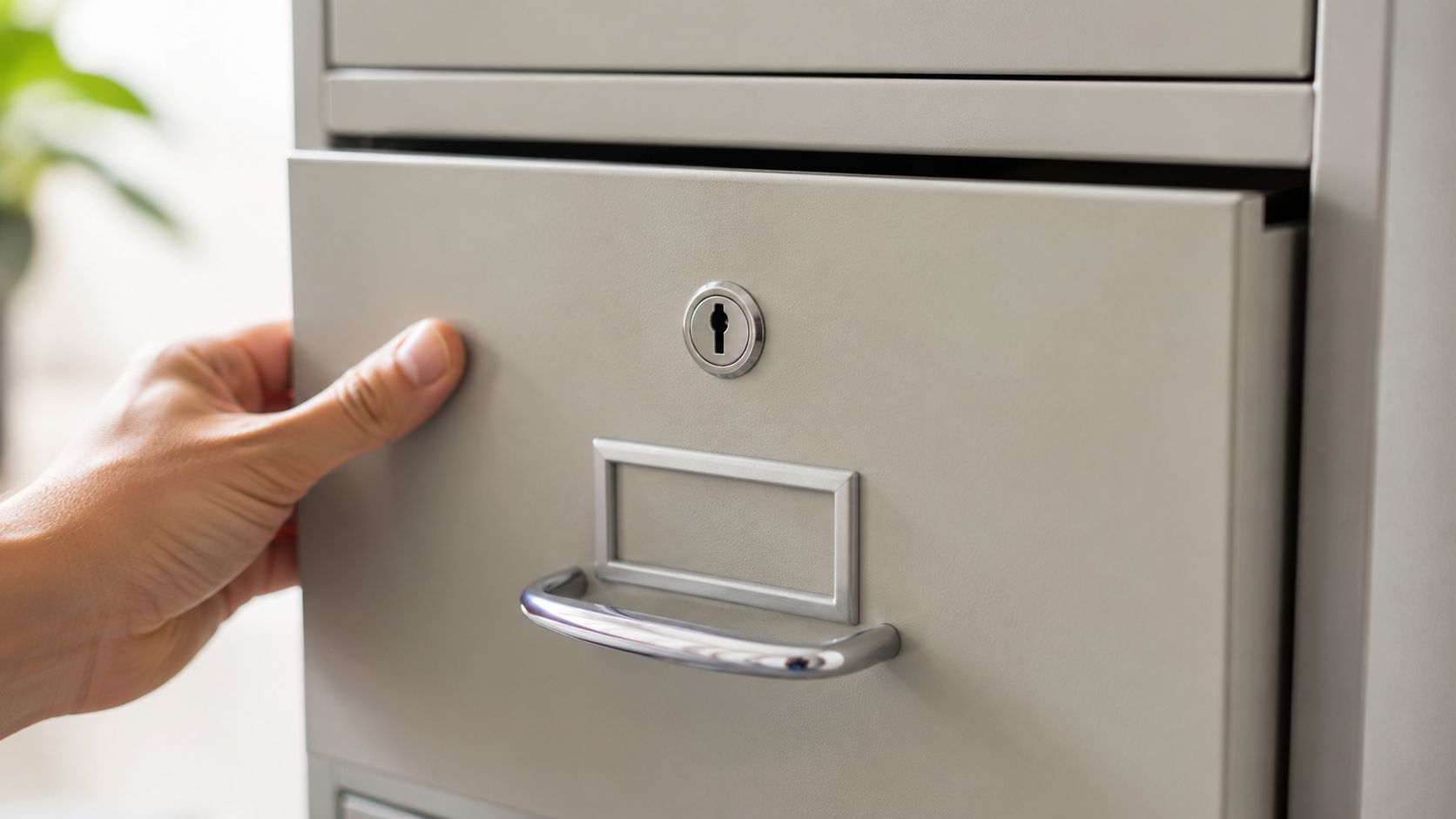
According to Sera4's discussion of locked filing cabinet security, the vast majority of standard filing cabinet locks can be opened by a skilled intruder in under 30 seconds, and many rely on a small metal tab that can be bypassed. That's the heart of the issue.
What a privacy lock does well
For ordinary office use, a basic cabinet lock can still be useful.
- Stops accidental access by staff opening the wrong drawer
- Adds day-to-day control in shared rooms
- Keeps drawers closed during normal use
- Provides a visible reminder that the contents aren't for general handling
That's fine if the papers inside are routine.
What it doesn't do well
If the cabinet holds sensitive records, the weaknesses become harder to ignore.
- Thin locking points can often be attacked directly
- Simple keys are easier to duplicate than owners expect
- Light cabinet bodies can flex, twist, or be worked around
- Open office placement gives a person time and privacy to interfere with the unit
A cabinet can be locked and still be the weakest point in the room.
A better way to judge risk
Instead of asking, “Does it lock?”, ask four practical questions.
| Question | If the answer is yes | What that usually means |
|---|---|---|
| Would disclosure of these papers create a privacy issue? | Sensitive employee, client, or legal records are inside | Basic cabinet security is likely not enough |
| Can multiple people reach the cabinet during the day? | Shared office, reception, common work area | Physical access risk is higher |
| Would a copied key go unnoticed? | Spare keys exist or key control is loose | The lock offers less control than assumed |
| Is the cabinet body light or ageing? | Older steel furniture, worn drawers, loose lock face | The overall unit may be easy to defeat |
Where genuine protection starts
If the records matter, the better answer is often not a “better filing cabinet lock” alone. It may be a stronger lock on the cabinet, tighter key control, a restricted-access room, or moving the most sensitive documents into a proper safe.
That last point matters. A cabinet is usually storage furniture. A safe is security equipment. Those are different jobs, and the difference shouldn't be blurred.
Common Problems and Basic Maintenance Fixes
Most cabinet lock call-outs start with something ordinary. The key won't turn. The drawer won't shut far enough to lock. The lock feels sloppy. A key has snapped. None of that automatically means the whole cabinet needs replacing.
The first rule is simple. Don't force it. Filing cabinet mechanisms are lighter than people think, and one hard twist can turn a small issue into a drilled lock, a broken key, or a bent drawer runner.
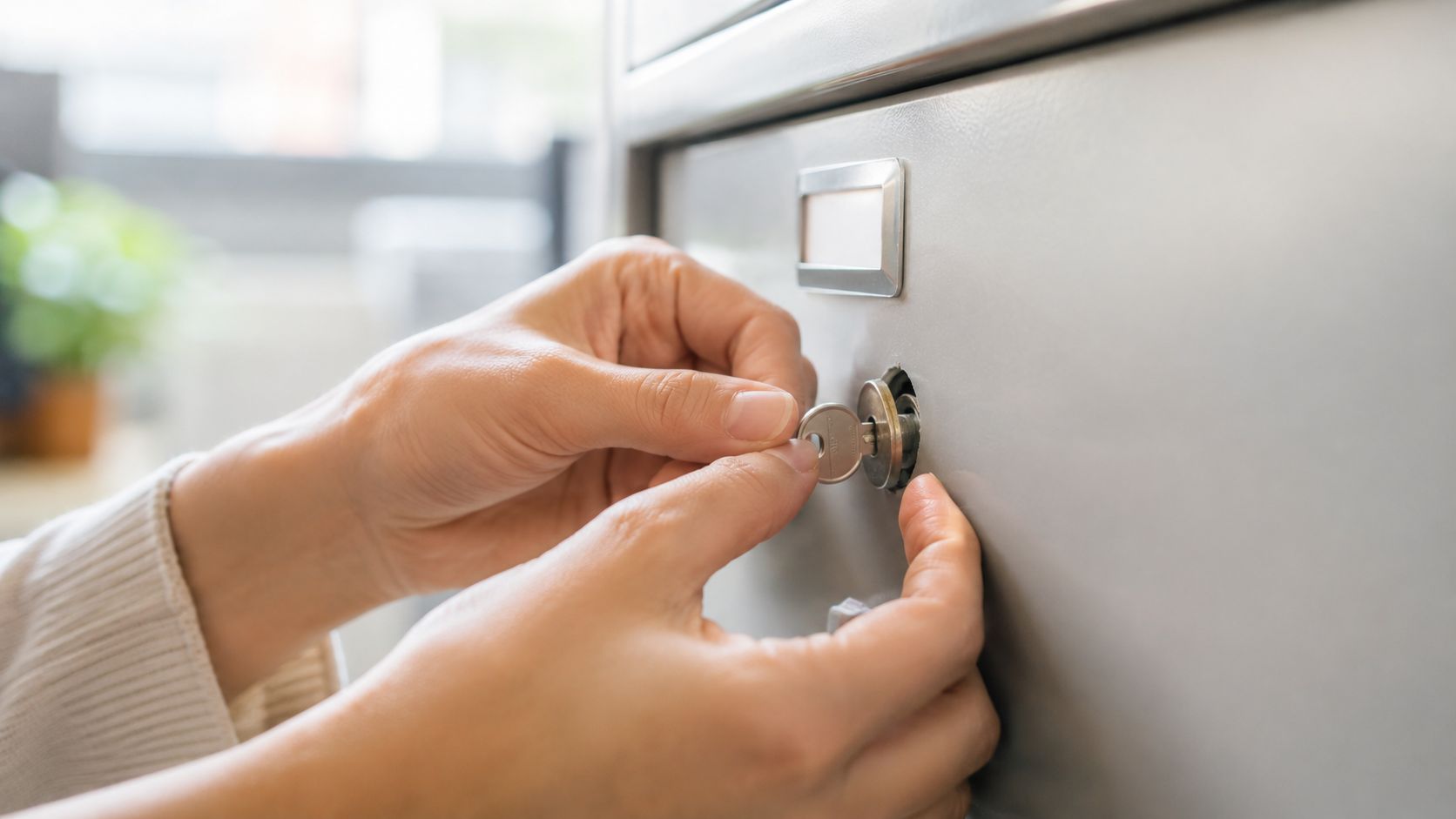
If the key goes in but won't turn
Start with the drawer itself. Many locks won't operate cleanly unless the drawer is fully aligned and pushed home.
Try this in order:
- Relieve pressure on the latch by pushing the drawer in firmly while turning the key.
- Check for overfilled files that may be twisting the drawer body.
- Use a dry lock lubricant made for locks. Avoid oil-heavy sprays that attract grit and make the problem worse over time.
If the key is hard to insert or feels rough
That often points to dirt in the keyway, wear on the key, or a slightly damaged plug.
A sensible check looks like this:
- Inspect the key for bends, burrs, or worn cuts.
- Try the spare key if there is one.
- Clean around the face of the lock so debris doesn't get dragged inside.
If the key has broken off, don't poke at it with a paperclip or screwdriver. That usually drives the fragment deeper. A proper extraction is much cleaner, and this guide on removing broken keys explains why improvised tools often make the job harder.
Workshop note: If a lock suddenly becomes stiff after years of working normally, the fault may be the drawer alignment, not the cylinder.
If the lock feels loose or the drawer won't stay secure
A loose face can mean the retaining clip or rear fixing nut has shifted. A drawer that won't lock may have a problem further back in the mechanism, such as a bent cam or worn linkage.
Basic checks that don't risk damage:
- Look inside the cabinet for loose fasteners or an obvious detached part.
- Open and close the drawer slowly to see whether the latch lines up.
- Stop if metal is scraping or the drawer is binding heavily.
When DIY should stop
Three signs mean it's time to stop experimenting.
- The key bends when turning
- The drawer is jammed with important documents inside
- The lock works but the cabinet still opens
At that point, the issue isn't just convenience. It's a security fault, and forcing parts usually increases the final repair.
Replacing or Upgrading Your Cabinet Locks
There are two broad ways to deal with old or unreliable filing cabinet locks. One is a direct replacement. The other is an upgrade.
A direct replacement keeps the cabinet working much as it always has. An upgrade changes the level of control, convenience, or resistance the cabinet offers. Which one makes sense depends on what's inside, how many people need access, and whether the cabinet itself is worth improving.
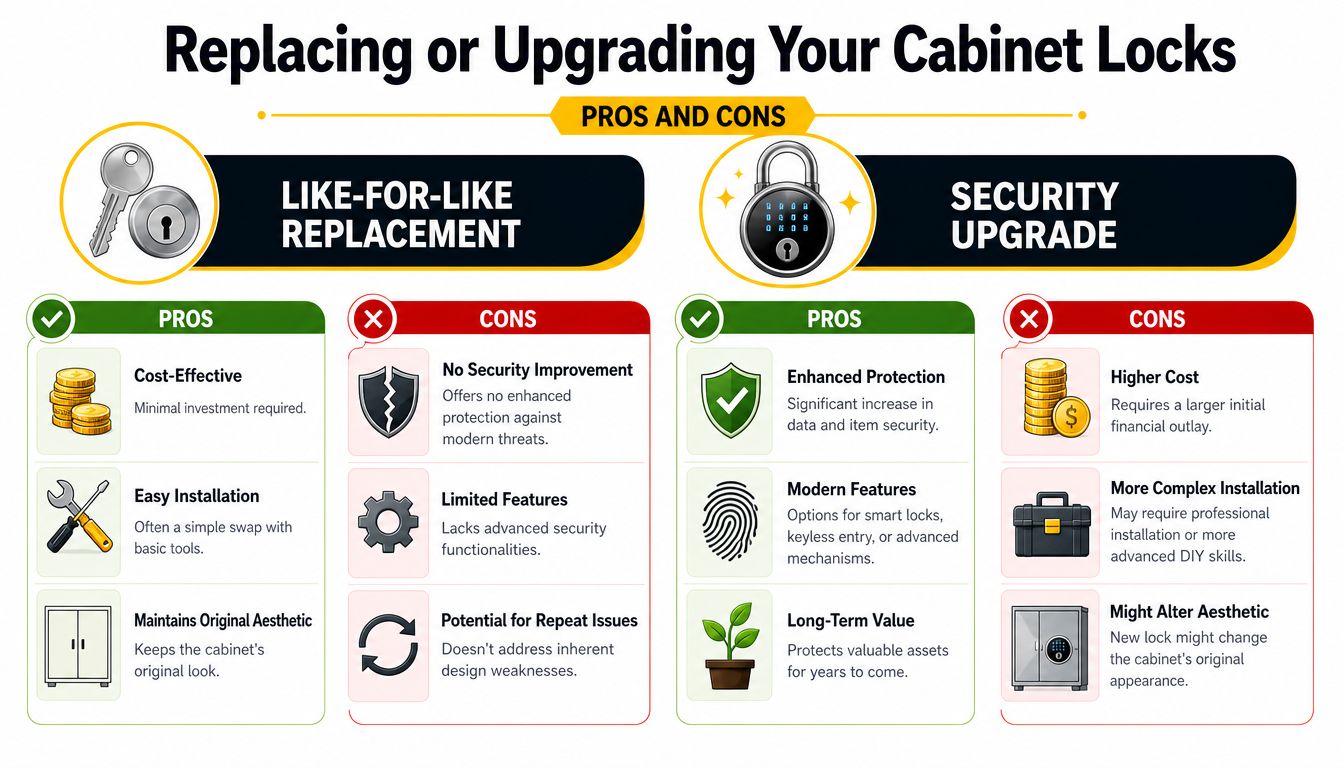
Like-for-like replacement
This is usually the right choice when the aim is to restore function, not redesign security.
Good fit for:
- General paperwork storage where the lock mainly provides privacy
- Older cabinets in decent condition where the original setup worked well enough
- Sites needing simple key replacement without changing staff routine
The upside is compatibility. The drawback is obvious. Replacing a weak lock with the same style usually restores the same weakness.
Security upgrade
An upgrade makes more sense when the documents carry real consequences if exposed, copied, or removed.
Possible upgrade paths include:
- A better quality keyed cylinder
- A different locking mechanism where the cabinet design allows it
- Electronic access for selected furniture and office storage
- A shift away from the cabinet for the most sensitive documents, using a proper safe instead
Replacing a failed lock solves a fault. Upgrading solves the original assumption that the old setup was secure enough.
DIY versus professional fitting
Many cabinet jobs encounter issues with locking mechanisms. On paper, a filing cabinet lock looks simple. In practice, small differences in cam length, thread size, fixing method, and rear linkage can leave a drawer unusable.
| Option | Best for | Main risk |
|---|---|---|
| DIY like-for-like swap | Straightforward cabinets with matched parts | Ordering the wrong lock or fitting it incorrectly |
| Professional replacement | Faulty locks on active office furniture | Lower risk of damage and better fitment |
| Professional upgrade | Sensitive records or multi-user access | Needs proper planning, parts selection, and key control |
A practical decision rule
A simple rule works well.
- If the cabinet stores routine paperwork and the old lock has just worn out, replacement is usually enough.
- If the cabinet stores sensitive information, it's worth reconsidering the whole setup, not just the barrel.
- If the furniture is flimsy, spending heavily on the lock alone may not be the smartest investment.
The lock is only one part of cabinet security. The body, the drawer fit, the room it sits in, and who holds keys all matter.
Master Key Systems for North Shore Offices
Many office managers don't have one key problem. They have twenty small ones. One key for reception storage, another for accounts, another for personnel files, another for archived drawers in the back room. Over time, keys get labelled badly, copied casually, or left in the wrong place.
That's where a master key system becomes useful. In plain terms, it allows different people to have different levels of access. A staff member might open only their allocated cabinet. A manager might open several. One master key can open all approved locks within the system.
Where this works well
This setup suits offices that need both control and convenience.
Examples include:
- HR and payroll storage where access needs to stay limited
- Medical or allied health administration with separate staff responsibilities
- Real estate and property offices managing multiple files and cupboards
- Shared commercial premises where one person needs broad access without handing everyone the same key
A well-planned system also reduces the habit of hiding spare cabinet keys in desk drawers or kitchen cupboards, which defeats the whole point of locking furniture in the first place.
The trade-off to understand
Master keying isn't just about fewer keys on a ring. It's about structure. The layout has to reflect who should access what, and that should be settled before cylinders are pinned or hardware is changed.
The useful questions are practical:
- Which drawers should general staff open?
- Which cabinets should only managers access?
- Is there one emergency key holder?
- Should cabinet locks match room, door, or store-room access in the same hierarchy?
For businesses comparing options, this guide to how master key systems work gives a clear picture of how access levels are set up.
The best master key system is the one that removes confusion without creating more access than the business intended.
Done properly, it cuts clutter and improves accountability. Done casually, it just produces a neater version of the same old key-control mess.
When to Call a Professional North Shore Locksmith
Some filing cabinet problems are minor. A sticky lock, a worn key, a drawer slightly out of line. Those can often be diagnosed without much fuss.
Other jobs need a professional from the start. Lost keys for active business records are one example. Cabinets tied to staff files, legal matters, or commercial records are another. The same applies when there's any doubt about who is authorised to open the cabinet.
A particularly sensitive situation arises when the key is missing and the owner is unavailable. DIY entry can create damage and legal problems, while a licensed Master Locksmith can work through the authorised access side properly, especially in NSW commercial or strata settings, as outlined in this article on locked cabinets with lost keys and absent owners.
Good reasons to stop and make the call
- Critical documents are locked inside and force would risk damage
- The lock has failed repeatedly and a simple lubricant won't fix the cause
- A cabinet needs upgrading because the contents are too sensitive for a basic privacy lock
- A master key setup is being considered across several cabinets or rooms
- Ownership or authority is unclear because a business has closed or staff have changed
For North Shore businesses, it also helps to know what to have ready before a service call. This North Shore locksmith call-out guide covers the details that make the job smoother and safer.
When the issue is routine maintenance, a careful check is fine. When the issue involves sensitive records, key control, or lawful access, it's smarter to treat the cabinet as part of a broader security problem, not just a jammed drawer.
If a cabinet in St Ives or elsewhere on Sydney's North Shore is giving trouble, holds sensitive records, or needs a proper security upgrade, Lock, Stock & Barrel Locksmiths can help with practical advice on-site. For a local call-out or a quote request, ring the team and explain what the cabinet is storing, what lock it has, and whether access is urgent.