- 24 Hour Emergency Services
- Servicing Sydney's North Shore
- View On Map

-
Mail Us On
info@lsblocksmiths.com.au
-
Make a Call
0411 700 072
- View On Map
- 24 Hour Emergency Services
- Servicing Sydney's North Shore
- View On Map
-
Mail Us On
info@lsblocksmiths.com.au
-
Make a Call
0411 700 072
- Contact Us
Lost Key Replacement: Sydney Guide & Costs 2026

Lock, Stock & Barrel Locksmiths
On July 6, 2026
Keys usually go missing at the worst possible moment. It's often when the shopping's in the boot, the dog needs to get inside, the kids are tired, or a front door suddenly won't open because the only set of keys isn't where it should be.
Around Sydney's North Shore, that moment of panic tends to look the same. Pockets checked twice. Bag emptied onto the passenger seat. A quick walk back to the letterbox, the café, the station platform, the oval. Then the bigger worry sets in. Was the key only misplaced, or is someone else now holding it?
That Sinking Feeling When Your Keys Are Gone
A lost key problem feels bigger than it is because it creates two problems at once. The first is access. The second is security. One can be solved with the right tools. The other needs a calm decision.
That's why the first few minutes matter. Rushing into the cheapest fix can leave the actual risk sitting there untouched. A fresh copy of a key is no help if the old one still opens the front door. On the other hand, replacing everything straight away can be unnecessary if there's a spare key at home and no genuine security concern.
For households on the Upper North Shore, the details matter. A key dropped on a bushwalk near Wahroonga is one situation. A key left on a café table with a tag attached is another. Tenants, homeowners and strata residents all need slightly different advice, especially when common entries, garage remotes, mailbox keys or building fobs are involved.
A practical starting point is to think in this order:
- Access first: can someone get inside safely right now?
- Risk next: is the key merely lost, or could it be used by someone else?
- Proof ready: can ownership or occupancy be shown when a locksmith arrives?
- Right fix: does the job call for a rekey, a full lock change, or just a duplicate from a spare?
Panic makes people ring the first number they find. A better move is to work out whether the job is a lockout, a security issue, or both.
For anyone dealing with an urgent lockout, this guide on 24/7 mobile locksmith help for emergency lockouts explains what an after-hours response does and when it makes sense.
Before You Call Anyone Assess the Real Risk
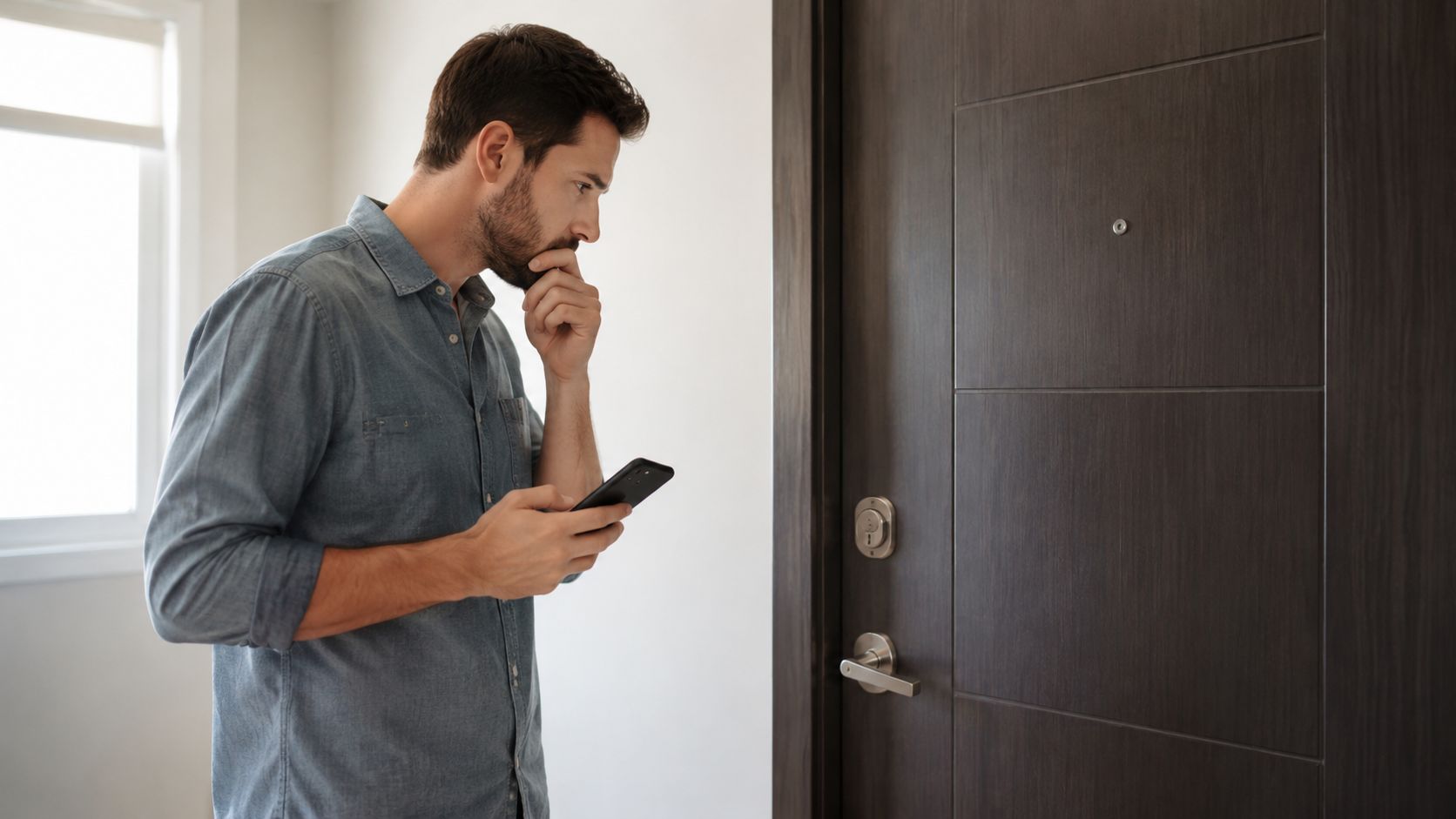
The first question isn't who to call. It's what kind of loss this is.
A lot of advice treats every missing key the same way. That's a mistake. As AccomNews notes in its discussion of lost keys and security risk, some situations involve “foul play by people with the wrong intention,” and the cost of illegal entry can be far worse than the replacement fee. If the missing key had a tag, fob or anything that identifies the home address, changing the lock or rekeying it moves from sensible to urgent.
Start with three blunt questions
Ask these before any booking is made:
Is the property secured?
If it's not secured, access is the smaller problem. Securing the property is the priority.Is there a spare key anywhere?
Check with family, a neighbour, a property manager, cleaner, dog walker or anyone else who may legitimately hold one.Was the key likely misplaced or possibly taken?
A key dropped during a jog is different from one disappearing from a bag, a worksite, a shared office kitchen or a café table.
Situations that raise the risk immediately
Some losses deserve a faster, firmer response:
- Address attached: a keyring with a unit number, street name, access fob label or anything similar.
- Shared building access: apartment keys, lift fobs, garage remotes, swipe cards and mailbox keys.
- Recent dispute or suspicious circumstances: keys missing after an inspection, breakup, tenancy issue or tradie visit.
- Wallet and keys gone together: identity details and access details in one loss can create a much bigger problem.
Practical rule: If a stranger could connect the key to the property, secure the property first and worry about convenience later.
For local households trying to sort out the immediate next step, what to know before calling a locksmith in Sydney's North Shore is worth reading before the phone call.
Get the details ready
A proper locksmith won't just turn up and open or alter locks for anyone who asks. That caution protects the resident.
Before any lost key replacement job starts, have the basics ready:
- Proof of identity: a NSW driver's licence with current address is commonly used.
- Proof of occupancy or ownership: current registration for a vehicle, or a tenancy agreement for residential access.
- Location details: exact suburb and any access notes that matter.
- What's missing: front door key, deadlock key, car key, remote, fob, mailbox key or gate key.
Those checks aren't red tape. They're a sign the person attending understands what unauthorised access looks like and won't take shortcuts with it.
Your Main Options Rekey Replace or Cut
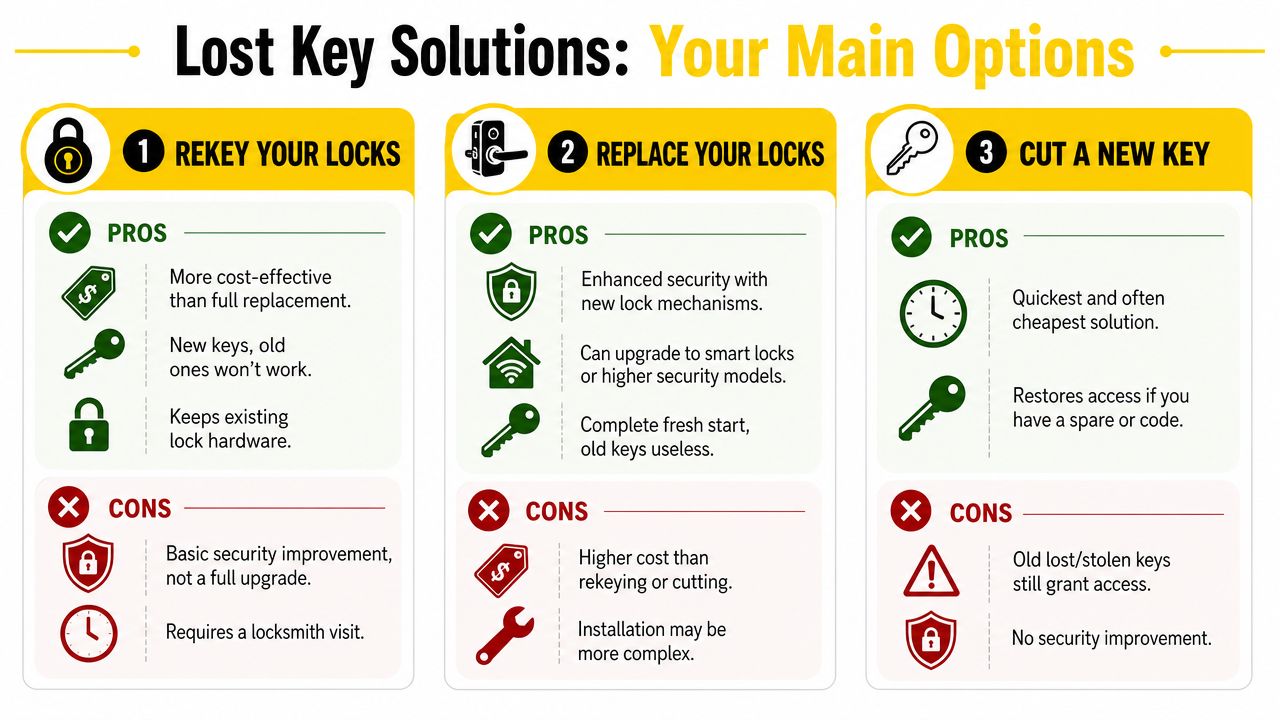
Once the risk has been worked out, the next decision is practical. Do you keep the existing lock and change its keying, replace the hardware entirely, or cut another key from a spare? On the North Shore, the right answer often depends on the building type as much as the key itself. A freestanding home, a strata apartment, and a rental unit can all call for a different approach.
Rekeying when the lock is sound
Rekeying changes the pins inside the cylinder so the old key stops working. The lock stays on the door. The hardware looks the same from the outside, but access control is restored.
For many local homes, this is the cleanest fix after a genuine key loss. It suits front doors, rear doors, side gates, and older deadlocks that still operate properly. It also makes sense in many rentals, because the cylinder can often be changed without altering the whole lockset, though tenants should still check what approval is required.
Rekeying is usually the right call when:
- the lock is in good condition
- the missing key may still be out in the world
- the goal is to stop the old key working
- you want all relevant doors set to a new key
That last point matters more than people expect. In a lot of North Shore properties, one lost key may operate the front door, screen door, garage side entry, or common side gate. A proper rekey job looks at the whole setup, not just the door you happen to be standing in front of.
Replacing when the hardware itself is the problem
Replacement is the better option if the lock is worn out, damaged, poorly fitted, or not the right standard anymore. There is no point paying to rekey a cylinder if the latch is sloppy, the deadbolt binds, or the hardware has already had a hard life near the coast.
This comes up often in older North Shore homes and units. Salt air, swollen timber doors, tired striker plates, and decades of mixed hardware can turn a simple lost key job into a chance to fix a setup that was overdue for attention anyway.
Replacement makes sense when:
- the lock is sticking or unreliable
- the cylinder cannot be rekeyed economically
- different doors have mismatched or outdated hardware
- you want to change lock style or improve how the door secures
It costs more than rekeying, but it solves the security issue and the hardware issue at the same time.
Cutting a new key when the old one is not a security risk
Sometimes the answer is simpler. If the missing key was misplaced inside the home, dropped somewhere it can't be linked back to the address, or there is a spare available and no real exposure, cutting another key may be enough.
This is the cheapest path, but only in the right circumstances. It restores convenience. It does not change who can use the original key.
That distinction matters in apartment buildings and strata complexes. If a lost key is attached to a fob, unit number tag, or mailbox identifier, cutting a duplicate may leave too much risk behind. In that case, the cheaper option can become the wrong one.
Lost key solutions at a glance
| Solution | Best For | Cost Position | Security Outcome |
|---|---|---|---|
| Rekey | Lost house key where the lock is still in good condition | Lower than full replacement | Old key no longer works |
| Replace | Worn, damaged or outdated lock hardware | Highest of the three | Old key no longer works, with new hardware fitted |
| Cut a new key | Spare key exists and the missing key does not pose a security issue | Lowest | Access restored, but old key may still work |
For residential work, Houdini Locksmiths notes that rekeying starts from around $50 per lock, full lock changes start from around $150, and on-site cutting of standard keys is priced from $5.50 plus a service fee. Actual pricing still depends on the lock type, access, and whether the job involves more than one door.
Car keys are a different job
Car key losses follow a different process because many vehicles no longer use a simple metal key alone. Transponders, remote fobs, proximity systems, and push-button start all change the job.
In Sydney, including the North Shore, car key replacement commonly ranges from $150 to $800, with basic keys at $150 to $250, transponder keys at $220 to $400, smart or proximity keys at $350 to $800, luxury models reaching up to $1,200, and after-hours service adding another $50 to $200.
Where both car keys are missing, the work can get much more involved. CarsGuide describes a method where the door lock cylinder is removed to obtain the code, a new blade is machined, and the transponder or smart fob is programmed on site. It says this typically takes under 60 minutes and may cost between $1,800 and $5,000+. Keeping one spare car key changes the cost and the complexity of the whole job.
How to Choose a Trustworthy North Shore Locksmith
Lost key replacement calls often happen when the resident is distracted, late, tired or locked out. That's exactly when people get funnelled into national call centres, vague quotes and operators who can't clearly explain what will happen on site.
A proper local locksmith should sound organised from the first call. The questions asked matter. So does what the locksmith refuses to do without verification.
What a professional should ask you
Before any lost key replacement service starts, OpenPR states that proof of ownership or occupancy should be prepared, such as a NSW driver's licence with address and current registration or a tenancy agreement. If nobody asks for that, something's off.
Expect questions like these:
- Whose property or vehicle is it?
- What proof can be shown on arrival?
- Is there a spare key available anywhere?
- Is this a lockout, a rekey, or a full hardware issue?
- What suburb in NSW is the job in?
Questions worth asking back
The phone works both ways. A resident can screen the locksmith as well.
Ask directly:
- Are you licensed to carry out locksmith work in NSW?
- Are you a member of the Master Locksmiths Association of Australasia?
- Do you have a physical local base, or are you dispatching through a call centre?
- Will you explain whether rekeying or replacement is the better fit before starting?
- Can you work on site, or will the lock or vehicle need to be removed or towed?
If the person on the phone won't explain the likely options in plain English, there's a good chance the job will become more expensive and less clear once they arrive.
Why local knowledge matters
North Shore homes aren't all built the same. Older timber doors, apartment common entries, side gates, garage access and mixed lock brands all change how a lost key job should be approached. A local locksmith who regularly works across suburbs such as Gordon, Hornsby and Killara is more likely to recognise the hardware, anticipate access issues and carry the parts needed for a sensible repair or rekey.
That matters even more in strata work, where one missing key can involve a unit door, a fire stair, a garage remote and a building fob all at once. A generic response doesn't help much there. Clear verification and the right on-site decision do.
Prevention A Few Simple Habits to Save the Hassle
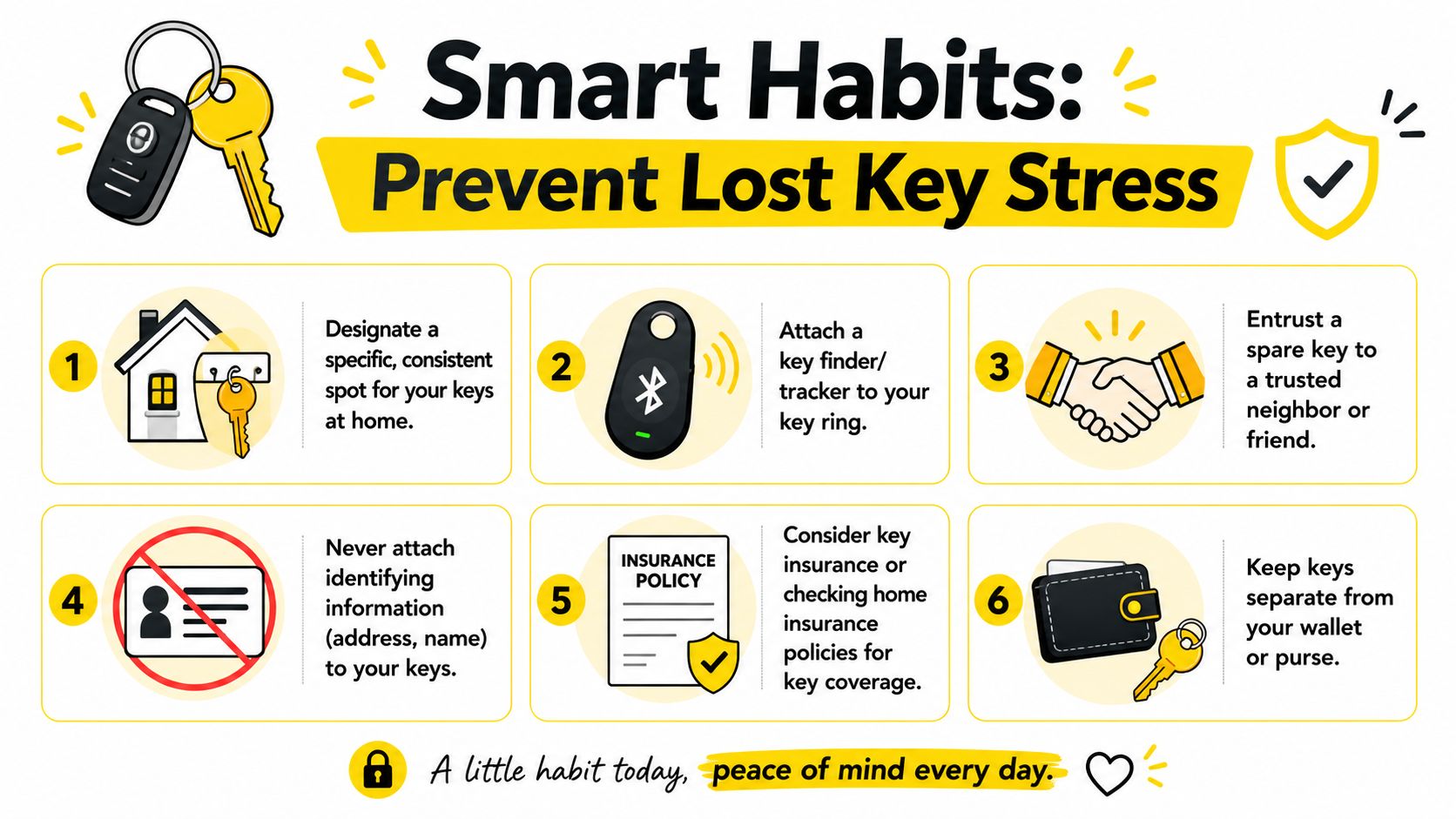
Most lost key jobs don't start with a major security failure. They start with routine. Keys in the gym bag one day, beach tote the next, jacket pocket after that. Then a rushed school pickup, a bushwalk, a grocery stop, and the set vanishes into the background.
The simplest prevention habits are the ones people routinely perform. Fancy systems get ignored. Reliable habits stick.
Habits that make a difference
A few practical routines go a long way:
- Use one landing spot at home: same bowl, hook or drawer every day.
- Keep a true spare key off the main ring: not hidden under a pot, and not clipped to the same bunch.
- Separate keys from wallets and handbags where possible: one loss doesn't need to become two.
- Don't label keys with address details: if the key is found by the wrong person, anonymity helps.
- Think about who really needs a copy: dog walkers, cleaners and tradies may need controlled access, but not necessarily the main household ring.
One useful prevention step is reviewing practical ways to stop losing keys in everyday life, especially for households juggling school runs, work bags and weekend sport.
For strata, rentals and family homes
Different homes need different habits. In a strata building, a resident may need to think beyond the front door and include swipe access, garage remotes and mailbox keys. In a rental, it's worth understanding who must be told if a key goes missing and whether the key also opens common doors.
Families should also look at windows and other secondary access points when reviewing household security. In NSW strata buildings, window safety devices must limit openings to no more than 125 mm in certain situations, resist 250 newtons of force, and non-compliance can attract fines of up to $550 for owners corporations. While that isn't a lost key issue by itself, secure access planning should never stop at the front door.
The easiest lost key replacement job is the one that never needs booking because the spare is controlled, the keyring is anonymous, and the household knows exactly where access sits.
A missing key feels urgent because it is. But it doesn't need to turn into chaos. A calm risk check, proper verification and the right fix usually sort the problem cleanly, whether that means a rekey, a new lock or a straightforward duplicate.
If a key has gone missing and the next step isn't clear, Lock, Stock & Barrel Locksmiths can help with practical advice, on-site locksmith work and urgent attendance across the North Shore. For immediate help, call to arrange attendance. For planned work, request a quote online and include the suburb, the lock type, and whether the key is lost, locked inside or possibly stolen.