- 24 Hour Emergency Services
- Servicing Sydney's North Shore
- View On Map

-
Mail Us On
info@lsblocksmiths.com.au
-
Make a Call
0411 700 072
- View On Map
- 24 Hour Emergency Services
- Servicing Sydney's North Shore
- View On Map
-
Mail Us On
info@lsblocksmiths.com.au
-
Make a Call
0411 700 072
- Contact Us
Wall Safe Installation Cost: Your 2026 Guide

Lock, Stock & Barrel Locksmiths
On July 11, 2026
A standard residential wall safe installation cost in Sydney usually starts at $300 to $600 for professional labour on a straightforward job. That's the right baseline to budget from, but it's only a baseline, because the wall itself, the safe you choose, and the amount of structural work all change the final figure.
Most homeowners start looking into a wall safe when loose valuables stop feeling secure in a drawer or cupboard. Passports, wills, jewellery, backup drives, family papers, spare cash. These are the items people want protected, but still close at hand.
The trouble is that most online cost guides flatten everything into one neat number. Real jobs don't work like that, especially on Sydney's North Shore where one home might have modern plasterboard internal walls and the next might be double-brick with far more cutting, drilling and fitting work involved.
How Much Does a Wall Safe Really Cost to Install
The cleanest starting point is this. In New South Wales, professional wall safe installation typically ranges from $300 to $600 for the labour component of a standard residential job, according to NSW wall safe installation pricing.
That figure is useful because it gives a homeowner a realistic floor for a normal install. It's the sort of job where the wall is suitable, access is sensible, and the safe can be anchored properly without major surprises once the wall is opened up.
A wall safe is rarely bought for convenience alone. It is typically desired for three reasons:
- Document security: passports, title papers, birth certificates and legal documents need protection from casual theft and household disruption.
- Controlled access: jewellery, keepsakes and small valuables are safer when they're not left in wardrobes, drawers or bedside furniture.
- Discreet storage: a wall safe can sit behind artwork, inside a robe, or in another low-traffic internal location without advertising itself.
For a standard installation, the labour quote generally covers the practical trade work needed to mount the safe correctly. That means finding the cavity, checking the fixing points, cutting the opening cleanly, getting the unit level, and anchoring it so the safe can't easily be pulled out.
Practical rule: If the quote sounds cheap but doesn't clearly cover anchoring, wall preparation and proper fitment, it probably isn't the full job.
Homeowners comparing options should separate generic internet pricing from local trade reality. Sydney work has to account for local building stock, local labour, and what's hidden behind the wall. Anyone wanting a better sense of the hardware side can also look at wall safes supplied and installed, because the safe itself is only one part of the budget.
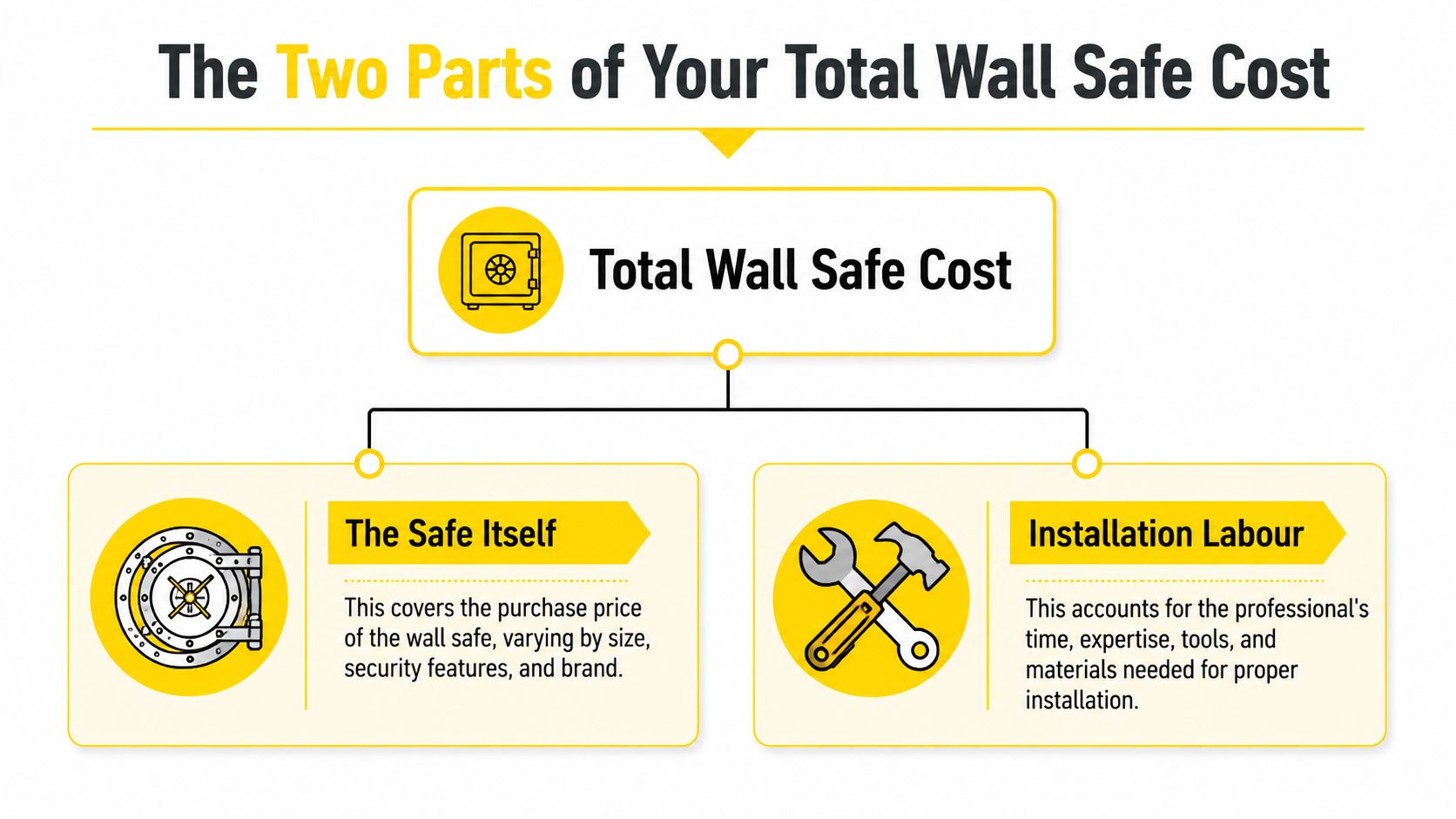
The Two Parts of Your Total Wall Safe Cost
A lot of confusion comes from mixing the safe price with the installation price. They're different costs, and they should be looked at separately.
Buying a wall safe is a bit like buying a television and then paying to have it mounted properly. One amount covers the product. The other covers the trade work that makes it secure, level and usable.
The safe itself
The first column in the budget is the unit you buy.
That can be a basic document safe with a simple locking setup, or a more substantial model with better fire protection, heavier construction, and a digital lock. As the safe gets larger, deeper, heavier or more specialised, the purchase price climbs. There's no useful one-size figure here because the market varies too much by brand, size and rating.
A homeowner should think about the contents first, not the catalogue photo. Documents, jewellery and backup media need different internal space and different protection. A shallow safe that fits the wall neatly might be perfect for papers, but frustrating for bulkier valuables.
Installation labour
The second column is the trade component.
The wall safe installation cost covers the assessment, measuring, cutting, fitting, anchoring, and the small but important details that make the unit sit properly and work as intended.
For standard residential work in NSW, that labour baseline sits in the range already noted above. That doesn't mean every property falls there. It means that's the sensible starting point before site conditions complicate things.
A simple way to think about it is this:
| Cost part | What it covers | What changes the price |
|---|---|---|
| Safe purchase | The actual unit | size, lock type, fire features, brand |
| Installation labour | Fitting and anchoring the safe into the wall | wall type, access, structural work, safe dimensions |
The mistake many homeowners make is adding up only the safe price and assuming installation is a small afterthought. On a wall safe, the fitting work is what makes the security real.
Why the split matters
When a quote is broken into these two parts, it becomes much easier to compare options.
- Better hardware decision: a homeowner can upgrade or reduce the safe spec without guessing what that does to labour.
- Cleaner quote comparison: one installer might supply the safe, another might fit owner-supplied hardware. Keeping the figures separate avoids confusion.
- More accurate budgeting: if the wall turns out to be more difficult than expected, the reason for the extra labour is easier to understand.
Key Factors That Affect Your Installation Price
The baseline cost only applies when the job is straightforward. What pushes the price up is the amount of labour, the difficulty of the wall, and whether the safe can be mounted cleanly without extra structural work.
The biggest variable on the North Shore is often the wall itself.
Plasterboard walls are usually the simpler jobs
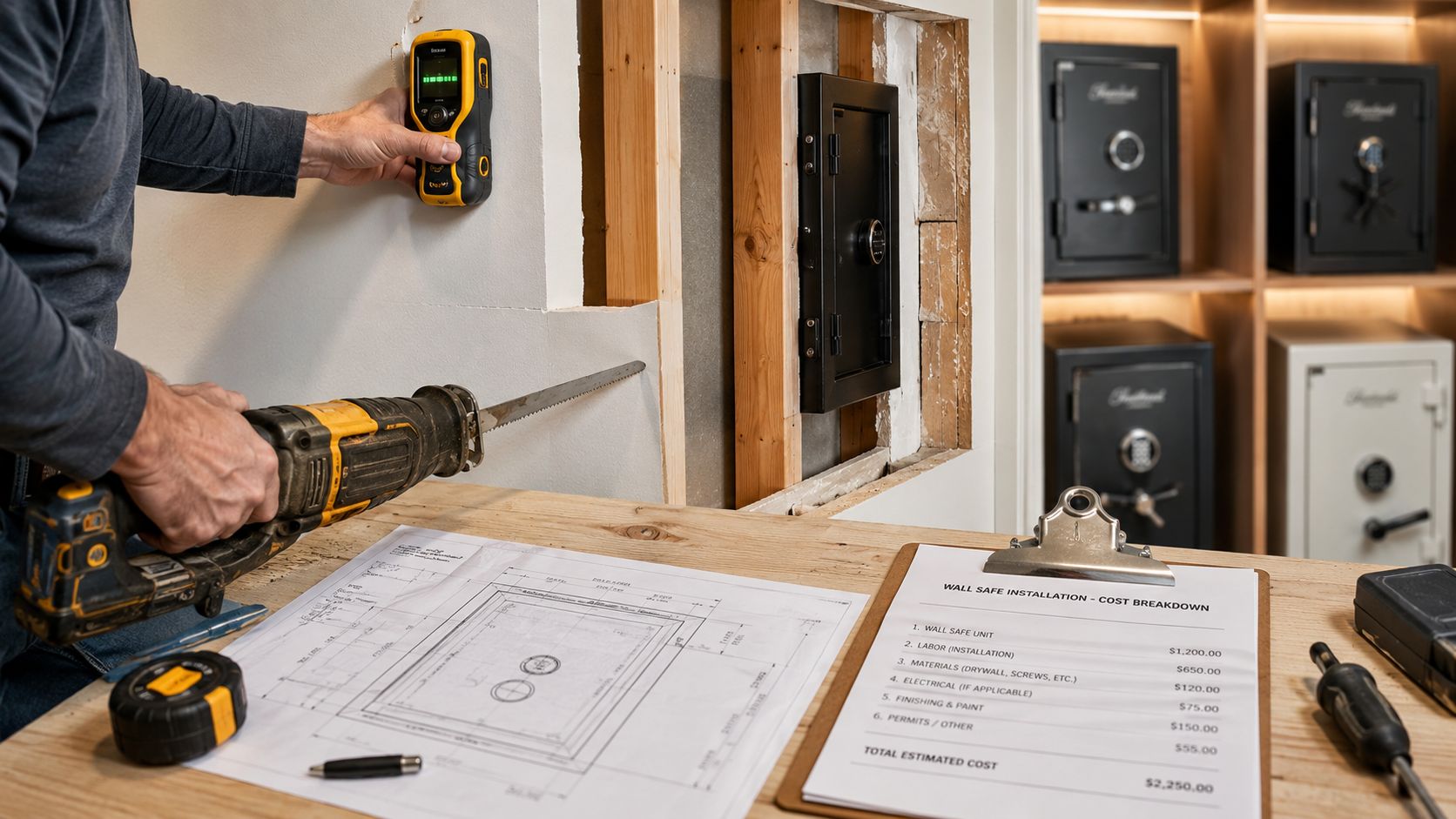
A standard internal plasterboard wall is usually the most straightforward type of installation, provided the cavity is clear and the safe suits the stud spacing.
For this style of fitment, the installer locates the studs, cuts the opening, and anchors the safe into the framing. The mechanical part matters. A common wall safe installation method is to secure the unit with four mounting screws, two per side, directly into the studs, and where the safe is narrower than the stud gap, shims are added near the top and bottom to create a snug fit before final screwing, as demonstrated in this wall safe stud mounting example.
That sounds simple on paper, but the difference between “fits in the hole” and “properly anchored” is exactly where good installation work earns its keep.
Brick veneer and double-brick change the job
Sydney homes often don't give the installer an easy plasterboard cavity to work with. Brick veneer and especially double-brick construction can turn a tidy install into a much more involved masonry job.
According to Angi's wall safe installation cost reference with the Sydney wall-type nuance provided here, Sydney's common brick veneer versus double-brick construction can increase labour time from 2 hours to over 6 hours, potentially adding $500 to $1,200 to the installation cost compared to a standard stud wall.
That's the local detail most generic calculators miss. On the North Shore, older homes in suburbs like Gordon, Killara, St Ives and Wahroonga often have wall construction that slows everything down. Cutting, drilling, dust control, edge finishing, and getting a safe to sit properly in masonry takes more care and more time.
Brick work doesn't forgive bad measurements. A plasterboard patch is one thing. A poor cut into masonry is another problem entirely.
Safe size and shape matter
The safe itself also changes the labour.
A compact document safe that suits the wall cavity is one thing. A larger unit with more depth or more weight can mean tighter tolerances, more awkward handling, and extra work getting the body aligned and fixed without strain on the wall structure.
Three hardware choices usually affect labour most:
- Overall width: if the safe doesn't sit neatly with the framing, the installer may need to build out support points for a proper fit.
- Depth: deeper units can create problems in thinner internal walls.
- Weight: heavier safes demand better support and more careful handling during install.
Access and location inside the house
Two homes with the same wall type can still price differently because access changes the job.
A hallway wall with easy clearance is much easier than a tight robe cavity, a cluttered storeroom, or a location near services that need to be worked around. Before any cutting starts, the installer needs to think about what else may be in that wall, whether the location is practical, and whether the safe can open and be used comfortably once fitted.
A sensible assessment usually considers:
| Factor | What the installer is checking |
|---|---|
| Wall construction | stud wall, brick veneer, double-brick |
| Available cavity | whether the safe physically suits the space |
| Hidden services | electrical wiring, plumbing, other obstructions |
| Working room | whether tools can be used safely and accurately |
| Final usability | door swing, access height, concealment options |
Structural adjustments
Some installs need more than a cut-out and a set of fixings.
If the wall cavity doesn't support the safe properly as-is, the installer may need to add support material, pack the opening, or adjust the fixing points to stop movement. That sort of work isn't optional. A wall safe that shifts, twists or racks under load isn't secure, even if it looks neat from the front.
DIY vs Professional Installation A Tradesman's Perspective
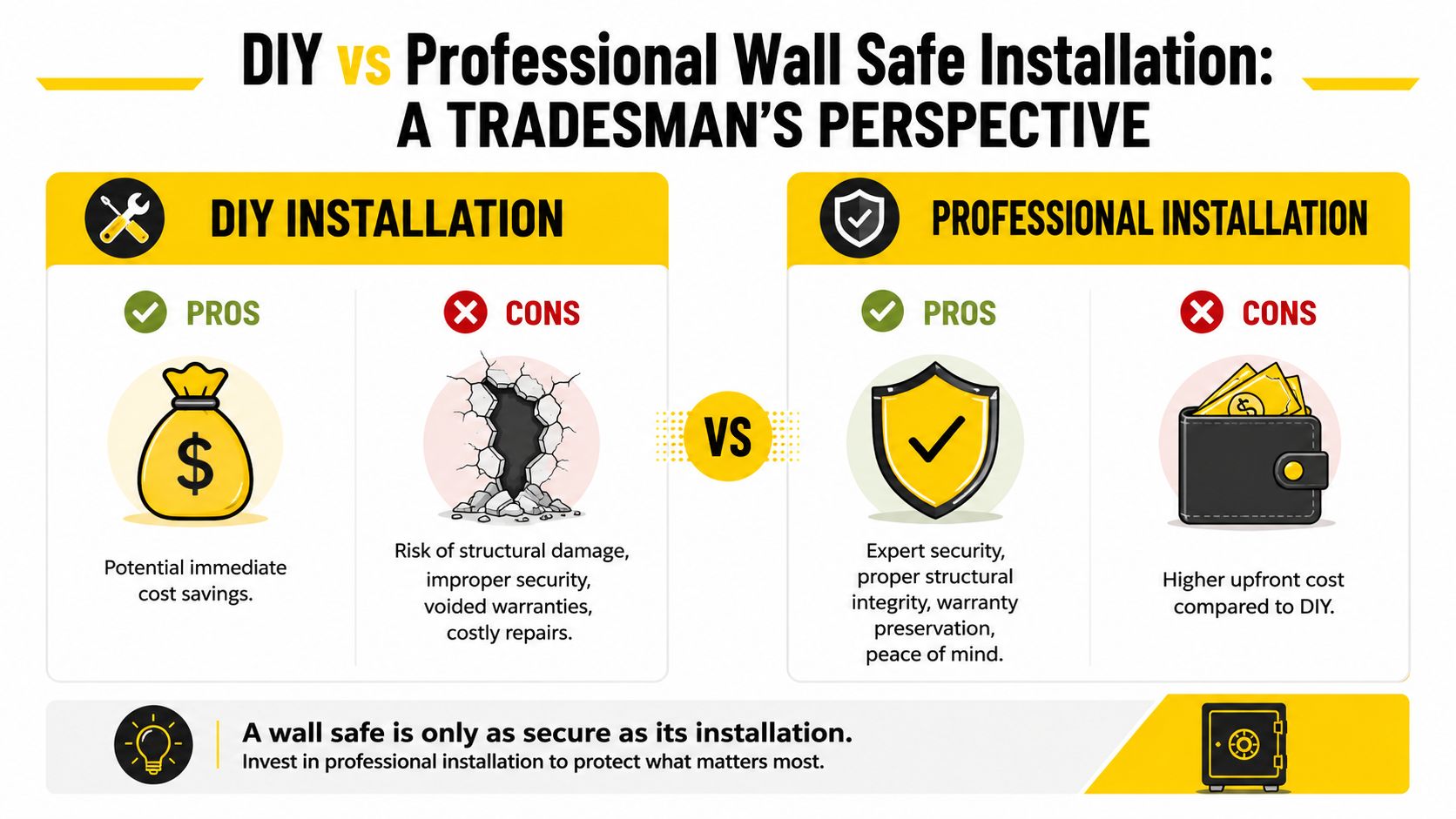
A wall safe looks deceptively manageable when it's sitting on the floor of a garage. Once it has to go into a wall, line up with structure, avoid services and hold its rating, the job changes.
That's why DIY attempts often go wrong in ways a homeowner doesn't spot until later. The safe might appear straight. The trim might hide the rough edges. But poor anchoring, a loose fit, or unnecessary modification can strip away the very protection the safe was bought for.
What DIY gets wrong most often
The first problem is usually structural. People cut first and measure the consequences after. If the opening is off, the safe won't sit tight. If the fixings miss solid support, the unit is relying on weak material around it.
The second problem is security. A wall safe must resist removal, not just occupy a hole in the wall. If it isn't anchored properly, a thief doesn't need to defeat the lock. They just need to remove the whole body.
Then there's fire performance. Professional installation is critical to ensure a wall safe retains its manufacturer-specified fire-resistance rating, as improper anchoring or modification can create gaps that compromise the unit's integrity during a fire, as explained in Australian safe installation guidance.
What professional installation actually buys
A tradesman isn't just bringing tools. The value is in knowing what not to cut, where not to mount, and when a chosen location is wrong for the safe.
Professional installation usually means:
- Correct assessment: checking the wall type, cavity and likely obstructions before cutting starts.
- Proper anchoring: fixing the unit into suitable structure so removal is far harder.
- Cleaner fitment: getting the safe level, tight and usable, rather than just “in”.
- Less risk to the home: reducing the chance of unnecessary wall damage or expensive rectification.
A neat faceplate can hide a bad install. The test is whether the safe is properly supported and anchored behind the trim.
The real saving
DIY feels cheaper because the labour line disappears. That only holds if the install is correct first time.
Once a wall is cut wrongly, once the opening is oversized, or once the chosen spot turns out to contain a problem, the repair bill can wipe out whatever the homeowner thought they were saving. A proper locksmith visit is also a lot more predictable when the process is clear, which is why some homeowners find it useful to read what happens when you call a locksmith before booking the job.
Real-World Cost Scenarios on Sydney's North Shore
The easiest way to understand wall safe pricing is to look at typical local properties. The numbers below stay within the verified labour ranges already covered, and the hardware side is described qualitatively because safe prices vary widely by model.
Gordon apartment with a straightforward stud wall
A modern apartment in Gordon, NSW often gives the cleanest kind of wall safe job. Internal plasterboard walls can make installation relatively simple if the cavity is clear and the safe suits the available framing.
In that situation, the homeowner might choose a smaller safe intended for passports, personal papers and a few valuables. The labour would generally sit around the standard residential baseline already discussed earlier, because the wall work is limited and the safe can usually be anchored without masonry cutting.
This is the sort of project where the quote feels refreshingly predictable. The main budgeting choice tends to be the safe itself, not the wall.
St Ives Federation home with internal brick work
A Federation-style property in St Ives, NSW is a different proposition. Older homes on the North Shore often have wall construction that makes fitment slower and fussier, especially when masonry is involved.
A medium-sized safe in this setting may require more cutting effort, more dust control, and more care getting the unit seated properly. The labour can move well beyond the simple stud-wall baseline because the installer isn't just opening plasterboard and fixing into timber. The house dictates the pace.
That's where many homeowners get caught by generic online guides. They compare their older brick home with a simple plasterboard example and assume the pricing should be similar. It usually won't be.
Wahroonga full-brick home with a larger safe
A larger installation in Wahroonga, NSW is where all the cost factors can stack together. Full-brick construction, a heavier safe, and a location that needs careful planning can turn the job into a proper building exercise rather than a basic fit-off.
The safe may need stronger support, slower handling, and more exact prep work before it can be anchored cleanly. Labour can move well above the standard entry range in these cases, particularly where masonry work is heavy and the chosen unit is ambitious for the wall.
A practical way to think about these three examples is this:
| North Shore scenario | Typical wall condition | Likely labour position |
|---|---|---|
| Gordon apartment | plasterboard internal wall | near the standard baseline |
| St Ives Federation home | older wall construction, possible masonry complexity | above the baseline depending on the wall |
| Wahroonga full-brick home | full-brick and more demanding fitment | at the more involved end of the range, or beyond it where local wall conditions add major labour |
The same safe can cost very different amounts to install in two houses only a few suburbs apart. The wall decides more than the brochure does.
Anyone comparing local examples may also want to see how security work is approached in nearby suburbs such as safe and security work in Killara, because suburb building styles often tell you more than broad national guides.
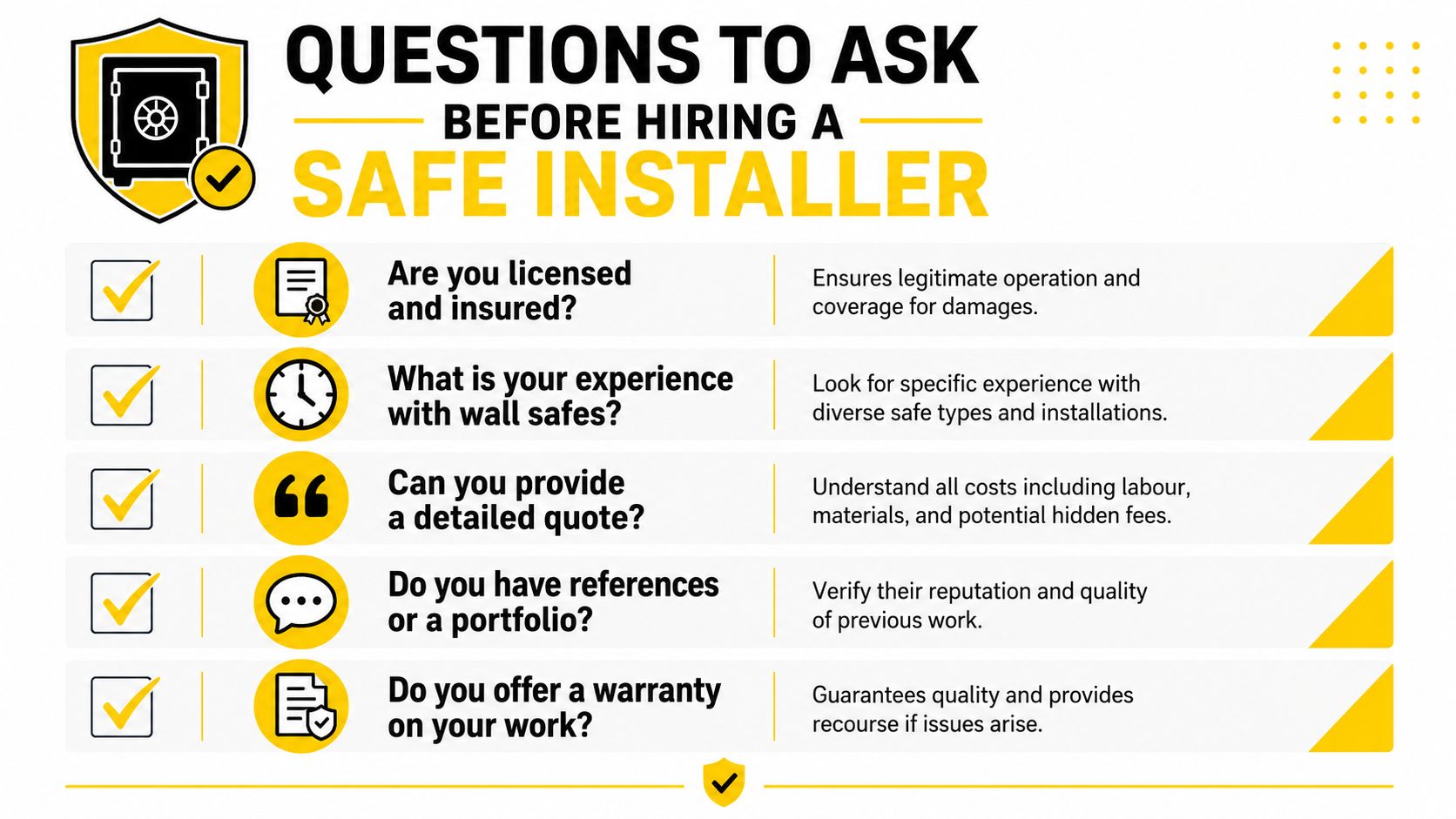
Questions to Ask Before Hiring a Safe Installer
A good quote starts with good questions. Homeowners don't need trade jargon. They just need clear answers about how the safe will be fitted, what the installer has allowed for, and whether the person doing the work is properly qualified.
Ask about licensing and cover
Start with the basics.
A homeowner should ask whether the installer is licensed and insured, and whether safe installation is regular work for them or just an occasional add-on. Wall safes sit at the intersection of security work and building awareness. That combination matters.
Ask how the safe will be anchored
This question tells you quickly whether the installer understands the job.
If the answer is vague, that's a warning sign. The installer should be able to explain what they expect to fix into, how they'll deal with stud spacing or masonry, and what happens if the wall cavity isn't as simple as hoped.
Ask what the quote includes
This prevents arguments later.
A useful checklist looks like this:
- Labour scope: does the quote include cutting, fitting, anchoring and making the unit level?
- Materials: are fixings, shims or support materials included if needed?
- Wall contingencies: what happens if the wall type turns out to be more difficult than expected?
- Final finish: what will the homeowner see when the job is done, and what won't be included?
- Warranty on workmanship: if something shifts or wasn't fitted correctly, what support is offered?
If an installer can't explain the fixing method in plain English, trust is going to be thin once the wall is opened.
Ask about experience with your kind of home
This matters more on the North Shore than many people realise.
A contractor who mostly works on light internal stud walls may not be the right fit for an older brick house. The right question isn't “Do you install safes?” It's “Have you installed them in homes like this one?”
For publishing, this kind of article should also carry Article schema so search engines can understand it properly. That's a technical site task, but it helps the content do its job.
If you're in Gordon, St Ives, Wahroonga, Turramurra or elsewhere on Sydney's North Shore and want a clear quote on your wall safe installation cost, speak with Lock, Stock & Barrel Locksmiths. The business is a father-and-son Master Locksmith service based in Turramurra, and homeowners can call to discuss the wall type, the safe they've chosen, and whether the job suits a standard install or a more involved brick-wall fitment.