- 24 Hour Emergency Services
- Servicing Sydney's North Shore
- View On Map

-
Mail Us On
info@lsblocksmiths.com.au
-
Make a Call
0411 700 072
- View On Map
- 24 Hour Emergency Services
- Servicing Sydney's North Shore
- View On Map
-
Mail Us On
info@lsblocksmiths.com.au
-
Make a Call
0411 700 072
- Contact Us
Commercial Key Cutting in Hornsby NSW: A Business Guide

Lock, Stock & Barrel Locksmiths
On July 8, 2026
A lot of Sydney businesses only think about keys when something goes wrong. A staff member leaves and nobody knows what they had. A cleaner has a copy that was never signed out. The front door key works one day and jams the next. Then someone asks the nearest hardware counter to “just cut another one”, and a small problem turns into a lock, access, and liability problem.
That's where commercial key cutting parts ways with simple duplication. In a business, strata site, medical suite, warehouse, school or retail shop, a key isn't just a shaped bit of metal. It's part of an access system. It controls who gets in, where they can go, and whether the business can prove that control if something goes wrong.
Your Guide to Commercial Key Management
A messy keyring usually points to a messy system.
One common example is the office that's grown over time. The original front door key was copied years ago. Then came a side entry key, a storeroom key, a gate key, and a cabinet key. Staff changed. Tenants rotated. Contractors came and went. Nobody kept a proper record, and now nobody's certain how many copies exist.
That situation isn't unusual. It's also why commercial key cutting should be treated as part of key control, not as a quick errand.
Where businesses usually get caught out
A business owner will often focus on the obvious issue, which is replacing a missing key. The harder problem sits underneath it. If there's no register, no signing authority, and no consistent system for who can request copies, the site loses control of access long before a lockout happens.
A practical key system needs to answer a few basic questions:
- Who holds each key: not roughly, but by name or role.
- Which doors that key opens: especially where staff access should be limited.
- Who can approve new copies: not every supervisor or team member.
- What happens after staff turnover: whether keys are returned, cancelled, or the lock is rekeyed.
For many businesses, the first improvement is tightening procedure. A useful starting point is keeping a written process and key register, which is covered well in these key control tips for businesses.
Practical rule: If nobody can say exactly how many keys exist for a premises, the problem isn't the key. It's the lack of control.
Why commercial key cutting matters
In Australia, basic key duplication isn't a protected activity, so retailers can cut ordinary keys. That makes many business owners assume all key cutting is much the same. It isn't. Commercial work often involves tighter tolerances, better hardware knowledge, and more disciplined authorisation.
The difference shows up in day-to-day operations. A retail-cut copy might seem fine at the counter. In a busy office or strata site, that same key can wear faster, drag in the cylinder, or create uncertainty about who can reproduce it again.
Commercial key cutting works best when it's tied to a broader plan. That can be as simple as standardising keys for a small office, or as detailed as managing a restricted master key system across multiple tenancies.
More Than Just a Copy of a Key
A residential key is a bit like a single password. It opens one thing, or a small number of things, and that's usually enough for a home.
A commercial key system is closer to user permissions in software. One person needs access to the front door only. Another needs the office and storeroom. A manager may need access across the whole site. The key isn't just opening a lock. It's carrying a level of authority.
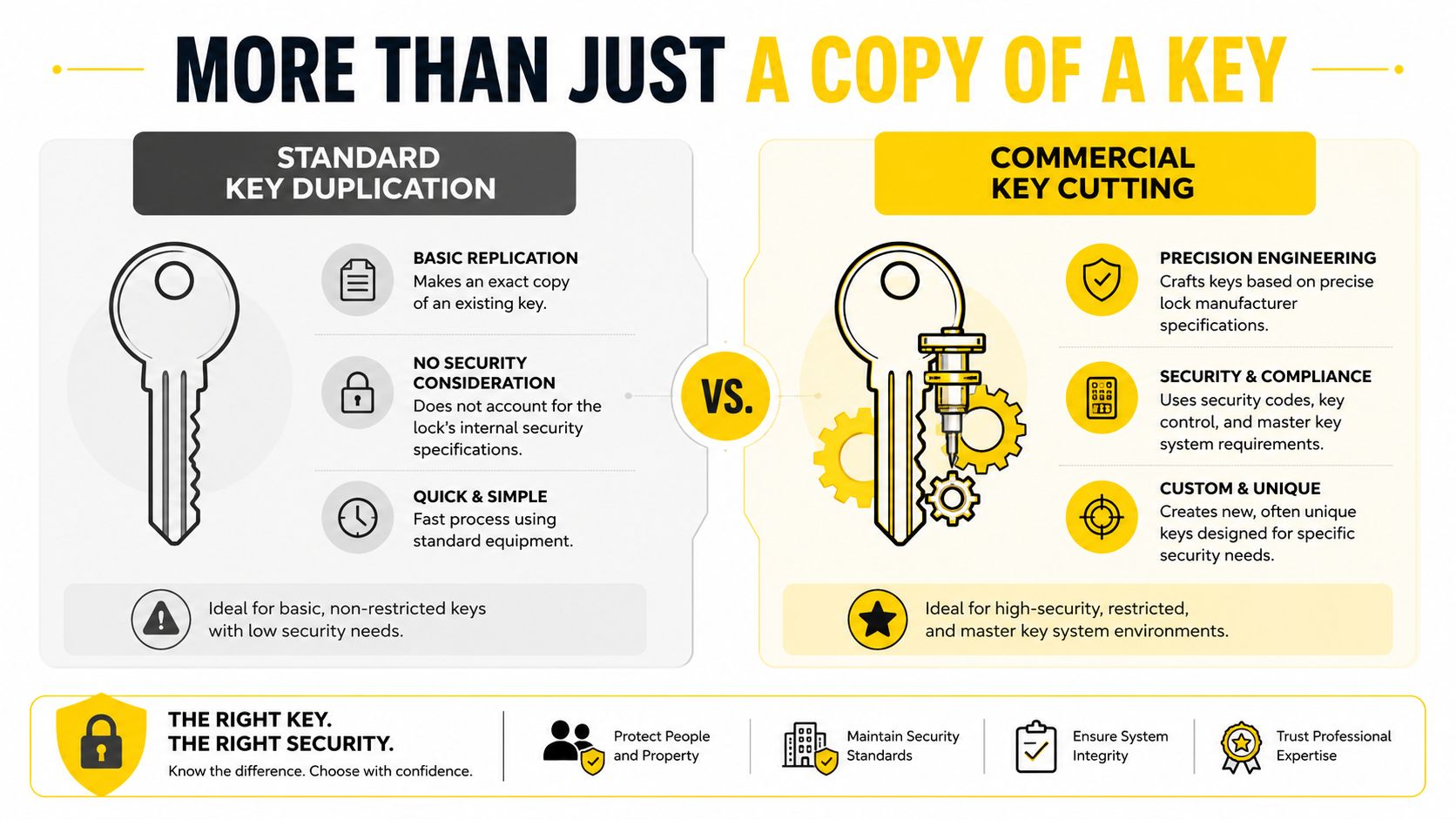
A domestic copy and a commercial key aren't the same job
Standard duplication usually means tracing an existing key and cutting the same pattern onto a blank. That can work for a simple household lock where convenience matters more than controlled access.
Commercial key cutting often involves a different standard of work:
- Correct blank selection: the blank has to match the cylinder and system, not just look close enough.
- Closer cutting tolerances: commercial hardware is less forgiving when the cut is off.
- System awareness: the key may belong to a master keyed or restricted setup.
- Authorisation checks: some keys should never be copied on request alone.
Why the cylinder matters
The lock cylinder is the part inside the lock that reads the cuts on the key. Think of it as a row of small internal checkpoints. If the cuts are right, the cylinder turns. If they're wrong, even slightly, the key may feel rough, stick, or fail.
That's why “near enough” isn't good enough in commercial settings.
A hardware-store copy can be acceptable for a basic, non-critical key. It's usually the wrong choice for premises where staff turnover, after-hours access, shared tenancy, or insurance concerns are involved. The risk isn't only a failed key. The risk is poor accountability.
Cheap cutting often costs more later
The cheapest copy can become the most expensive key if it causes:
| Issue | What it leads to |
|---|---|
| Rough operation | Wear inside the lock cylinder |
| Inaccurate cut | Repeat call-outs and key failures |
| Wrong blank | Weak fit and shortened hardware life |
| Uncontrolled duplication | More copies in circulation than expected |
A commercial key should suit the lock, the access plan, and the site's risk level. If one of those is ignored, the key is only half done.
That's the main divide. Retail duplication aims to make another key. Professional commercial key cutting aims to preserve function, control, and security over time.
The Commercial Key Cutting Process
A Sydney business usually notices key cutting quality when something goes wrong. Staff are waiting at a back door at 6:30 am, the key turns only if it is wiggled, and now the question is whether the problem is the copy, the cylinder, or both. That is the difference between a quick retail duplicate and commercial locksmith work. One aims to produce another key. The other aims to preserve reliable access, system control, and a clear record of who should have what.

The process starts with identifying the job properly. A locksmith checks whether the key is a straight duplicate, a key that should be cut from code, or part of a larger access system that needs to stay consistent with site records. On a commercial site, that distinction matters because one bad copy can waste staff time, wear out hardware, and create an access record nobody can trust.
Duplicating a sound original
If the original key is clean, unworn, and known to work correctly, duplication is usually straightforward. The right blank is matched to the keyway, the cuts are traced or entered into the machine, and the finished key is dressed so there are no burrs left to scrape inside the plug. A proper test follows. The key should enter cleanly, turn without force, and operate the lock the same way as the original.
That last part is where cheap cutting often falls short. Retail counters are built for speed. Commercial locksmith work is built around fit, function, and whether the copy will still be working properly after months of daily use on a busy door.
When copying makes the problem worse
A worn key should not be used as the pattern unless there is no better option. If the shoulders are rounded, the blade is thinned, or the key only works with pressure, a straight duplicate often reproduces the wear instead of the correct original shape.
The result is predictable. The new key may work badly from day one, or it may seem acceptable for a week and then start sticking as the cylinder struggles to read an inaccurate cut. That is one reason businesses end up paying twice. First for the cheap copy, then for the locksmith call-out when the lock starts playing up.
The Master Locksmiths member directory article on how locksmiths create accurate keys notes that worn keys can lead to poor duplication outcomes and extra stress on the lock. In practice, if a key is visibly tired, cutting from code or decoding the cylinder is often the better job.
For businesses using structured access, a worn key can also distort the record of the system. That becomes a bigger issue once the site uses master keyed access or restricted profiles. Businesses comparing open and restricted key systems for commercial access control should pay attention to that point, because uncontrolled copying and poor source keys both weaken accountability.
Workshop cutting versus mobile service
Both options have a place, and the right one depends on the job.
Workshop cutting suits larger batches, specialist blanks, record checks, and jobs where the locksmith needs to cross-check against an existing master key chart. It is usually the better setting for planned works, new staff issue packs, and cleaning up a site that has accumulated too many inconsistent copies over time.
Mobile service suits live problems. If a business in Hornsby or elsewhere in Sydney has a key failing on the door, the locksmith can test the key in the actual lock, inspect the cylinder, and see whether the fault sits with the cut, the hardware, or the whole access setup. Sometimes the right answer is a new key. Sometimes it is rekeying. Sometimes the lock itself is worn enough that another duplicate is just delaying a proper repair.
That practical judgment is what separates trade work from counter copying. A commercial key is tied to security, downtime, and liability, not just whether it opens the door once at the shop bench.
Understanding Master Key and Restricted Systems
Most businesses don't need more keys. They need fewer keys that are better organised.
That's the purpose of a master key system. It creates a clear hierarchy, so each person gets access appropriate to their role. One cleaner might open common areas only. A manager might open the office and stockroom. The site owner might hold the top-level key that opens the full system.
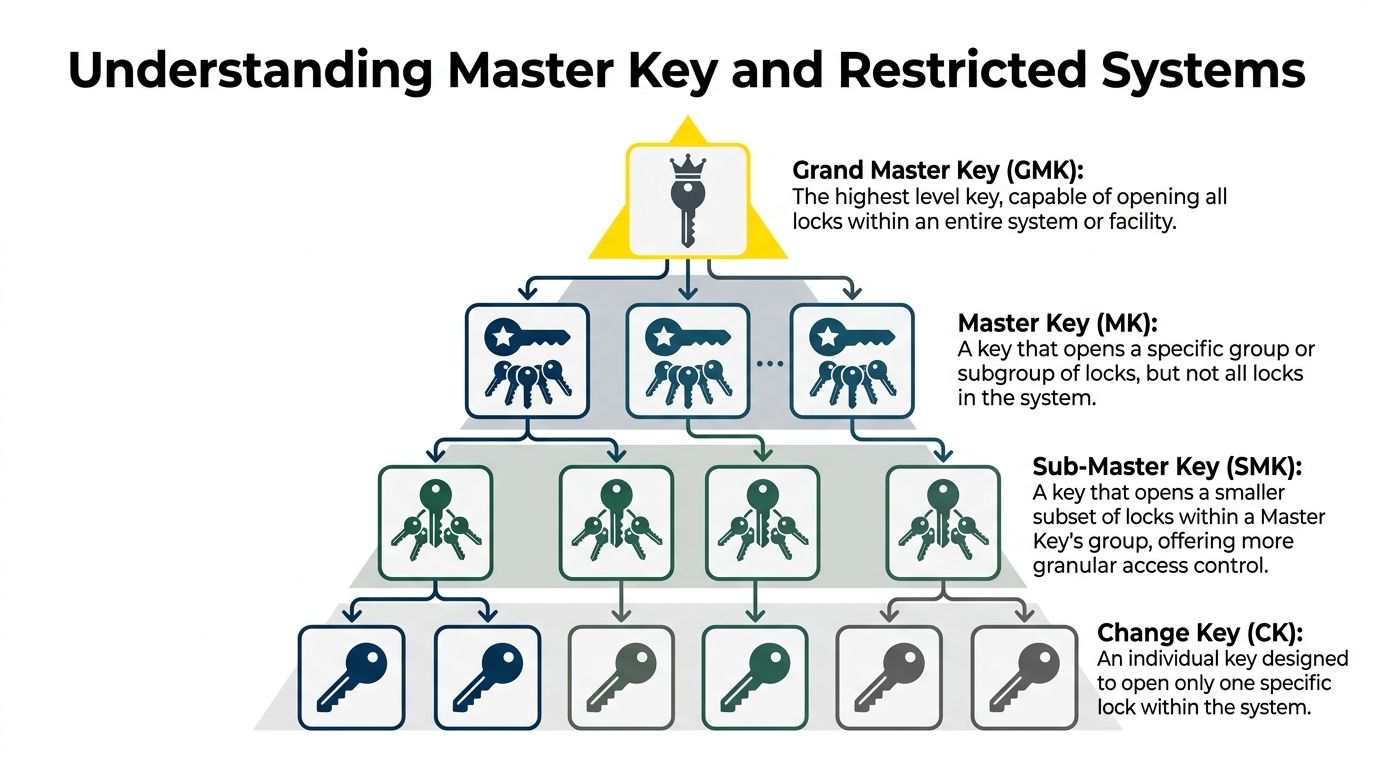
How the hierarchy works
The simplest way to think about it is like building access permissions.
- Change key: opens one lock or one door only.
- Sub-master key: opens a smaller group of locks.
- Master key: opens a larger section, such as one tenancy or department.
- Grand master key: opens all locks within the broader system.
That structure keeps daily access practical without handing every user unrestricted entry.
What “restricted” actually means
Many businesses are often mistaken: a key stamped “Do Not Copy” isn't automatically protected. In many cases, that stamp is just a request. It doesn't create legal restriction by itself.
A restricted key system is different. Control comes from the system itself. The keyway, blanks, records and authorisation process are set up so duplication is limited to approved channels. For a business, that's what turns key cutting from a casual retail task into managed security.
The Locksmiths Guild of Australia's Code of Practice for restricted systems states that every key must be serially numbered to prevent unauthorised duplication and ensure traceability. It also requires emergency access to restricted systems to involve verified customer ownership and prior approval from the responsible locksmith. Combined with proprietary key blanks, that means these keys can't be reproduced on standard equipment.
For businesses that need tighter control, the practical differences are significant:
| Standard open system | Restricted system |
|---|---|
| Copies may be easier to obtain | Copies are tied to authorisation |
| Key records are often loose or absent | Keys are tracked by serial number |
| Common blanks may be widely available | Proprietary blanks limit duplication |
| “Do Not Copy” may have little effect | System rules carry real control |
A fuller breakdown sits in this guide to restricted key systems for businesses.
Restricted doesn't mean impossible to manage. It means access is deliberate, recorded, and harder to abuse.
For strata, schools, medical premises and multi-tenant offices, that level of control is often the difference between confidence and guesswork.
Authorisation Security and Legal Duties
The strongest key system in the world can still be undermined by weak process.
If a business lets anyone request keys, nobody checks returns after staff leave, and contractors borrow keys informally, the hardware can't fix that. Commercial key cutting only stays secure when the business controls authorisation properly.
A simple policy prevents most avoidable problems
A practical key control policy doesn't need to be complicated. It needs to be clear and followed.
The essentials are usually:
- A key register: record each issued key, who has it, and what it opens.
- An authorised signatory list: limit who can approve new keys or rekeys.
- A return process: collect keys at offboarding, tenancy changes, or contract completion.
- A lost-key response plan: decide in advance when a missing key means rekeying, not waiting.
This matters even more where multiple parties share access. In strata-managed sites, medical buildings, retail centres and mixed-use premises, one casual copy can affect more than one tenancy.
Locksmiths have a duty too
A proper commercial locksmith doesn't just cut whatever is handed across the counter. Authorisation checks are part of the job, especially for restricted systems and sites with shared risk.
That protects the client as much as the locksmith. If there's a dispute later about who approved access, written records and a clear chain of authority matter.
Security problems often start with convenience. “Just this once” is how unmanaged keys spread.
Related compliance issues on strata sites
Keys and locks also intersect with broader building obligations. In NSW, all residential strata buildings must be fitted with window safety devices that restrict the maximum window opening to less than 12.5 cm (125 mm), as outlined in this NSW window safety overview.
That requirement matters because locksmiths are often the tradespeople handling the keyed hardware and access control around these installations. On strata and mixed-use properties, the discussion isn't only about front doors and common entries. It can also involve compliant window safety devices, restricted keys for common-area access, and documented control over who receives them.
For owners corporations and strata managers, the practical takeaway is straightforward. A key register and an approval process aren't admin for admin's sake. They reduce risk, tighten accountability, and make it easier to respond when something changes at short notice.
Costs Turnaround and Emergency Services
A Sydney business usually notices the full cost of key cutting on a bad day. A staff member cannot open at 7:45 am. A copied key sticks in the front door cylinder. A missing key turns into an urgent question about who still has access.
Price matters. Turnaround matters. The problem is that commercial key work is rarely a simple copy-and-go job.
A shopfront key cut at a retail counter may be fine for a letterbox or a basic domestic lock. Commercial sites are different. Office doors, restricted systems, shared tenancies, and master keyed hardware all need tighter tolerances and better record keeping. If the cut is rough, the lock wears faster, staff lose time at the door, and the cheap spare starts costing money.
What affects price
Commercial key cutting costs change with the job in front of the locksmith. The main variables are practical ones:
- Key type: standard open-section keys are simpler than restricted or high-security keys.
- What you bring in: a clean original is easier to copy than a worn key that has already been copied several times.
- System size: one key for one door is a different task from maintaining a master keyed site.
- Authority checks: some jobs stop until the locksmith confirms the request came from the right person.
- Site work: rekeying, cylinder changes, lock servicing, and testing doors on site add labour and travel.
- Timing: after-hours callouts and urgent attendance cost more because they interrupt scheduled work.
That spread is why two jobs that both sound like “cut me a key” can land in very different price brackets.
Why the cheapest option often costs more
In trade terms, a key is only as good as the pattern it was cut from and the machine that cut it. Copy a worn key on a retail duplicator and the next key often carries the same mistakes, sometimes with a few new ones added. The result is familiar to anyone who manages a site. The key works in one door, jams in another, and needs to be wiggled every time.
That does not just waste a few seconds. It puts extra wear on cylinders, creates nuisance lockouts, and sends staff back out for another copy. On a business site with frequent use, those small faults add up quickly.
A professional locksmith will often stop and ask a better question first. Do you need another copy, or has the system reached the point where the cylinder should be decoded, recut properly, or rekeyed? That is the difference between buying the cheapest metal today and fixing the access problem properly.
Turnaround depends on risk, not just speed
Some jobs are quick. If the key is standard, the original is in good condition, and authority is clear, a locksmith can usually turn it around fast.
Other jobs take longer for good reasons. Restricted blanks may need to be sourced through the correct channel. A worn key may need decoding rather than copying. A master key system may need checking against records so one new key does not create trouble across multiple doors.
Emergency work changes the calculation again. If a lost key is tagged with the business name or site address, cutting another key is often the wrong response. The safer move may be to rekey affected doors and control who gets the replacements. For urgent situations like that, these 24/7 mobile locksmith emergency lockout solutions show why fast attendance matters, but proper site security matters more.
For most Sydney businesses, the practical choice is straightforward. Retail cutting can suit low-risk spare keys. Commercial locksmith work is for jobs where accuracy, accountability, and liability matter after the key leaves the machine.
Choosing a Qualified Commercial Locksmith
For business work, the right question isn't “Who can cut keys?” It's “Who can protect the site while doing it?”
In Australia, basic duplication isn't a protected activity. That's why retailers and other non-locksmith operators can offer simple copies. But commercial work goes beyond making metal match metal. It often involves authorisation, high-security hardware, restricted systems, and rekeying decisions that affect the whole premises.
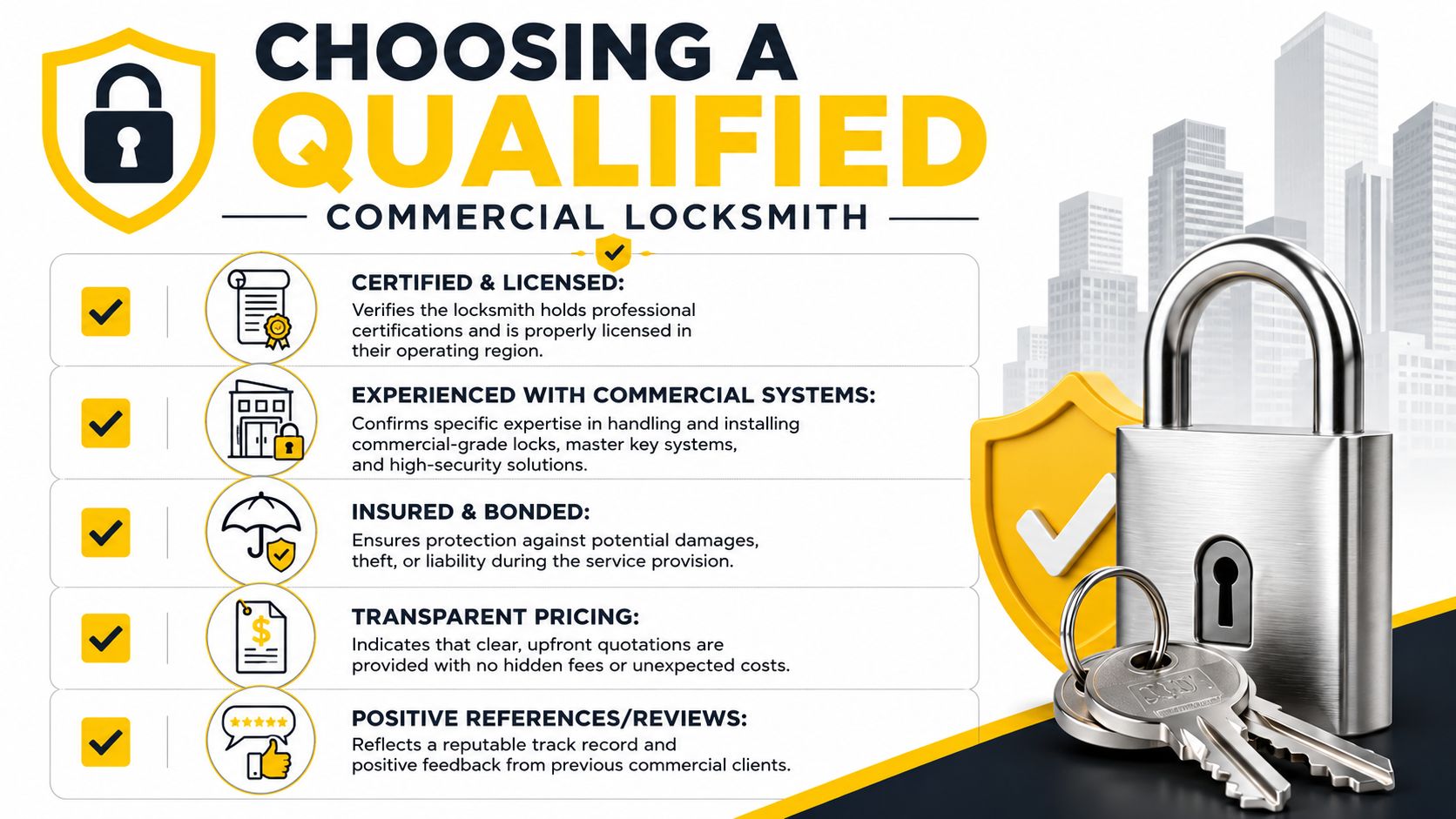
What separates a proper commercial locksmith from a retail cutter
The practical dividing line is scope and accountability.
According to this discussion of locksmith licensing and protected activities in Australia, basic duplication isn't a protected activity, which is why retailers can participate. The same source notes that high-security work requires a Class 2 security licence, which separates professional Master Locksmiths from unlicensed operators.
That distinction matters because a business may need more than a duplicate. It may need someone to assess whether the lock should be rekeyed, whether the key belongs to a restricted system, whether the authorisation is valid, or whether the access structure itself is flawed.
A practical hiring checklist
When choosing a locksmith for commercial key cutting, look for evidence of fit for purpose:
- Licence status: a current security licence for the type of work being carried out.
- Commercial experience: familiarity with offices, strata, retail, schools and shared-access sites.
- Restricted system knowledge: not every operator handles controlled key platforms properly.
- Mobile capability: useful when locks need testing, decoding, or rekeying on site.
- Clear records and approvals: especially where more than one person can request work.
A qualified operator should also understand the difference between solving the immediate request and solving the actual problem. If a key keeps failing, another copy may not be the right answer. If staff turnover is high, a better hierarchy or rekey schedule may matter more than a handful of extras.
The best locksmith for a business is usually the one who asks harder questions before cutting anything.
For business owners in Hornsby NSW, that's the standard worth holding. A key affects access, liability, and continuity of trade. It shouldn't be handed over as a casual commodity.
For businesses in Hornsby and across Sydney's North Shore, Lock, Stock & Barrel Locksmiths provides commercial locksmith work backed by Master Locksmith expertise, mobile service, and NSW Police Master Licence No. 408 659 677. For advice on commercial key cutting, restricted systems, rekeying after staff changes, or a quote for site-specific work, call the team or submit a quote request through the website.