- 24 Hour Emergency Services
- Servicing Sydney's North Shore
- View On Map

-
Mail Us On
info@lsblocksmiths.com.au
-
Make a Call
0411 700 072
- View On Map
- 24 Hour Emergency Services
- Servicing Sydney's North Shore
- View On Map
-
Mail Us On
info@lsblocksmiths.com.au
-
Make a Call
0411 700 072
- Contact Us
Cylinder Lock Replacement in Hornsby NSW: A Guide

Lock, Stock & Barrel Locksmiths
On July 2, 2026
Keys go missing. New owners move in. A front door starts feeling rough and unreliable, then one day the key won't turn cleanly. That's usually when cylinder lock replacement becomes urgent instead of something to deal with later.
On Sydney's North Shore, that job comes up often in older brick homes, newer townhouses, strata units, and small commercial tenancies alike. Some doors only need a simple rekey. Others need a properly sized new cylinder so the lock works smoothly and the door stays secure.
Your Guide to Cylinder Lock Replacement on the North Shore
A lot of homeowners in Hornsby hit the same moment. They've just picked up the keys to a new place, or they've realised a spare key is unaccounted for, or the front door lock has become stiff enough that everyone in the household has their own trick for getting it to work.
That's the point to act.
A cylinder lock replacement sounds more technical than it really is. In plain terms, it means changing the part of the lock that accepts the key, without automatically replacing the entire lock body inside the door. It's a common fix, and when it's done properly, it restores security without unnecessary work.
The wider shift toward better home security isn't slowing down. The global cylindrical lock market is projected to reach USD 7.01 billion by 2032 according to Data Bridge Market Research's cylindrical lock market outlook. That lines up with what's happening locally. More Sydney homeowners are upgrading tired hardware instead of putting up with it.
For residents looking for a local service area option, Hornsby locksmith support on the North Shore is one place to start.
Why this job matters early
Leaving a questionable lock in place usually doesn't save trouble. It often creates more of it.
- After moving in: Old keys may still be out there with former owners, tenants, trades, or neighbours.
- After losing keys: If keys were attached to anything that identifies the home, the risk changes straight away.
- When the lock feels worn: Stiff turning, inconsistent locking, or a key that only works “just right” are all warning signs.
Practical rule: If the lock is on the main entry door and there's any doubt over key control or reliability, treat it as a security issue, not a minor maintenance issue.
What Exactly Is a Cylinder Lock
Many believe the whole front door lock is one piece. It isn't.
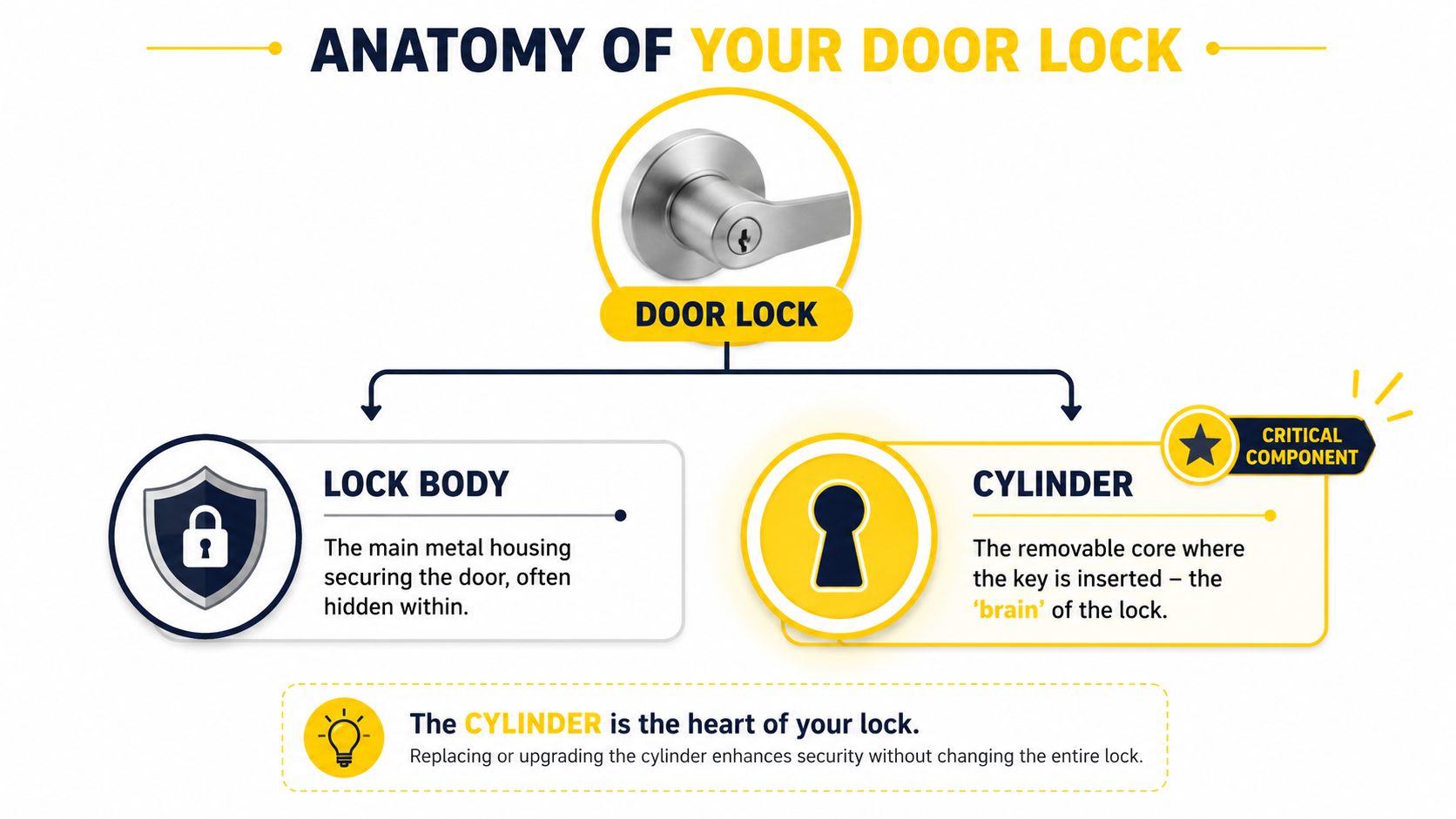
The lock body is the larger mechanism fitted into the door. The cylinder is the smaller removable part where the key goes in. That cylinder contains the pin setup that matches your key. If the cylinder changes, the working key changes too.
That's why cylinder lock replacement is often the neatest solution. If the main lock body is still sound, there's no need to replace more hardware than necessary.
The common cylinder types seen locally
On the North Shore, a few setups turn up again and again.
Euro cylinders are common in newer homes, many units, and a lot of replacement hardware. They're easy to identify by their long profile shape.
Oval cylinders still appear on plenty of existing doors, especially where older style mortice locks remain in good condition.
Some doors also have hardware that looks standard from the outside but has been altered over time. That matters because replacement isn't just about matching shape. It's about matching the exact dimensions and how the cylinder sits through the door furniture.
Why size matters more than most people realise
The single most important measurement is the exact cylinder length.
According to ABUS guidance on replacing and maintaining a door cylinder, the wrong length can stop the internal cam from engaging the lock properly. In practical terms, that can leave the bolt failing to throw properly, make the lock hard to operate, or leave the door insecure.
A cylinder that protrudes too far can also create a weakness at the face of the door. A cylinder that sits too short may not operate the lock body as intended.
A front door lock can look “close enough” and still be wrong. With cylinders, close enough isn't good enough.
A simple way to think about it
A good analogy is this:
| Part | What it does |
|---|---|
| Lock body | Holds the main mechanism that secures the door |
| Cylinder | Reads the key and tells the lock body to operate |
| Cam | Connects the cylinder movement to the lock mechanism |
If the cylinder is the wrong size, the whole chain is off. That's why a proper cylinder lock replacement starts with measuring before ordering parts, not the other way around.
Clear Signs You Need a Lock Replacement
Not every lock problem arrives as a lockout. More often, the signs build up slowly and the household works around them until the lock finally stops cooperating.
The easiest way to judge it is by looking at what the door is doing, not what the key is doing alone.
Everyday signs that shouldn't be ignored
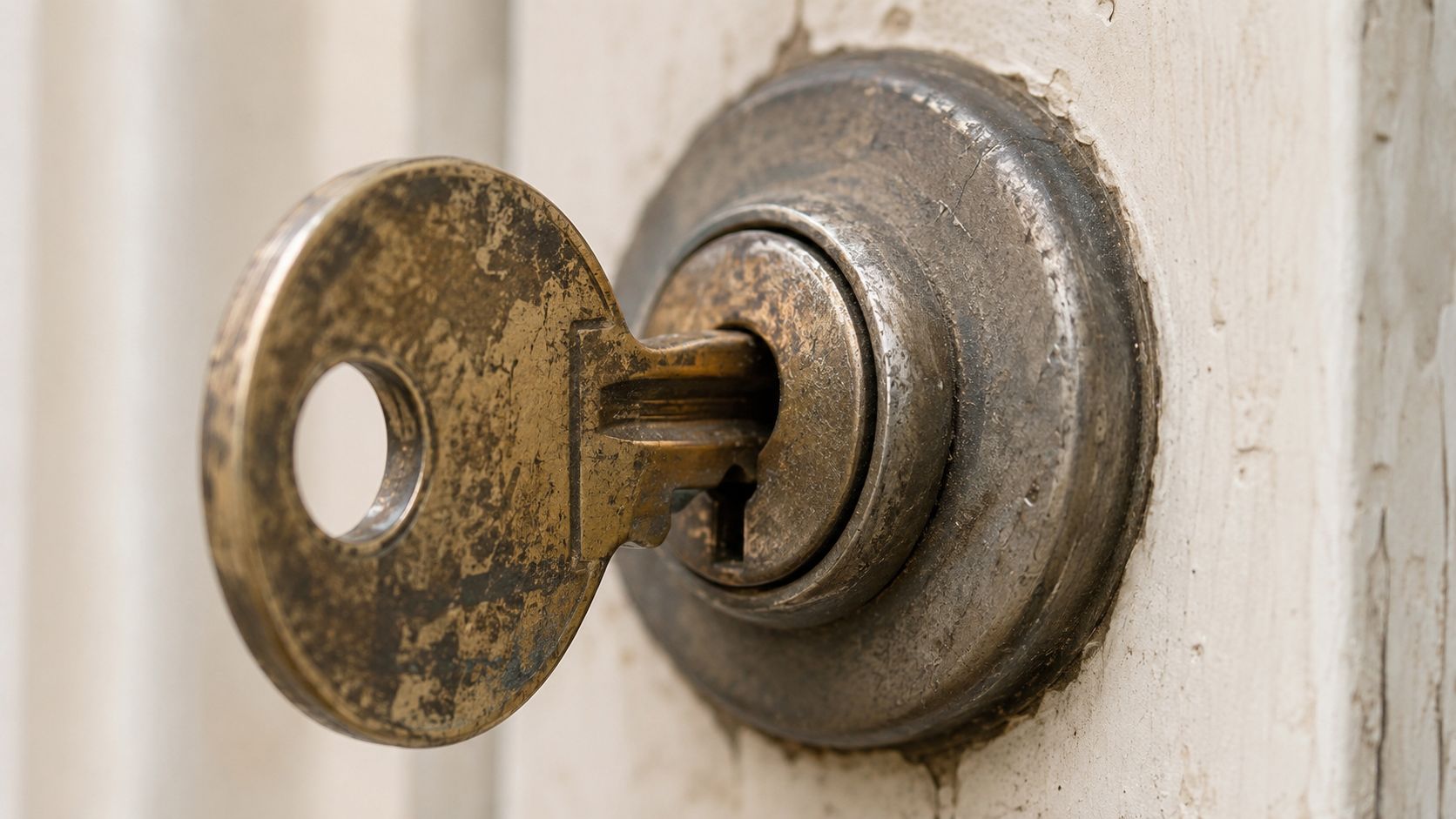
- The key sticks or drags: If the key needs jiggling, backing off, or extra pressure, internal wear may already be developing.
- The lock only works from one side properly: That can point to a worn cylinder, poor alignment, or a sizing issue from a previous replacement.
- The key has become visibly worn: Keys don't usually wear badly unless the lock is also creating friction.
- The door has become hard to secure at night: If someone has to lift, pull, or push the door to get the key to turn, the setup needs checking.
Situations where security matters more than convenience
A change in circumstances often matters more than the lock's physical condition.
Moving into a property is the obvious one. So is losing a key set, especially if there's any chance your address can be linked to those keys. After a relationship change, tenant change, or staff change, key control can become murky very quickly.
Then there's the upgrade question. Some homeowners don't have a failed lock at all. They have an older cylinder that no longer gives them confidence.
If the question is “could someone else still have a key?”, the answer isn't to wait and see.
Replace or rekey
Sometimes a full cylinder lock replacement isn't necessary. If the existing hardware is in good condition and the issue is only who has copies of the key, rekeying can be the smarter option.
Replacement usually makes more sense when:
- the cylinder is worn
- the operation is rough or unreliable
- the door hardware is outdated
- a security upgrade is the primary goal
Rekeying suits a lock that still works well but needs old keys cancelled out.
DIY or Call a Pro An Honest Comparison
DIY lock videos make cylinder changes look simple. On a basic internal door, sometimes they are. On a main entry door, the margin for error is much smaller.
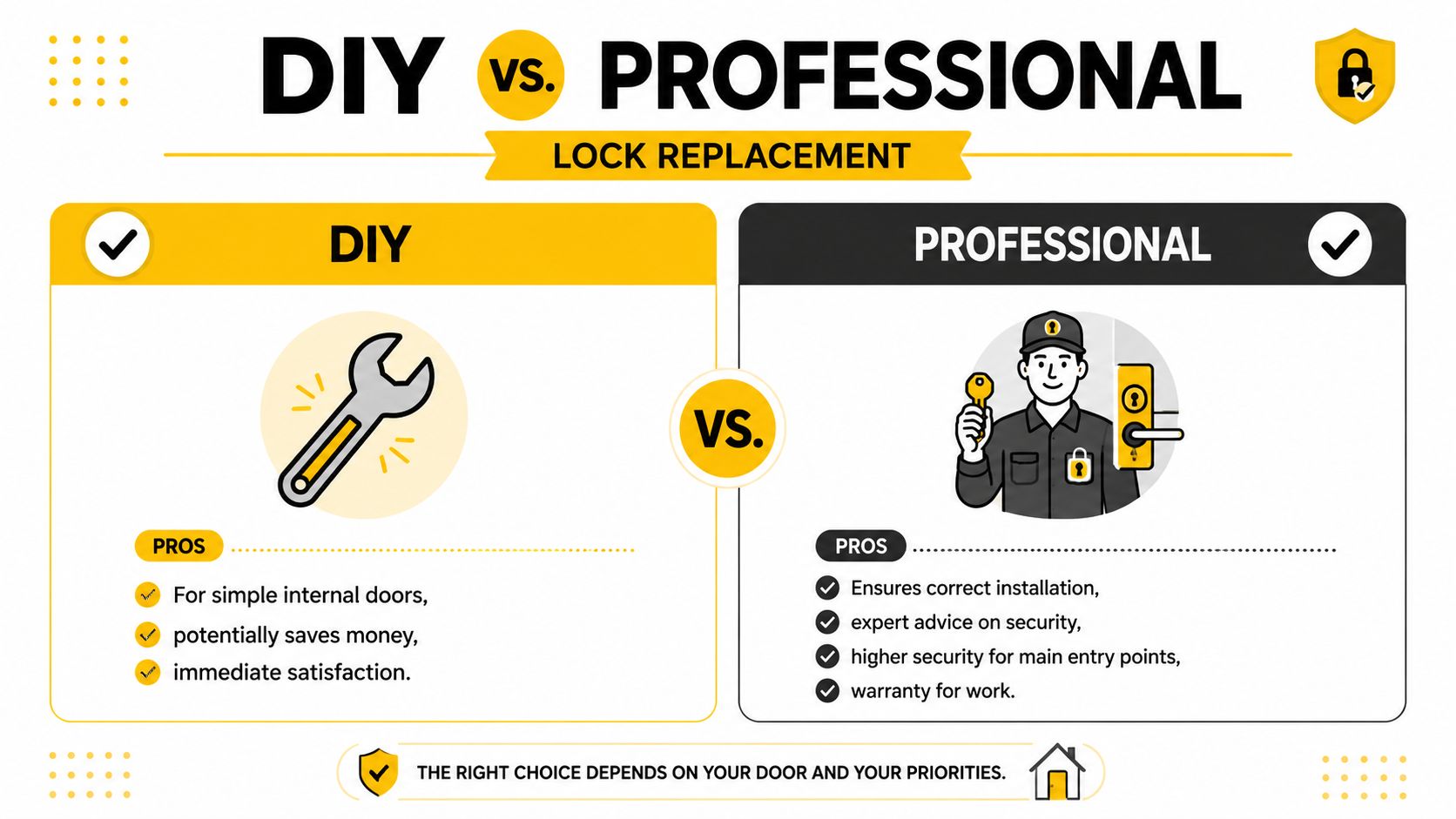
A homeowner can remove a cylinder. The harder part is knowing whether the new one is the right profile, the right length, properly seated, and suitable for the door's actual security role.
A useful primer before making that call is this guide on what to know before calling a locksmith in Sydney's North Shore.
Where DIY can work
DIY can be reasonable when the job is low-risk and the consequences of getting it wrong are minor.
| Situation | DIY may suit |
|---|---|
| Internal privacy door | Yes, if it's a straightforward hardware swap |
| Non-critical storage room | Sometimes, if matching the part is simple |
| Main entry door | Usually not the best place to learn |
| Strata or multi-tenant setup | Better handled professionally |
What often goes wrong
The most common problem isn't dramatic failure. It's a lock that sort of works.
The key turns, but not cleanly. The cam engages, but only if the fixing screw is under just the right tension. The cylinder sits a bit proud of the escutcheon. The door locks today, then binds next week as things settle.
Cheap replacement hardware can also create longer-term trouble. A low-grade cylinder may be harder to key alike, harder to integrate into a master key arrangement, or less durable under frequent use.
What a professional brings to the job
Professional fitting isn't just about carrying tools. It's about judgment.
That includes checking the cylinder length, confirming how far the cylinder should sit, making sure the door alignment isn't the primary issue, and spotting when the issue is bigger than the cylinder itself. On older North Shore homes, especially, the visible lock problem sometimes starts with movement in the door, frame, or strike.
The cheapest fix is only the cheapest if it works properly the first time.
Understanding Costs and Security Considerations
For most homeowners, cost comes down to a simple question. Is it worth replacing the cylinder, or is rekeying enough?
The answer depends on the condition of the hardware and what problem needs solving. If the cylinder still operates well and the concern is old keys floating around, rekeying is often the efficient path. If the cylinder is worn, unreliable, or due for a security upgrade, replacement is usually money better spent.
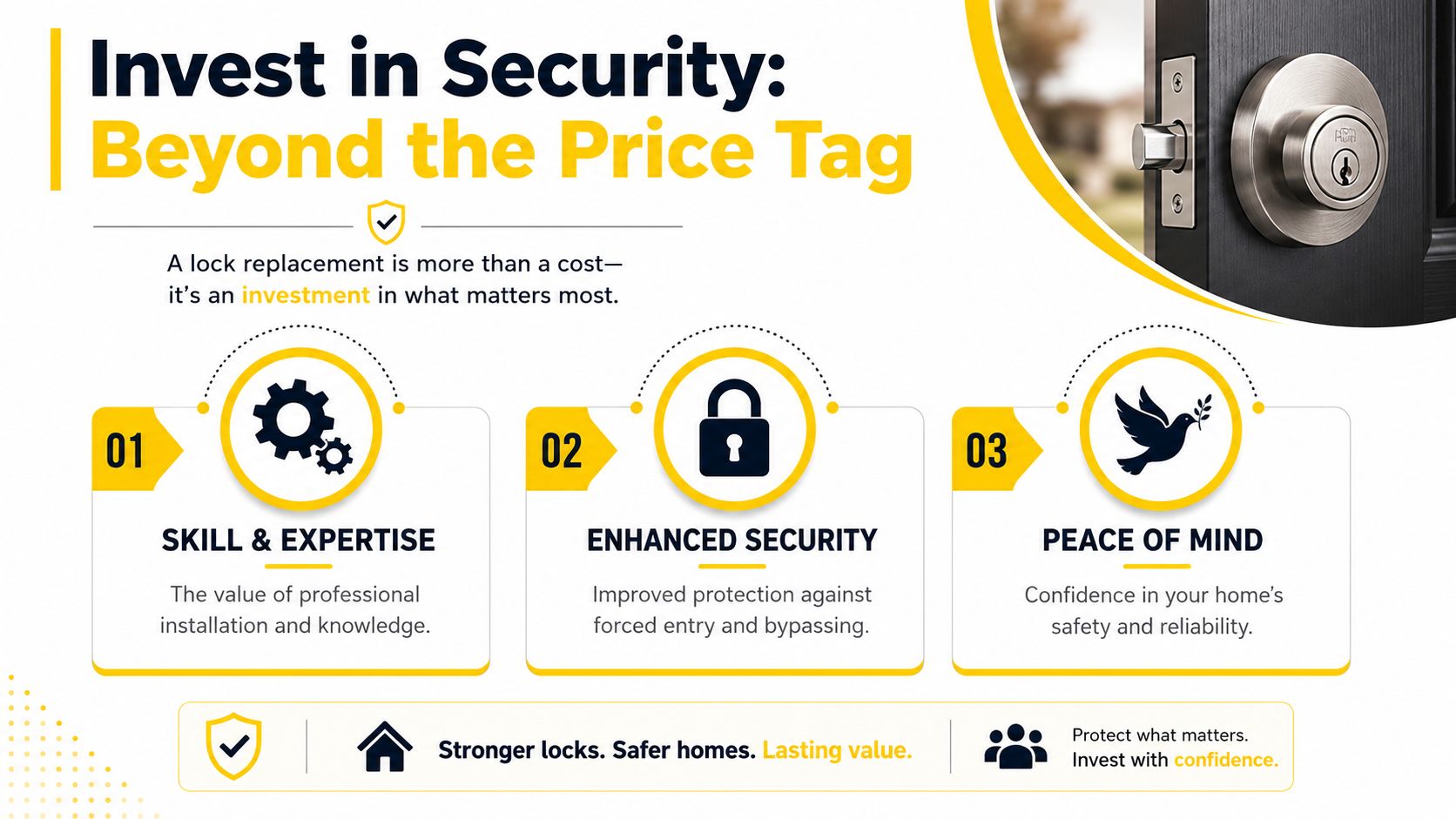
What the typical cost looks like
In Australia, a basic cylinder lock replacement costs around $70 to $120 for the part, plus $80 to $150 for professional labour, while rekeying averages $15 to $40 per cylinder according to this Australian guide to door lock replacement costs.
That gap matters. Rekeying is clearly cheaper when the existing cylinder is still worth keeping.
But the cheapest line item on the invoice isn't always the best value for the door. If a worn cylinder is already failing, rekeying it doesn't solve the wear. It only changes the key combination.
A typical service call in real terms
A normal front-door job often starts with a quick check of how the lock is operating before anything is removed. If the key is dragging because the door is dropping, replacing the cylinder alone may not fully fix the issue. If the cylinder itself is the problem, the old unit comes out, the replacement is matched, installed, and tested from both sides.
Then come the checks that homeowners don't always see coming but do notice later if they're skipped:
- Smooth operation: The key should enter and turn cleanly without forcing.
- Correct fit: The cylinder shouldn't protrude excessively or sit awkwardly.
- Door function under load: The lock should still work when the door is fully closed, not just when it's open.
- Key handover: New keys need to be checked on site, not assumed.
Security isn't just the hardware
There's also a difference between changing a part and improving security.
A proper cylinder lock replacement should leave the door more reliable, easier to operate, and better suited to the way the property is used. That matters even more on shared entries, rental properties, and homes where key control has become uncertain.
The Lock Stock & Barrel Process What to Expect
When a homeowner books a cylinder job, the process should be straightforward. The door is inspected first, the existing hardware is identified, and the actual problem gets separated from the assumed problem. Sometimes the cylinder is at fault. Sometimes the lock body, door alignment, or strike position is adding to the trouble.
A clear quote should come before the work starts. That matters because lock jobs can vary depending on cylinder type, condition of the existing door hardware, and whether the best answer is replacement or rekeying.
Why standards matter on this kind of job
Professional locksmiths work with compliant replacement hardware for a reason. According to Doric's information on door cylinders and standards compliance, compliant cylinders in the Australian market need to align with standards such as AS 2208 and AS 5030, and rekeyable cylinders are important where master key compatibility matters.
That's especially relevant in strata buildings and multi-tenant properties. A cheap non-rekeyable cylinder may look fine on day one and still create key management problems later.
What homeowners should expect before the van leaves
A proper finish isn't just “the key turns”.
- The operation should feel smooth: No grinding, sticking, or needing a trick to lock up.
- The fit should suit the door: The cylinder must match the door thickness and furniture properly.
- The keying should make sense: If the household needs multiple matching locks, that should be discussed up front.
- The advice should be practical: Homeowners should know whether they've solved a key control issue, a wear issue, or both.
For anyone wondering how a service visit generally unfolds from first phone call to job completion, this page on what happens when you call a locksmith gives a useful overview.
If the front door lock feels unreliable, if keys are unaccounted for, or if a recent move has left doubt over who still has access, it's worth sorting it out before it becomes a lockout or a security problem.
If you need help with a cylinder lock replacement on Sydney's North Shore, Lock, Stock & Barrel Locksmiths can be reached by phone or through an online quote request. As a father-and-son Master Locksmith business based in Turramurra, they handle practical lock work without the run-around, including rekeying, lock repairs, replacements, and urgent attendance when access can't wait.