- 24 Hour Emergency Services
- Servicing Sydney's North Shore
- View On Map

-
Mail Us On
info@lsblocksmiths.com.au
-
Make a Call
0411 700 072
- View On Map
- 24 Hour Emergency Services
- Servicing Sydney's North Shore
- View On Map
-
Mail Us On
info@lsblocksmiths.com.au
-
Make a Call
0411 700 072
- Contact Us
Round Door Lock Repair in Wahroonga NSW

Lock, Stock & Barrel Locksmiths
On August 18, 2026
A round knob can start misbehaving without warning. In a Wahroonga home, the key may turn normally while the knob stays slack, the latch may catch against the strike plate, or the inside handle may stop retracting the latch altogether. Each symptom points to a different part of the doorset, so replacing the cylinder first can waste time and leave the actual fault untouched.
For round door lock repair, the useful question isn't whether the key works. The job is to separate a cylinder problem from a latch, spindle, return spring, fixing, hinge, or alignment problem, then choose repair or replacement based on the condition of the complete lockset. The following checks suit homeowners, tenants, strata residents and small businesses across Sydney's North Shore.
What Is Going Wrong With Your Round Door Lock
A front door in Wahroonga can appear locked, yet the trouble may have nothing to do with the key. If the key turns but the knob doesn't return, attention should move towards the spindle or internal return spring. If the latch catches only when the door is closed, the strike or door alignment deserves inspection. If the key itself sticks, the cylinder and keyway become more likely suspects.
A visible round knob is usually only the operating part of a cylindrical lockset. Behind it sit the latch, spindle, return spring, fixing screws and strike plate. A fault in any one of those parts can feel like a failed lock at the front door.
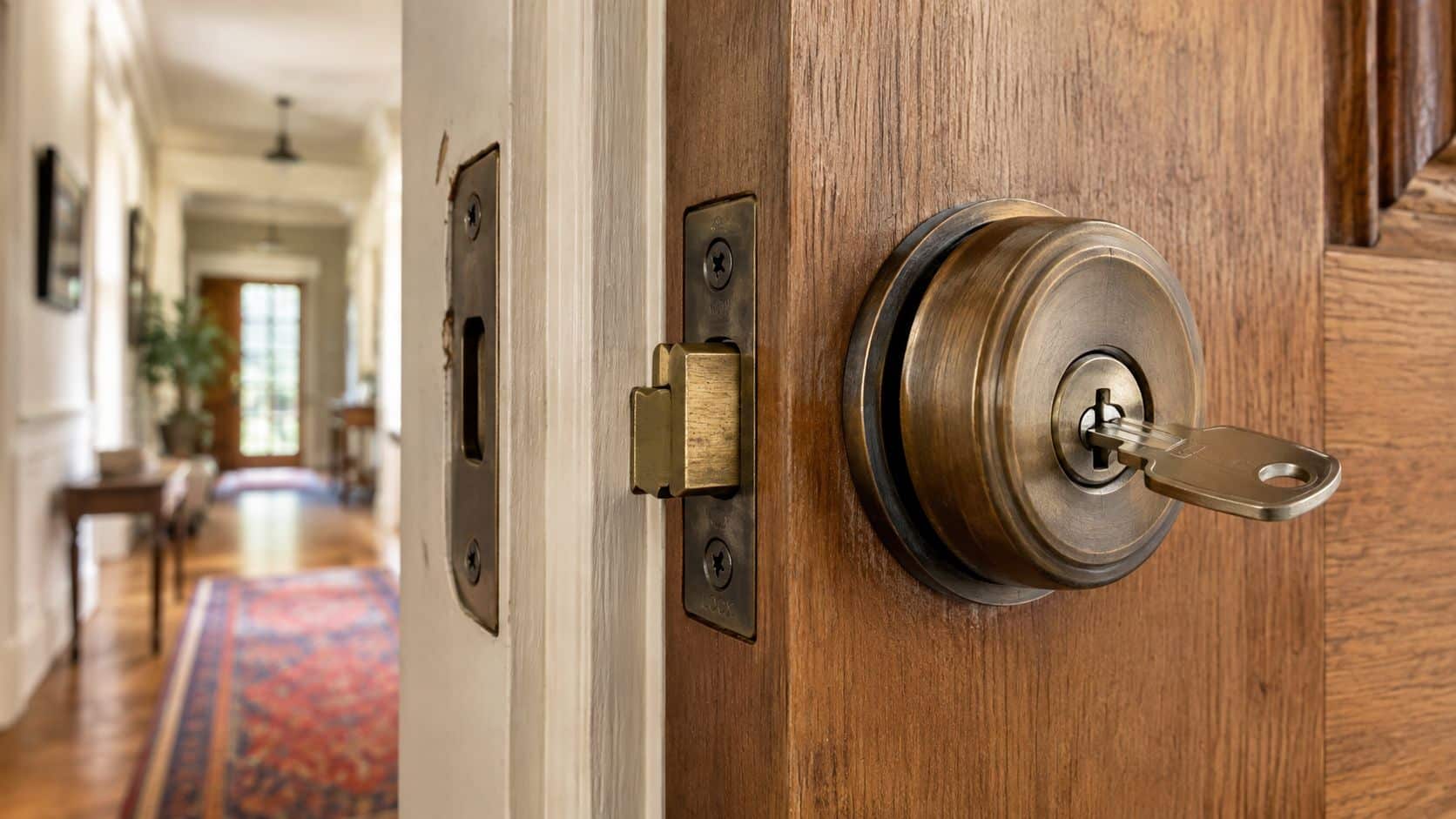
Match the symptom to the likely fault
The first check is observational. With the door open, turn the key and operate the knob, then watch whether the latch retracts fully and whether the knob springs back to its normal position.
- Key turns but the latch doesn't move: The cylinder tail, spindle connection or internal lock body may be disconnected or damaged.
- Knob turns but feels loose: A loose rose, missing fixing or worn spindle may be allowing movement without transferring force.
- Latch works with the door open but binds when closed: The strike opening may have shifted, or the door may be sagging against the frame.
- Inside handle does nothing: The spindle may be broken, incorrectly seated or no longer engaging the latch.
- Key is difficult to insert or remove: The keyway may be dirty, the key may be worn, or the cylinder may be damaged.
Practical rule: Test the lock with the door open before applying force. A lock that operates freely in the open position often has a doorset alignment problem rather than a failed cylinder.
The relevant Australian standard, AS 4145.2-2008 for mechanical locksets and latchsets, covers general design, performance and testing expectations for locksets used in homes, offices, public buildings, warehouses and factories. That doesn't diagnose a particular knob, but it reinforces the need to assess the lockset as a working assembly rather than treating the key cylinder as the whole problem.
Inspect the Door Before the Lock
A careful inspection starts outside the lock body. Open the door slowly, close it without turning the knob, and notice whether the leaf scrapes, drags or needs a lift to meet the frame. A door that has dropped on worn hinges can push the latch below the centre of the strike, making a sound lock feel defective.
Follow the movement
Look at the gap between the door and frame. Uneven gaps, rubbing marks and a latch that meets one edge of the strike are useful clues. Check each hinge for loose screws, movement, bent leaves or signs that the timber has lost its grip. Don't keep forcing the door if the fixing points are pulling out, because more pressure can shift the latch further out of position.
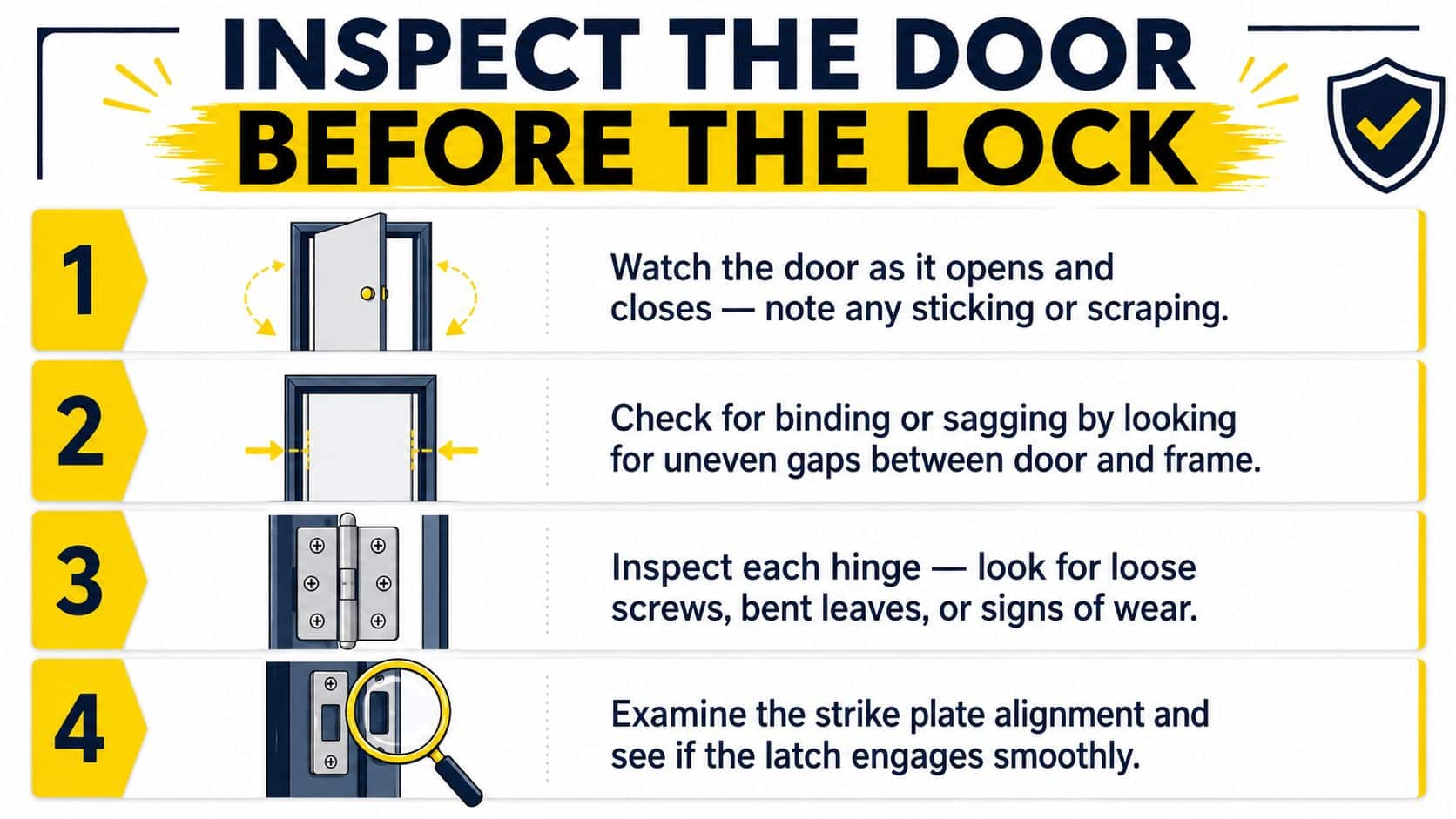
The strike plate should be checked next. With the door open, extend and retract the latch by turning the knob. Then close the door gently and see whether the latch enters the keeper evenly, without needing the handle lifted or the door pushed sideways.
Check the accessible hardware
A short inspection can identify several external faults before any dismantling:
- Knob and rose: Check for wobble, loose screws or a cover that moves independently of the knob.
- Latch face: Confirm it sits squarely in the door edge and retracts fully when the handle turns.
- Strike and keeper: Look for fresh scraping marks, shifted screws or an opening that no longer centres on the latch.
- Key action: Test the key with the door open. A smooth open-door action followed by binding when closed points away from the keyway.
- Hinges and gaps: Watch for sagging, binding or a door that needs lifting to latch.
For Australian timber and composite doors, the practical benchmark is to check the doorset against the installation and maintenance expectations in AS 2688:2017, alongside the lockset performance logic in AS 4145.2. In practical terms, that means checking alignment, fixings, latch throw and lubrication before buying internal parts.
A small adjustment may solve a shifted strike or loose fixing. It won't solve a cracked lock body, failed spring or bent spindle. If the latch doesn't retract fully, the door won't close squarely, or the hardware is insecure, the sensible point to stop is before removing the lock.
Choose Between Repair and Replacement
Repair suits a lock with a sound body and usable components. Cleaning, careful lubrication, adjustment, new fixings, or replacement of a worn latch, spindle or spring can restore reliable operation when the surrounding doorset is healthy.
Replacement becomes more sensible when the body is cracked, corrosion has weakened the mechanism, the same failure returns after proper servicing, or the lock no longer provides the required security function. Mechanical locksets are expected to operate under usage ranging from light to heavy traffic and resist forced or unauthorised entry under AS 4145.2-2008. A lock that can't meet its intended function shouldn't be kept alive through repeated part swaps.
| Symptom or condition | Likely action | Reason |
|---|---|---|
| Lock operates freely with the door open but binds when shut | Adjust the strike, hinges or door position | The lock may be sound, while the doorset is misaligned |
| Knob is loose and screws have backed out | Re-secure or replace damaged fixings | Stable fixings are needed to transfer handle movement to the latch |
| Latch, spindle and return spring are intact but stiff | Clean, lubricate and test | Serviceable components may recover without full replacement |
| Return spring is fatigued or the spindle is bent | Replace the affected component or lockset | A weak or distorted part can cause repeat failure |
| Lock body is cracked, badly corroded or repeatedly fails | Replace the lockset | Further adjustment is unlikely to provide dependable operation |
| Keys are lost but the mechanism works | Consider rekeying | Access control can change without automatically replacing the complete lock |
| Shop entry lock has damaged internal hardware | Assess replacement and the broader access requirement | Business doors need reliable daily operation and controlled access |
A worn round knobset in a rental might need a latch or spring rather than a new cylinder. A damaged lock on a shop entry may justify replacement if staff depend on consistent access or the existing hardware can't provide the required security.
For a clearer comparison of key control options, the guide to rekeying versus replacing residential locks explains why a lost key doesn't automatically mean the entire lock must be changed. The decision should follow the cause, condition and access requirement, not the appearance of the knob.
Carry Out a Cautious Round Lock Repair
DIY work is reasonable only when the door is open, the lock is accessible, and the hardware can be identified without guesswork. A working key should be available before dismantling begins. If the door is locked, the mechanism is seized, or the lock forms part of a security system, forcing the job can turn a minor fault into an access problem.
Start by photographing both sides of the hardware and the latch face. Keep the fixing screws together, note the spindle orientation, and place removed parts on a clean surface. The photograph matters because round knobsets can look similar while using different latch depths, spindle arrangements and fixing methods.
A controlled service sequence
- Open and stabilise the door. Keep the door open throughout the inspection so the latch can't trap the lock or prevent access.
- Test before removal. Turn the key, operate both sides of the knob and watch the latch. A stiff return action, a loose exterior knob, or a latch that retracts only when the handle is lifted should be recorded rather than hidden with force.
- Remove only accessible trim. If the rose cover releases normally, expose the fixing screws and check that the spindle is present and correctly seated. Don't pry against the door face or use improvised tools.
- Clean reachable surfaces. Wipe dust and residue from the latch face, strike and trim. Use a suitable lubricant sparingly at manufacturer-directed points, rather than flooding the keyway or lock body.
- Check the fit. Confirm the latch is the correct way around, the spindle passes through its follower, and the screws draw the assembly together evenly. Overtightening rose screws can distort the cover or restrict handle movement.
- Test the action. The latch should retract fully, the handles should move smoothly, the key should turn without excessive resistance, and the knob should return without dragging.
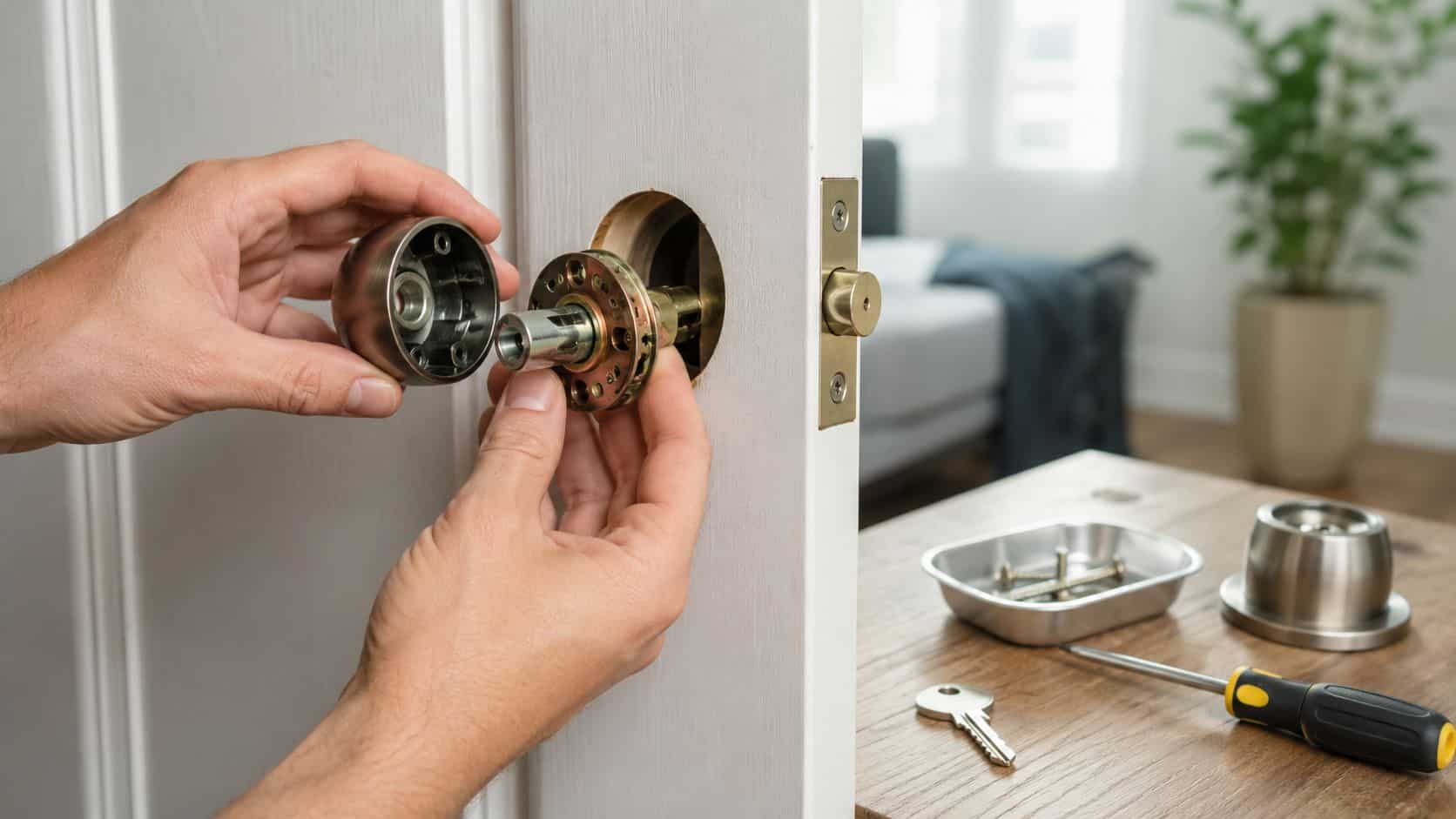
A key that's difficult to remove may indicate cylinder wear or pressure from the door against the strike. A latch that retracts only when lifted can indicate a sagging door, a poorly seated latch, or a worn internal connection. Lubricant can't correct those faults.
Don't drill, force a seized cylinder, or dismantle security hardware without the right knowledge. If a spring breaks, a part doesn't match, the lock can't be identified, or the fault remains after accessible checks, stop and arrange professional servicing through lock installations and repairs.
Finish by testing the door through repeated open-and-close cycles, first without locking and then with the key, provided the mechanism remains reliable. The door should close without binding, the latch should engage cleanly, and the key should operate without force.
Avoid the Mistakes That Cause Repeat Failures
A new cylinder won't cure a door that drags against the frame. A new spring won't straighten a bent spindle, and fresh lubricant won't realign a strike that has shifted. Round door lock repair fails when the visible symptom receives attention while the load causing it remains.
Heavy lubricant is a common example. It can attract dust and grit inside the keyway and latch, creating a paste that makes movement worse. Use only a suitable product at the points intended for lubrication, and apply it sparingly.
Quality control after the repair
- Check the rose: The knob should be secure without the cover being crushed or distorted.
- Check the latch: It should retract completely and sit correctly in the door edge.
- Check the strike: The latch should enter without scraping, lifting the door or pushing it sideways.
- Check the key: It should insert, turn and withdraw smoothly with the door open and closed.
- Check the fixings: All required screws should be present and seated firmly, without stripping the timber.
- Check the return: The knob or handle should come back to position without hesitation.
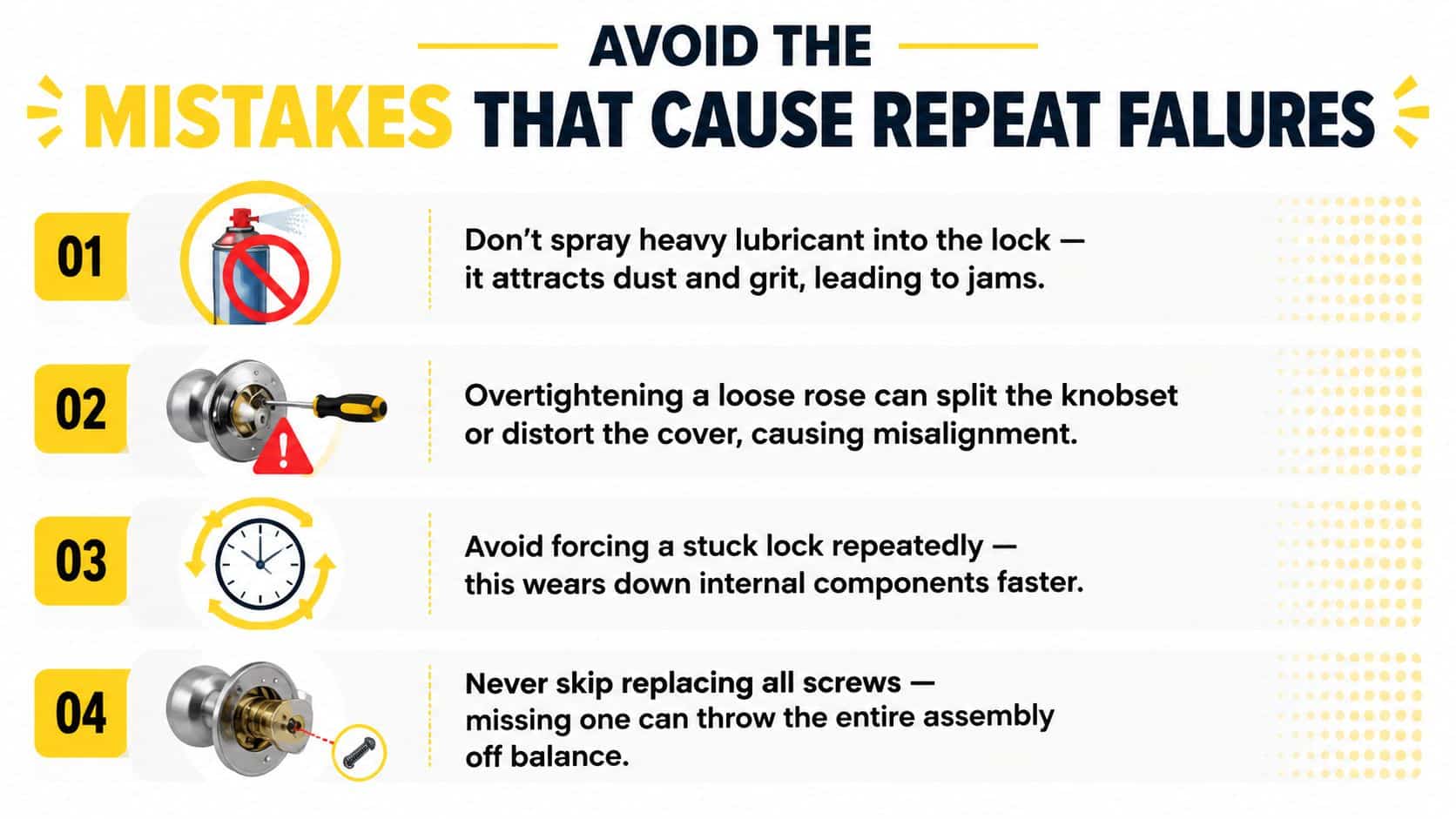
Overtightening the knob rose can split a knobset or distort its cover. Seating a latch upside down or incorrectly can prevent proper engagement, while reusing fatigued springs can produce a repair that feels acceptable briefly and then fails again. Keep the pressure light when a key sticks. Repeated twisting can damage the cylinder or leave the property unsecured.
Routine attention should match the environment. Australian product guidance recommends routine inspection and cleaning at least annually, with more frequent checks in corrosive settings, and some maintenance schedules call for checks ranging from weekly to monthly according to risk. Hardware should operate freely, engage correctly and remain secure, while Australian product-care guidance for door hardware identifies routine lubrication and adjustment as part of proper maintenance.
If a lock needs repeated adjustment, that repetition is useful evidence. It suggests a deeper alignment, component or security issue that should be assessed rather than covered with another temporary fix.
Know When to Call a North Shore Locksmith
A round lock that feels stiff, loose or unreliable does not automatically need a new cylinder. A locksmith can check whether the fault comes from door alignment, a worn latch, a failed spindle, tired internal springs or a security change such as lost keys. That inspection separates a repairable lockset from hardware that should be replaced or rekeyed.
Stop dismantling and arrange professional help if the key will not turn, the latch will not retract, the knob spins without operating the latch, or the door only locks when it is pushed or lifted. Those symptoms can involve the door, strike plate and lock together. Forcing the key or repeatedly adjusting the screws can leave the property unsecured and make the original fault harder to identify.
Tenants should report a damaged entry lock to the landlord or property manager before paying for work themselves, unless an urgent response is required to secure the premises. In strata buildings, responsibility may involve the owners corporation, particularly where the hardware relates to a shared entrance, window safety or a wider compliance issue.
NSW strata rules cover qualifying window safety devices that limit opening to 12.5 cm and withstand 25 kg of force. In relevant circumstances, installation and maintenance sit with the owners corporation, as explained in NSW strata safety guidance. Separate NSW requirements apply to an openable window at least 2 metres above outside ground level where the lowest part of the opening is below 1.7 metres above the internal floor. The device must stop a 125 mm sphere, resist 250 newtons of outward force and include a child-resistant release where applicable, according to NSW Planning window-safety requirements. A lock repair should therefore be considered alongside the building's responsibilities, not as an isolated parts swap.
For a shop, office or multi-user site, check who has keys and whether lost access requires rekeying. Lock, Stock & Barrel Locksmiths is a mobile North Shore service operating since 2002, offering residential and commercial locksmithing with 24-hour emergency response, as stated on its North Shore locksmith service website. Have the suburb, door type, symptoms and lockout status ready. Further preparation is covered in what to know before calling a North Shore locksmith.
Call when the latch, spindle, spring or alignment remains uncertain, or when replacement and rekeying need an on-site assessment. The suburb and exact symptom help the locksmith bring suitable parts and equipment.