- 24 Hour Emergency Services
- Servicing Sydney's North Shore
- View On Map

-
Mail Us On
info@lsblocksmiths.com.au
-
Make a Call
0411 700 072
- View On Map
- 24 Hour Emergency Services
- Servicing Sydney's North Shore
- View On Map
-
Mail Us On
info@lsblocksmiths.com.au
-
Make a Call
0411 700 072
- Contact Us
Affordable Locksmith Service on the North Shore

Lock, Stock & Barrel Locksmiths
On August 12, 2026
A lost key on the way to Hornsby station, a tenant handing back a flat in Chatswood, a Saturday lockout in Pymble. Those jobs all sound like the same nuisance until the invoice lands. The sensible number is rarely the cheapest headline on the page, because an affordable locksmith service is about the total job, not the first figure a caller hears.
On the North Shore, the test is simple. Does the locksmith get the door open, sort the hardware properly, and leave the place working without a second visit? That's the difference between cheap and affordable.
What Affordable Really Means on the North Shore
A lot of people ring after a key's gone missing and ask for the cheapest option straight away. That's understandable, but it misses the point. If a door is opened fast, the cylinder is tested properly, and the lock doesn't need a return trip, the job can cost less overall than a low quote that turns into a second call-out.
Affordability has three layers. Access is getting in, cutting a key, or restoring entry. Hardware is the lock body, cylinder, or safe itself. Expertise is the bit that saves money later, because a proper diagnosis tells the locksmith whether the gear can stay or whether it's already on the way out.
Practical rule: judge the quote by what it includes, not by the lowest number at the top.
A planned rekey after a move, for example, is a different job from a break-in repair or a jammed multi-point lock. The first might keep the existing hardware and change the keying. The second may need parts, fitting time, and testing. One looks dearer on paper, yet the cheaper-looking job can become the expensive one if it's done twice.
For a local benchmark on how locksmith pricing is commonly framed, this guide from Lock, Stock & Barrel Locksmiths is worth keeping handy. It's the sort of page that helps homeowners, tenants, and strata managers compare like with like before anyone drives out.
What Actually Moves the Price
The quote changes because the job changes. On the North Shore, that usually comes down to time, complexity, hardware, access, urgency, and whether the van already carries the right parts. The more of those variables that are fixed before the visit, the less likely the bill is to wander.
Time of day and urgency
The biggest price swing is timing. A 2022 survey found the average residential service call was $85 during regular business hours and $128 after hours, while the average hourly rate was $92 by day and $135 after hours (Locksmith Ledger survey). That same survey also showed metropolitan pricing sitting higher than regional pricing, which lines up with what mobile operators see across Sydney.
Job complexity and parts
Some jobs are straightforward, some aren't. A 2026 cost survey put home lockouts at $75 to $200, rekeying at $50 to $130 per lock, new lock installation at $100 to $300, lock repair at $60 to $150, key duplication at $2 to $20 per key, and safe opening at $150 to $300 (Angi cost survey). Those bands tell the story, simple work sits lower, while urgent or difficult work climbs.
Access and hardware quality
A timber door with standard hardware is usually simpler than an awkward aluminium frame, a security screen, or older gear that needs replacement instead of service. Better-quality cylinders and pick-resistant systems can cost more up front, but they're often the smarter answer when the lock is already worn.
The cheapest quote is usually the one that avoids after-hours attendance and bundles the fixes into one visit.
| Typical North Shore locksmith price ranges | |
|---|---|
| Job | Typical range (AUD) |
| Home lockout | $75 to $200 |
| Rekeying per lock | $50 to $130 |
| New lock installation | $100 to $300 |
| Lock repair | $60 to $150 |
| Key duplication per key | $2 to $20 |
| Safe opening | $150 to $300 |
The same pricing picture helps explain why a planned rekey in the morning beats a weekend call-out. It's not only cheaper, it's usually cleaner work.
Questions to Ask Before You Book
A fair quote starts before the van leaves the driveway. A professional operator should be able to identify themselves, explain the price range, and tell the caller what the visit does and doesn't include. If any of that feels vague, the bill usually will be too.
Check the licence and membership
In NSW, the first question is licence proof. Ask for the NSW Police Master Licence number and check whether the locksmith is associated with the Master Locksmiths Association of Australasia. The Association's public material treats locksmithing as a recognised profession with member businesses expected to meet licensing and security-industry obligations, which matters more than a generic “we do locks” claim.
Get the price in writing
A proper quote should show the price range, the after-hours surcharge if one applies, and the parts breakdown. If the operator is fitting a cylinder, ask which one. If they're rekeying, ask whether the existing hardware will stay or be replaced.
The right detail protects both sides. Australian consumer law prohibits misleading pricing claims, so a business can't safely wave around “cheap”, “fixed price”, or “same-day” language without the conditions behind it. A written quote keeps that conversation honest before work starts.
Ask what happens on arrival
The caller should know the response window, the call-out fee structure, and whether the job includes on-site testing. If the locksmith won't say what gets tested after the repair or installation, that's a problem. The lock should be left working in the door, not theoretically working in the van.
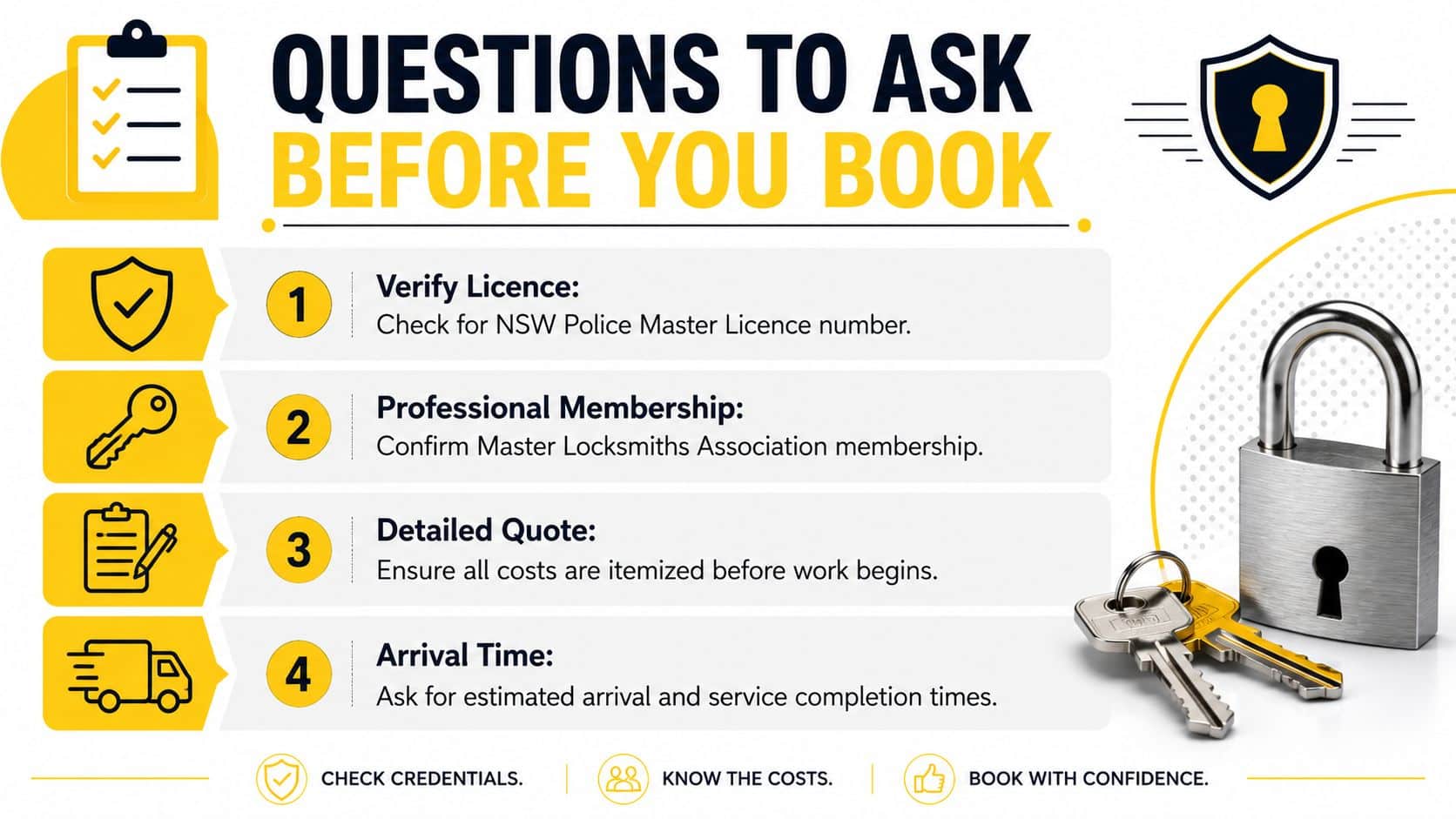
Phone script: “What's your NSW Master Licence number, and can I have the quote in writing before work starts?”
For a practical reminder about rekeying after a move, the local note on bought a new home and rekeying the locks is the kind of page that helps people ask better questions before they book.
Rekey or Replace, Which Saves More
Rekeying sounds cheap because it usually is. The lock body stays put, the internal pins are changed, and old keys stop working. That suits a strata handover in Neutral Bay, a tenant turnover in Willoughby, or any North Shore home where the lock is still mechanically sound.
When rekeying is the right call
If the key turns cleanly, the cylinder isn't loose, and the door already closes properly, rekeying usually makes sense. It's quicker, lighter on hardware cost, and it preserves the existing trim and fitting. It also fits the practical benchmark that field work should be completed on the first visit, because repeat runs chew through time and raise the final bill.
When replacement earns its keep
A full replacement is the better choice when the lock is worn, the standard is dated, or the homeowner wants a higher-security system. That comes up in older Turramurra homes with tired key-in-knob sets, and in heritage timber doors where the existing gear no longer holds alignment. If the hardware is already failing, a cheaper rekey can turn into a return visit.
The decision usually comes down to this. If the lock is good and the key control is the problem, rekey. If the lock itself is tired, replace. Anything else is guesswork dressed up as savings.
A locksmith only saves money on a rekey when the existing hardware is worth keeping.
On the workbench, the sensible sequence is inspect, confirm compatibility, cut or rekey to the correct profile, then test the result on site. That keeps the job inside the first-visit success window and avoids the false economy of a cheap fix that doesn't hold.
How to Avoid Locksmith Scams
Low-ball ads usually lean on the same trick. They throw out a tiny headline price, then add on once the caller is locked in, stressed, or standing at the front door. That's why the details matter more than the slogan.
Red flags that usually go together
A cash-only demand is the first warning sign. So is a vague company name that looks recycled, no licence number offered on request, or a price quoted before anyone has inspected the lock. An unmarked car can happen with legitimate mobile operators, but when it's combined with the rest, the risk goes up quickly.
The other tell is a price jump after the job begins. A proper operator should quote a range, inspect the lock, and confirm the final figure before moving ahead whenever possible. If the number keeps changing without a clear reason, the customer is no longer dealing with a fair process.
What a legitimate operator does instead
The good habits are boring, and that's the point. The locksmith shows ID, confirms the licence, checks ownership or access rights, tests the lock first, then puts the final figure in writing. That doesn't make the job cheaper by magic, but it stops avoidable disputes.
For a local consumer warning on scam-style behaviour, the note at MLAA scam guidance for consumers backs up the same practical advice. The lesson is simple. A quote should be clear before the screwdriver comes out.
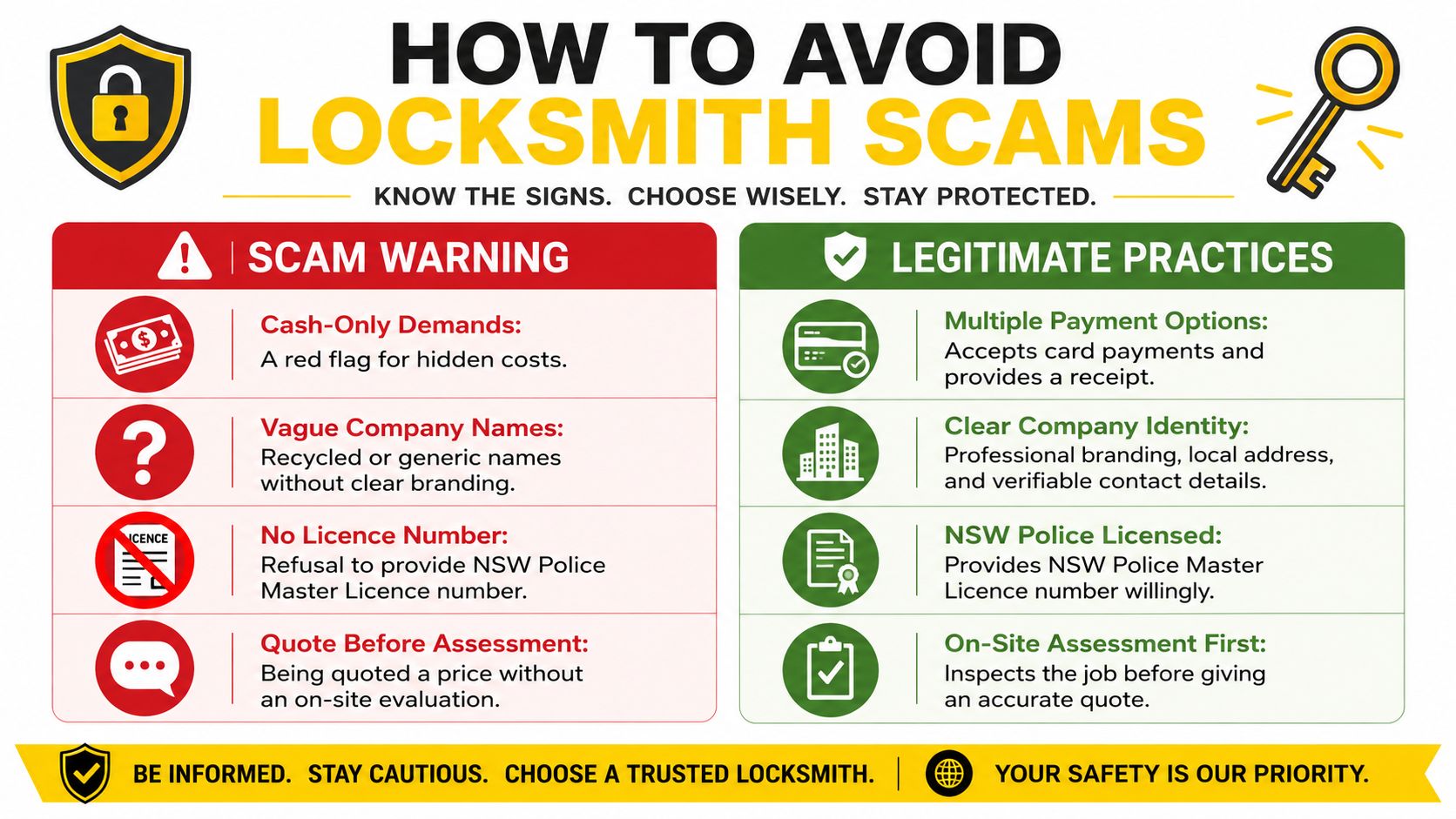
If the price changes before the lock is even inspected, the caller should stop the job there.
Smart Ways to Keep the Cost Down
The best savings usually come from planning, not haggling. A Tuesday-morning rekey is easier on the budget than a Sunday-night lockout because the job is easier to schedule, easier to scope, and easier to complete in one go.
Bundle the work
If a door is sticking, a lock is worn, and a spare key is missing, those jobs should sit on the same ticket. One visit can cover more than one fix, which means the call-out fee works harder. Sending photos before booking also helps, because the locksmith can narrow the parts list before arrival.
Keep the small problems small
Sticky deadbolts, misaligned strikes, and tired cylinders don't usually fix themselves. Small faults turn into big costs when the lock seizes on a weekend or the key snaps at the wrong moment. A quick service visit is almost always cheaper than a full emergency.
Plan for strata and compliance work
In NSW strata and family housing, window safety devices and multi-user key control often belong in the same planning conversation as the locks themselves. A daylight rekey during a scheduled visit is usually easier and more thorough than trying to solve access problems in a hurry after hours.
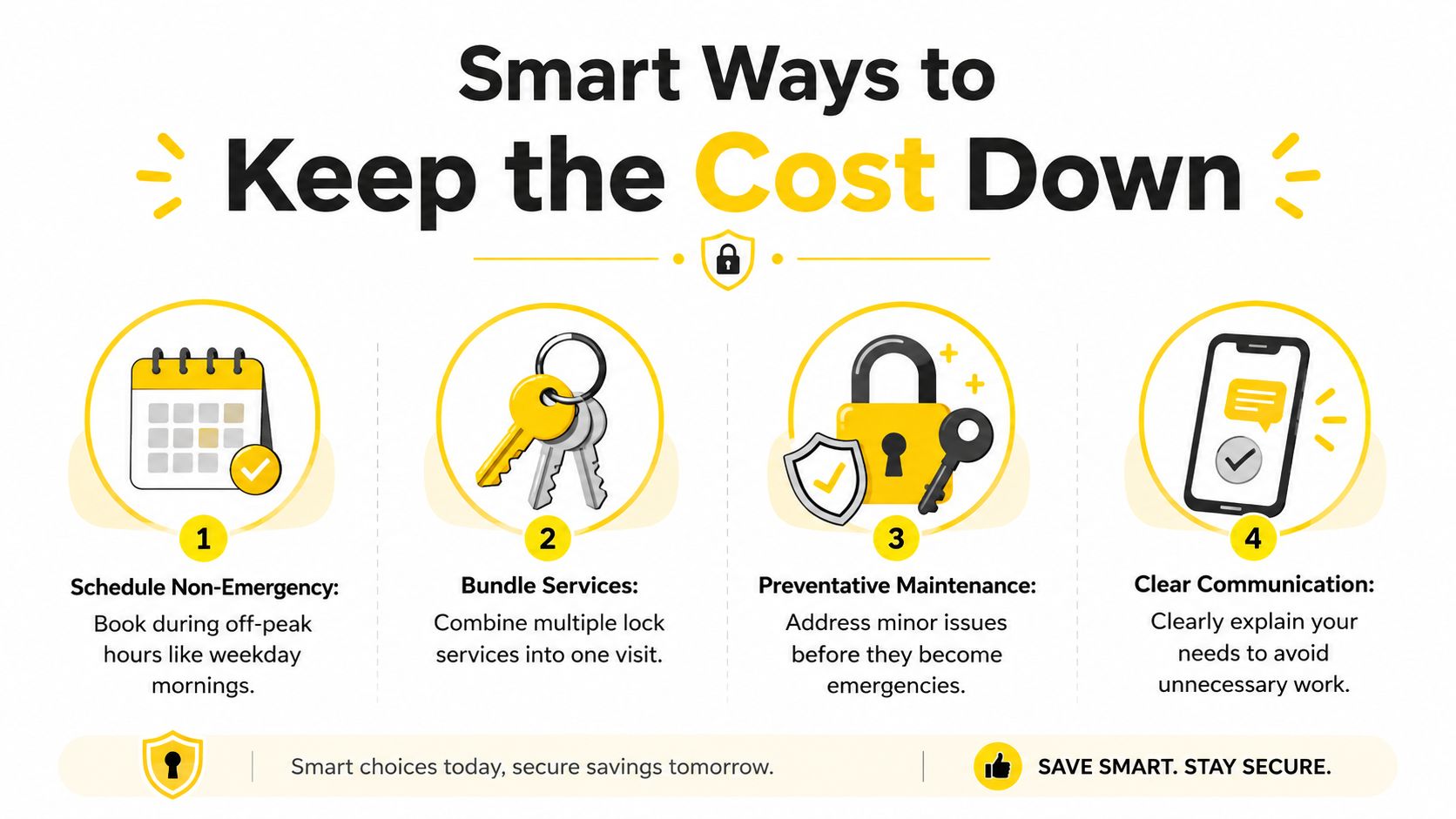
The rule is plain. Affordable service is usually planned service.
Your North Shore Locksmith Checklist
A good locksmith quote should survive a short check before anyone books it. Licence proof, clear pricing, and on-site testing are the basics. If the job is a rekey, the caller should ask whether the existing hardware is staying. If it's a replacement, the caller should ask why the old lock isn't worth saving.
That checklist matters across Turramurra, Hornsby, Gordon, Killara, St Ives, Pennant Hills, Thornleigh, Berowra, Pymble, Wahroonga, and the surrounding suburbs. The North Shore housing mix is varied enough that one price never fits every job, which is why good advice starts with the lock in front of you, not a slogan on a screen.
Lock, Stock & Barrel Locksmiths works as a mobile North Shore locksmith service, with residential and commercial lock work, rekeying, master key systems, window safety devices, and safe work across the area. The business holds NSW Police Master Licence No. 408 659 677 and is a member of the Master Locksmiths Association of Australasia. That's the sort of setup a caller can check before agreeing to anything.
For a suburb-specific booking, the best move is still the same. Send photos, ask for a written range, and choose the option that fits the hardware in front of you. A planned visit almost always costs less than an urgent one, and it usually leaves the door in better shape too.
If the lock's acting up, the key's gone missing, or the quote doesn't make sense, Lock, Stock & Barrel Locksmiths can talk through the job in plain English and price the work around the actual hardware. Visit Lock, Stock & Barrel Locksmiths to request a quote or book a North Shore locksmith visit that fits the job, not just the headline.