- 24 Hour Emergency Services
- Servicing Sydney's North Shore
- View On Map

-
Mail Us On
info@lsblocksmiths.com.au
-
Make a Call
0411 700 072
- View On Map
- 24 Hour Emergency Services
- Servicing Sydney's North Shore
- View On Map
-
Mail Us On
info@lsblocksmiths.com.au
-
Make a Call
0411 700 072
- Contact Us
Cabinet Lock Replacement: Pymble’s Expert Guide 2026

Lock, Stock & Barrel Locksmiths
On August 10, 2026
You're usually here for a simple reason. The filing drawer sticks, the key's gone missing, or a new cabinet has arrived with a lock that doesn't feel worth trusting. In a home office, strata storeroom, or small business, cabinet lock replacement is usually less about glamour and more about getting access back without making a bigger mess of the furniture.
A good result starts with the right diagnosis. If the lock is worn, breaks often, shows signs of tampering, or the key movement feels rough, replacement is the sensible call rather than trying to nurse the mechanism along. That's the practical threshold often overlooked, and it's the point where a quick fix turns into false economy, especially once the cabinet has to be used every day Houlte's cabinet security guide.
Deciding When a Cabinet Lock Needs Replacing
The most common trigger is simple. Someone loses the key to a filing cabinet, inherits a cabinet with no matching key, or notices the original lock has become stiff enough to make every open-and-close feel clumsy. A fresh lock also makes sense when the hardware is flimsy on a new piece of furniture, because weak factory fittings can waste time later if they don't hold up to regular use.
A lock doesn't need to fail completely before it becomes a candidate for replacement. If the key turns with rough resistance, the mechanism has started to bind, or the cabinet doesn't secure cleanly after testing, the lock has moved beyond routine use. That's especially true where tampering is visible, because a compromised cabinet lock can create access problems even before it becomes a full security issue.
Practical rule: if the lock is worn, breaks often, or shows signs of tampering, replace it rather than hoping it will settle down.
What counts as “replace now”
A lock usually belongs on the replacement list when the drawer won't secure consistently, the key action feels gritty, or the cylinder has obvious damage around the face. Those are the signs that matter on the job, because they point to wear inside the mechanism, not just a dusty keyway.
The key point is this. A cabinet lock is a working part, not a decorative fitting. Once the mechanism starts misbehaving, replacement is usually the cleaner and safer answer than repeated forcing, especially in workplaces where the cabinet needs to stay operational. For mixed-use properties and turnover work, that reliability matters as much as the lock itself.
Identifying Your Cabinet Lock Type and Size
A replacement goes wrong fast if you choose by appearance alone. Two locks can look almost the same from the front and still differ in cylinder length, cam shape, or the way they sit against the cabinet face. The fit has to be right, otherwise the new lock may sit proud of the surface, miss the strike, or bind as soon as you try to use it.
Most cabinets we see in the field use one of three common styles. Cam locks use a cylinder with a flat cam behind it, and they are common on filing cabinets and storage units. Drawer deadbolt locks drive a bolt straight into the frame, while plunger locks use a spring-loaded pin that keeps the cabinet closed until the key releases it.
Measure before you buy. Take the cylinder length from the face of the lock to the end of the barrel, then check the cam or bolt length so it reaches the strike correctly. The shape matters too. A cylinder that is too long or too short can appear to fit, then fail once the cabinet is back in service. That is the part a locksmith checks first, because a close-looking lock that does not match the old hardware usually creates a second problem for you later Engineerfix's file cabinet lock guide.
| Common Cabinet Lock Types | Identifying Feature | Commonly Used On |
|---|---|---|
| Cam Lock | Key turns a flat cam behind the cylinder | Filing cabinets, desk drawers, storage cupboards |
| Drawer Deadbolt Lock | Key drives a bolt directly into the frame | Office drawers, furniture with a stronger closing action |
| Plunger Lock | Spring-loaded pin keeps the drawer closed | Cabinets that need simple push-to-secure operation |
Measure the old cylinder first, then compare the cam shape. That order avoids most of the mistakes people make at the counter.
If you are working on filing cabinets, a dedicated guide to filing cabinet locks can help you confirm the general lock style before you order the replacement. That matters in office settings, where the wrong lock can leave key control sloppy and make it harder to keep track of who has access.
Your Tools and Materials Checklist
Start with an empty cabinet. Pull everything out of the drawer or compartment before you touch the lock, so you can reach the back of the hardware and keep loose papers, clips, and screws from disappearing into the unit. That small bit of preparation saves time once the old lock is out and you are working with the replacement parts.
A cabinet lock replacement job usually needs only a few basic tools, but the right mix depends on how the lock is held in place. A screwdriver set, an adjustable wrench, and a measuring tape cover most home and office cabinets. On some commercial units, the retaining hardware uses a nut instead of a clip, so a 15/16-inch (24 mm) socket or a nut driver can make removal much easier.
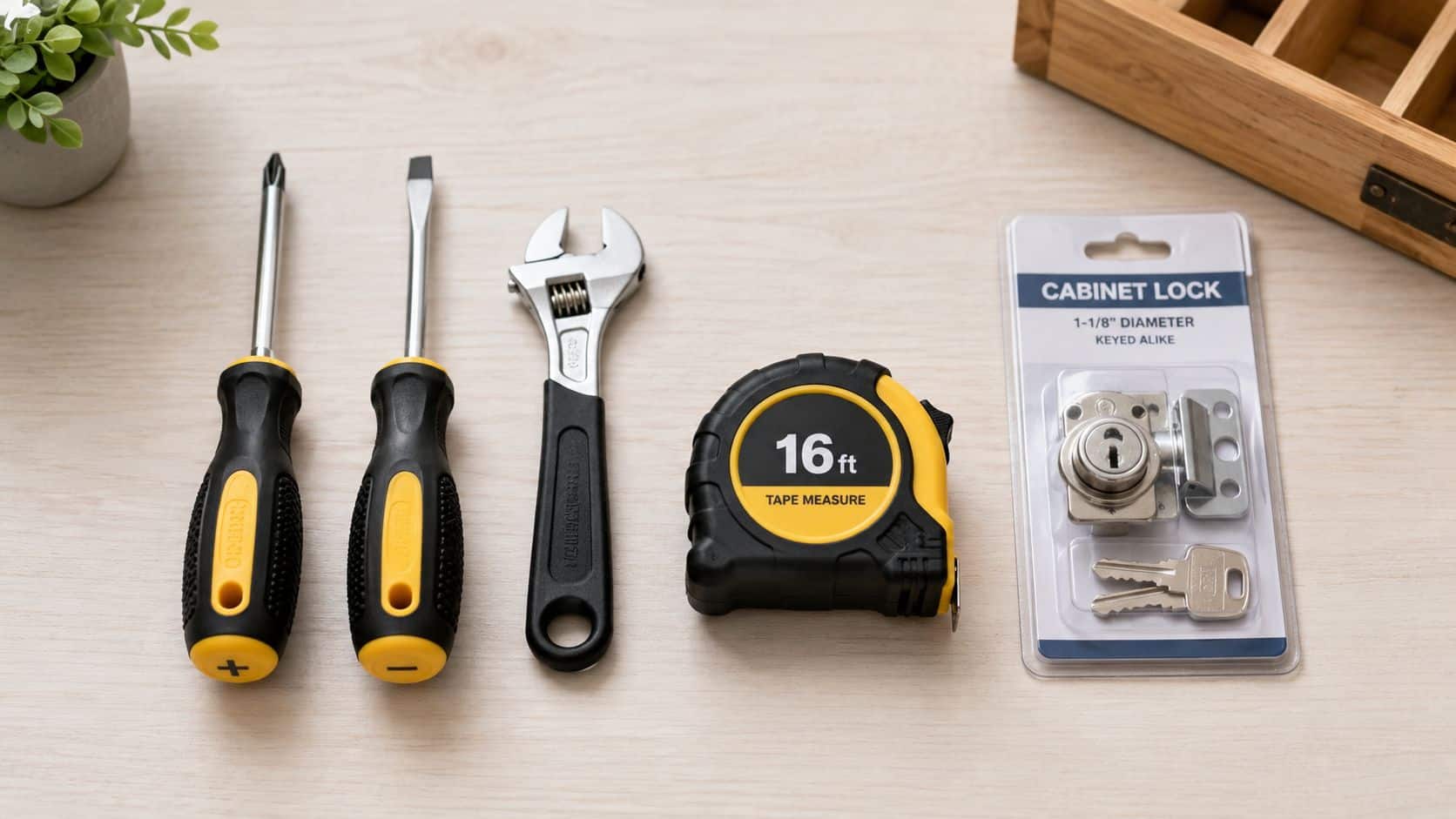
What to have on the bench
- Screwdriver set: Used for faceplate screws, drawer stops, and any trim pieces that block access to the lock.
- Adjustable wrench: Handy when the retainer is a nut rather than a spring clip.
- Measuring tape: Lets you check the cylinder and cam against the old hardware before you fit the new one.
- Correct replacement cylinder: The new lock needs to match the old mounting style and dimensions.
- Socket or nut driver: Useful on cabinets that secure the lock with a retaining nut.
A locksmith looks at the whole job before turning the first screw. The lock body, the retainer, the cam, and the cabinet opening all need to work together, and the smallest mismatch can leave you with a part that fits in the hand but not in the cabinet. That is why measurement matters before purchase, especially in office settings where key control can become messy if the wrong lock ends up in service.
If the old cylinder or cam resists, stop and check the retainer type before applying more force. Forced removal usually creates more work than the fault you started with.
A Step-by-Step Guide to Replacing the Lock
A cabinet lock swap goes more smoothly if you work from the drawer inward and keep the old parts beside you as a reference. Open the relevant compartment, clear out the contents, and make sure you can reach the back of the lock before you touch the front hardware. On many filing-cabinet style locks, the drawer has to come out first, because that gives you access to the rear of the cylinder and the retainer.
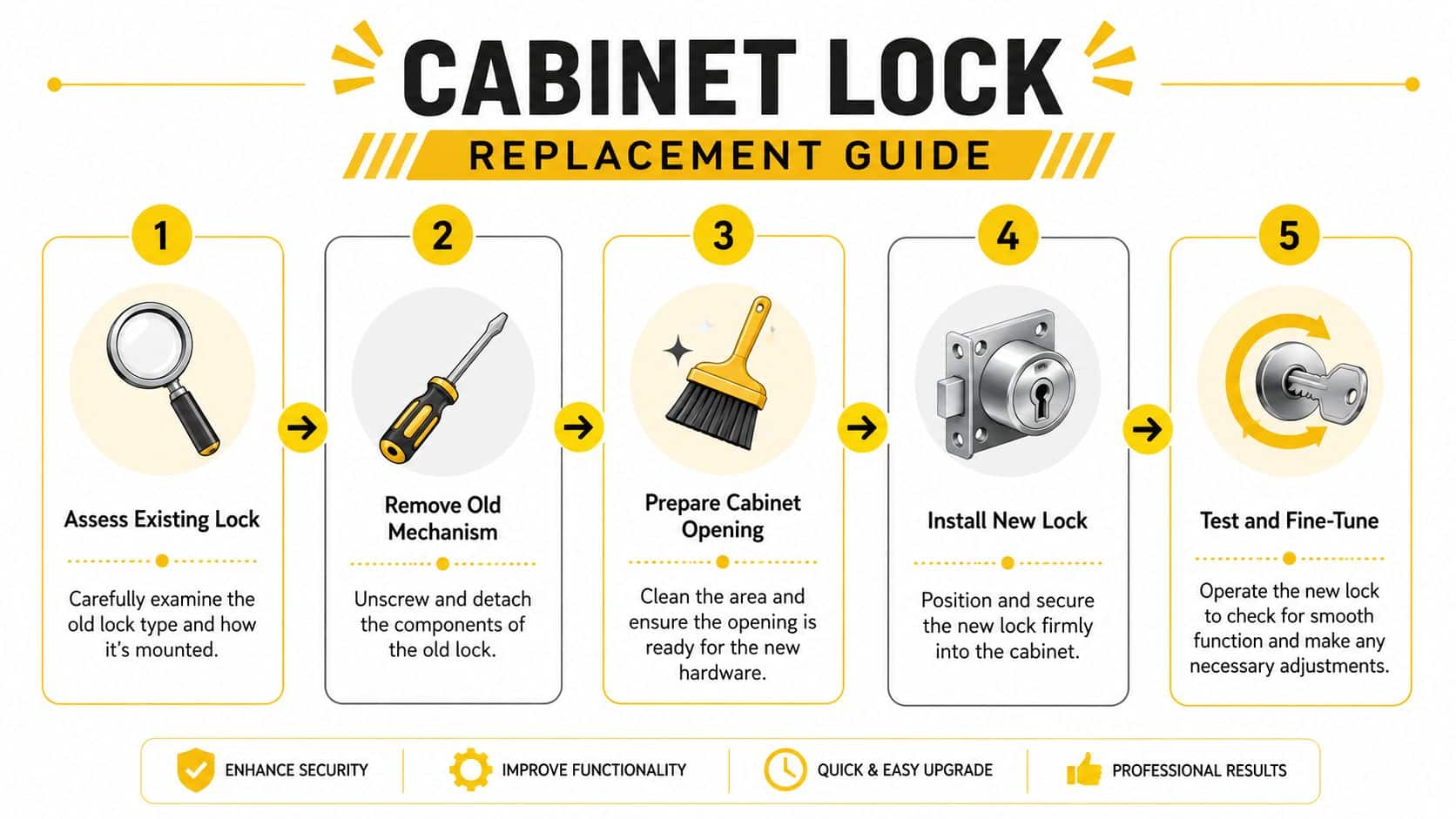
Gaining access to the cylinder
With the drawer removed, the back of the lock usually comes into view. Depending on the cabinet, the cylinder is held by a C-clip, spring clip, or retaining nut. Remove that retainer carefully, because it is what keeps the cylinder seated from the inside.
Once the retainer is off, the old cylinder should slide out from the front of the cabinet. If it hangs up, stop and check whether the clip or nut is fully released before you apply more pressure. For a clear visual reference on cylinder removal, see Cisco-Eagle's cylinder replacement instructions.
Preparing the new cylinder
Fit the new lock with the key in the non-locking position. That keeps the cylinder aligned while you seat it and secure the retainer, which is where fitment mistakes usually start. The cam or rod also needs to be lined up before the clip or nut is fully tightened, or the drawer may close without locking.
Check the keyway orientation at 12 o'clock and confirm the rotor or rod alignment before you push the lock fully home. If the new cylinder does not sit the same way as the old one, compare it against the existing hardware before you force the fit. For office cabinets, that check matters because one wrong cylinder can create key control problems for everyone who shares access. If you want a locksmith's view on that part of the job, this cylinder lock replacement guide explains the replacement process from a practical service perspective.
Installing and testing
Install the new cylinder, seat the retainer, and test the key before you put the drawer back in. Turn the key through both positions and watch the cam travel, because alignment problems usually show up there first. A dry fit of the cam before final tightening helps prevent a lock that appears installed but does not secure the cabinet.
The last check should be simple and honest. The lock should engage smoothly, release cleanly, and show no dragging or resistance once the drawer is reinstalled. If the action still feels off, the cabinet is telling you the alignment needs another look.
Troubleshooting Common Replacement Issues
The annoying part of this job is that the lock can look right and still behave badly. A key may turn normally while the drawer refuses to secure, or the new cylinder may feel stiff even though the dimensions seemed correct. In practice, those faults usually point to one of three issues, incorrect cam orientation, wrong cylinder length, or a retainer that's been overtightened.
When the key turns but the drawer won't lock
That usually means the cam isn't reaching the strike properly. The cylinder may be seated, but if the cam is too short, too long, or angled incorrectly, the locking action won't engage cleanly. A quick test with the drawer open is the best way to spot this, because you can watch the bolt travel before the cabinet is closed.
When the lock feels stiff
Stiffness usually comes from fitment, not from the key itself. A cylinder that sits too deep, a cam that binds on the frame, or a retainer tightened harder than necessary can all create resistance. The first response should be to check the dimensions again rather than assuming the lock is faulty.
Smooth key movement doesn't always mean the cabinet is locking properly. The useful check is whether the bolt travels fully and without scraping.
There's also a bigger issue that most DIY guides skip. Once a cabinet lock is replaced, the job can become an access-management question rather than just a hardware swap. Office managers often need multiple cabinets to share one key, and that raises choices about key control, spare-key governance, and whether the cylinder should be matched to an existing key system instead of living as a one-off lock EasyKeys on replacing file cabinet locks.
Thinking beyond the mechanism
That matters most in offices, strata rooms, and small businesses where access has to stay orderly. A lock that works mechanically but doesn't fit the wider key plan can create more admin than the old lock ever did. For those sites, the right fix isn't just “new lock fitted”, it's “new lock fitted and the keying still makes sense”.
For broader cylinder work and matching hardware across a site, the cylinder replacement service information is worth keeping nearby cylinder lock replacement.
DIY Job or Time to Call a Pymble Locksmith?
A simple single cabinet at home is often a fair DIY job. If the lock is a standard cam style, the access is clear, and the replacement cylinder matches the old one closely, the work is usually manageable with basic hand tools and a careful test at the end. The job becomes less forgiving when there are multiple cabinets, mixed hardware, or the keying needs to stay consistent across a workplace.
That's where professional help earns its keep. Commercial and strata settings often need a cleaner result than a one-off swap, especially when cabinets share keying or the access plan has to be preserved. Independent cost guides note that replacing a standard lock can run A$80 to A$225 per door, while cabinet-specific work is often smaller in scope and U.S. pricing averages US$50 to US$200, which makes professional replacement a targeted maintenance task rather than a major project HomeGuide's lock replacement cost guide.
Good reasons to call a locksmith
- Multiple cabinets: Shared keying or master-key compatibility is easier to manage when the whole setup is planned together.
- Tight fitment issues: If the new lock binds, scrapes, or sits proud of the cabinet face, a locksmith can match the hardware properly.
- Commercial or strata use: Access control matters more when several people rely on the same storage system.
- A failed first attempt: Over-tightened retainers and bent cams are common repair calls after a DIY try.
For a broader look at professional pricing, the local locksmith cost page can help frame the decision how much a locksmith costs.
If the cabinet only needs a straightforward swap, DIY can make sense. If the lock has to fit a key system, support business access, or avoid another round of disassembly, calling a locksmith is usually the calmer choice.
Lock, Stock & Barrel Locksmiths handles cabinet lock replacement for homes, offices, and strata properties across Sydney's North Shore with practical, on-site workmanship. If you'd like the cabinet sorted without guesswork, visit Lock, Stock & Barrel Locksmiths and request a quote or call for help with the lock, the keying, and the fitment.