- 24 Hour Emergency Services
- Servicing Sydney's North Shore
- View On Map

-
Mail Us On
info@lsblocksmiths.com.au
-
Make a Call
0411 700 072
- View On Map
- 24 Hour Emergency Services
- Servicing Sydney's North Shore
- View On Map
-
Mail Us On
info@lsblocksmiths.com.au
-
Make a Call
0411 700 072
- Contact Us
DIY Chain Lock Installation: Guide for St Ives Homes

Lock, Stock & Barrel Locksmiths
On July 14, 2026
A lot of North Shore homeowners end up in the same spot. The front door already has a lockset, maybe a deadbolt too, but there's still that nagging feeling that answering the door means opening up more than they'd like. A simple door chain can help with that. It gives a bit of controlled opening, it's visible, and it still suits plenty of older timber doors around St Ives.
The catch is that a chain lock only helps if it's mounted properly. A neat-looking install with the wrong screws, the wrong position, or the wrong fixing point can fail fast. That's why chain lock installation is one of those jobs that looks easy from the packet and often isn't in practice.
Why a Simple Chain Lock Still Makes Sense
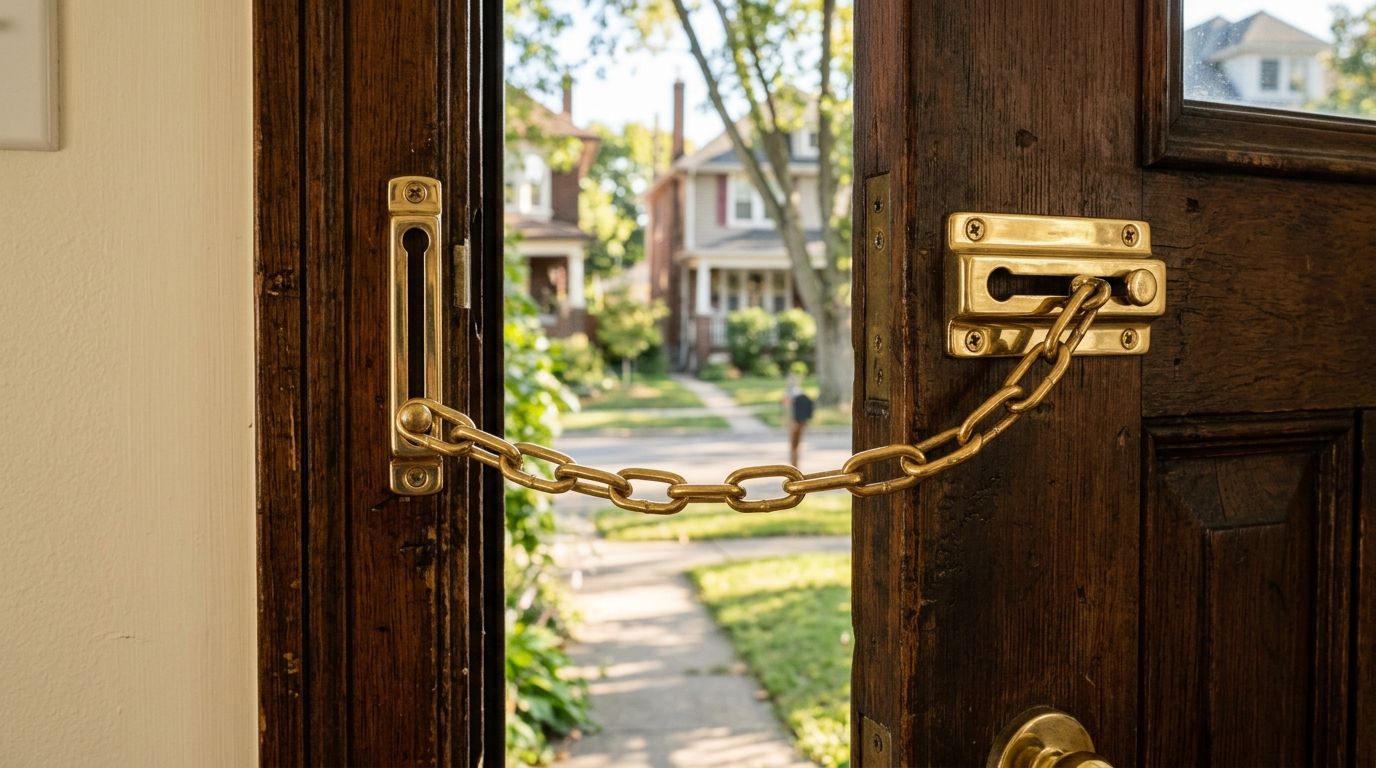
On a typical suburban front door, a chain lock isn't the main security device. It's the extra layer. It lets the occupant crack the door open to speak to someone, take a delivery, or check who's there without swinging the door wide open.
That's still useful in St Ives homes, especially where the entry opens straight into the living area or where the front step sits close to the door. On older homes, a chain lock can also be a sensible add-on when the owner wants something mechanical and familiar rather than going straight to electronics. For anyone weighing up traditional hardware against newer options, the trade-offs in smart locks versus mechanical locks are worth considering before drilling anything.
What a chain lock does well
A properly installed chain lock works best for:
- Controlled door opening so the occupant can speak through a narrow gap
- Visible deterrence because visitors can see the door has an extra restraint
- Simple operation with no batteries, apps, pairing, or electronic parts
- Older-style doors where a basic mechanical solution suits the property
What it doesn't do
It's not a substitute for a good deadbolt, a properly fitted lockset, or solid door and frame construction. If the chain is fixed into weak trim, soft timber, or short screws that only bite into the jamb face, the door chain becomes more decorative than protective.
Practical rule: A chain lock is only as strong as the frame it's fixed to.
That's where many DIY jobs go wrong. The hardware itself might be fine, but the fixing method lets the whole setup down.
Gathering Your Tools and the Right Hardware
Before any drilling starts, the hardware choice matters just as much as the fitting. Plenty of packet chain locks look acceptable on the shelf, but some are made from light metal, weak screws, and small mounting plates that don't inspire much confidence once they're in the hand.
For residential chain lock installation, the safest approach is to treat the supplied screws with caution. The packet often includes short fixings intended to make installation easy, not necessarily strong. On a timber-framed entry door, the goal is to get a proper bite into solid material, not just the face of the trim.
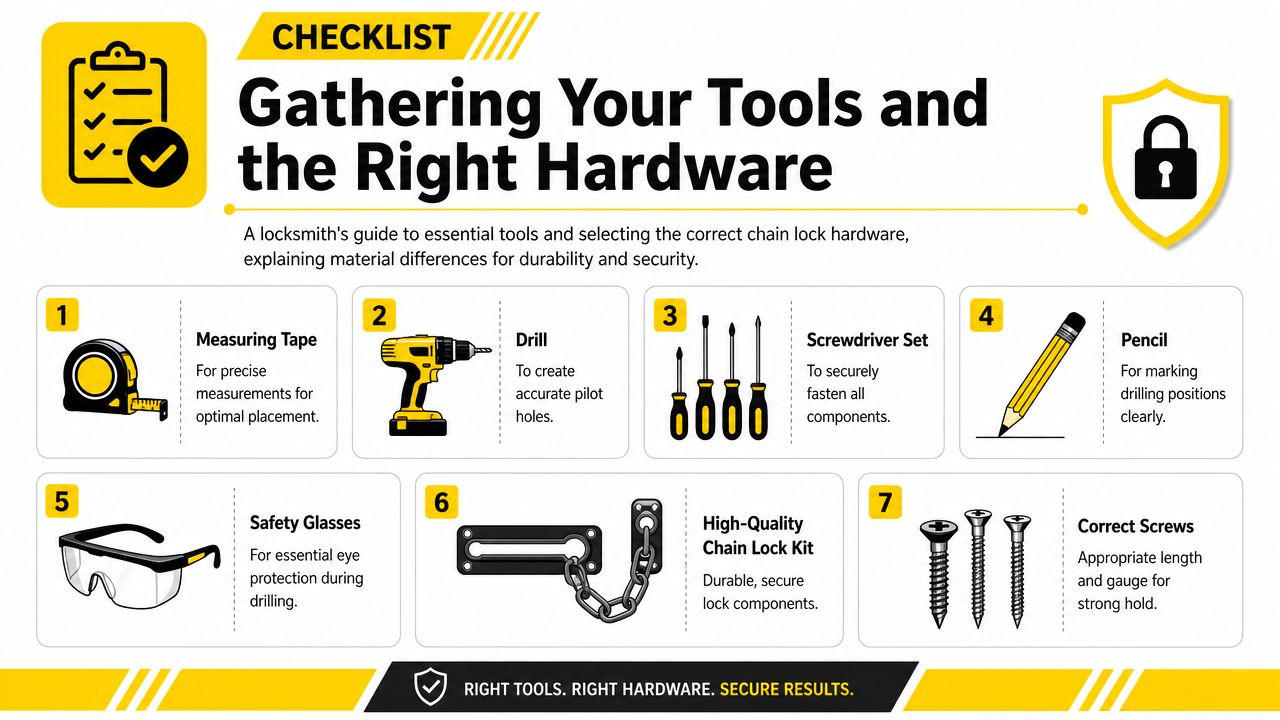
Chain Lock Installation Toolkit
| Item | Specification | Pro Tip |
|---|---|---|
| Measuring tape | Compact tape measure for accurate set-out | Check both the closed position and the partially open position before marking holes |
| Pencil | Fine point pencil | Mark lightly first so the plate can be shifted if alignment is off |
| Drill | Variable-speed drill | A slower start helps stop the bit skating across painted timber |
| Drill bits | Pilot bits suited to timber or metal | Match the pilot hole to the screw shank, not the thread |
| Screwdriver set | Hand screwdriver or driver bits | Final tightening by hand helps avoid stripping screws |
| Safety glasses | Basic eye protection for drilling | Wear them even for one or two holes |
| Chain lock kit | Quality door chain set with solid plates | Check the chain links and slide for looseness before fitting |
| Correct screws | Door screws and longer frame screws suited to the substrate | For timber, longer frame screws make the real difference |
Choosing hardware that's worth fitting
For a timber front door, the basics are straightforward:
- A solid chain set: The slide should move cleanly and the chain links should feel substantial, not flimsy.
- Longer frame screws: The frame side takes the load. That fixing needs to reach solid timber behind the visible face.
- A finish that suits the door: Brass, satin chrome, and similar finishes matter less than the strength of the fixing, but it still helps when the hardware matches the rest of the entrance set.
A deadbolt remains the main security upgrade on many doors, and the practical details in this guide to door deadbolts and how they work help clarify where a chain lock fits into the bigger picture.
Timber frame versus metal frame
Timber is usually the easier job. Pilot holes can be drilled, screw length can be adjusted, and there's often enough structure to work with if the plate is positioned correctly.
Metal frames are a different story. They can require different fixings, careful drilling, and a proper understanding of what's behind the visible section. If the frame is hollow or the fixing point is limited, a simple DIY install can become a poor one quickly.
Cheap hardware gives a false sense of security. The fixing method has to match the door, the frame, and how the door actually closes.
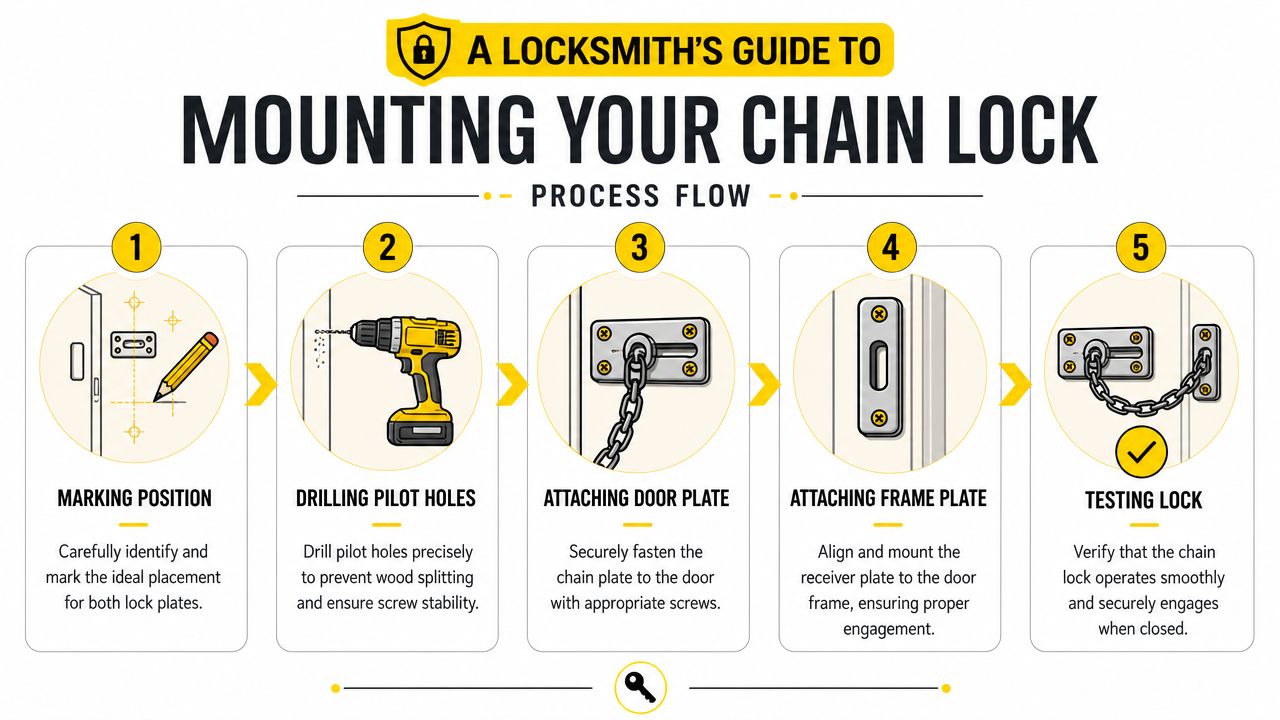
A Locksmiths Guide to Mounting Your Chain Lock
Good chain lock installation starts with placement. If the chain is too high, too low, too far toward the edge, or mounted on the wrong surface, the slide binds, the chain sags, or the screws end up in weak material.
Start with the frame side
The strongest setup puts the chain mechanism where it can anchor into the stationary structure, not into trim that can flex or split. For optimal strength, chain mechanisms must be mounted on the stationary door frame with the slide catch on the door, using screws up to 3 inches long to firmly attach into the structural frame. Pre-drilling holes is essential to prevent screw wandering and ensure the chain can fully extend without issue, as noted in the NSW home security guidance.
That one detail sorts out a lot of bad installs before they happen. The frame side is where the restraint force lands, so that side has to be the stronger fixing.
Mark the position with the door fully closed
Close the door properly first. Don't mark anything with the door just resting against the latch because a slight shift can throw the alignment off.
Then check:
- Comfortable height: The chain should sit where an adult can use it easily without reaching awkwardly.
- Clear travel: The slide has to move freely without hitting moulding, weather seals, or the edge profile of the door.
- Door opening gap: The chain should allow a modest opening for conversation, not so much opening that it defeats the point.
A good habit is to hold both plates in place and test the travel by hand before making the first pencil mark.
Hold the parts in place and simulate the movement first. If it feels awkward in the hand, it'll feel worse once it's screwed on.
Drill pilot holes properly
Pilot holes are not optional on painted timber doors and frames. Without them, screws can wander, split timber, or go in at a poor angle.
A clean pilot hole helps with:
- Accurate screw placement so the plate stays square
- Less splitting risk on older dry timber
- Better grip because the screw can drive straight instead of chewing its way sideways
Drill the pilot holes to suit the screw shank, then stop and check the fit before driving every screw home.
Fix the slide to the door
The slide catch belongs on the door itself. Keep it straight, keep it level with the frame plate, and tighten evenly so the plate doesn't twist.
If the door has decorative beading, raised profiles, or panels near the closing edge, don't force the chain lock onto an uneven surface. The plate needs a flat, stable mounting area or it won't sit properly.
Fix the chain plate to the structural frame
This is the make-or-break step. Longer screws belong here, and they need to bite into real structure behind the visible frame face. A screw that only grabs a thin jamb skin won't do much under pressure.
Check each screw as it tightens. If one spins or goes soft, stop and reassess the location.
Test the action several times
Open and close the door with the chain engaged and disengaged. The movement should be smooth. The chain shouldn't bind, scrape, or leave the occupant fumbling to release it.
Look for these final signs of a sound install:
- The chain sits neatly when not in use
- The slide enters and exits cleanly
- The screws stay firm with no movement in the plates
- The door still closes normally without rubbing or dragging
If any part feels forced, the job needs adjustment before it's called finished.
Critical Safety Rules for Door Chains
A chain lock can be fitted neatly and still be the wrong choice in the wrong place. Safety matters just as much as strength, especially on the main entry of a home or unit.
The first issue is egress. People need to be able to leave quickly if there's smoke, fire, or another emergency. A chain that's mounted too high, jams under pressure, or becomes awkward for children, older occupants, or visitors can create a real problem. On a primary exit door, that risk has to be taken seriously.
Think about who uses the door
A front door isn't just used by the person who installed the chain. It may be used by children, grandparents, visitors, carers, or tradespeople staying in the home.
That changes the decision. A chain lock that feels simple to one person may be fiddly to someone else.
- Households with children: The chain shouldn't create a trap or delay if an adult needs to get everyone out quickly.
- Older residents: Small sliding catches can be awkward if grip strength or dexterity is reduced.
- Shared households: Everyone needs to understand how it works, especially at night or in an emergency.
A safer lock setup isn't always the one with more hardware. It's the one people can use properly under stress.
Strata rules can matter more than people expect
In apartments and strata-managed properties across Sydney, the front door often isn't treated the same way as a freestanding house door. Strata by-laws can affect what hardware can be added, how the door can be altered, and whether the external appearance can change.
NSW building rules show just how specific these requirements can be. A complying window safety device under NSW strata law must restrict the opening so a 125mm diameter sphere cannot pass through and must resist a 250-newton force under the Strata Schemes Management Amendment Regulation 2013. Door chain rules aren't set out in that same way here, but the lesson is clear. Hardware on strata property should never be treated casually.
Don't ignore the door construction
Solid timber doors usually give more room for a secure install. Thin decorative doors, hollow-core internal doors, or frames with movement can be a poor candidate for a chain lock.
If the door already sticks, drops, or needs a push to latch, adding a chain often highlights the problem rather than solving anything. In that case, the door and frame condition needs attention first.
Common Installation Mistakes We Fix
Most failed chain lock installation jobs don't fail because the chain snapped. They fail because the plates were fixed into the wrong place or with the wrong screws.
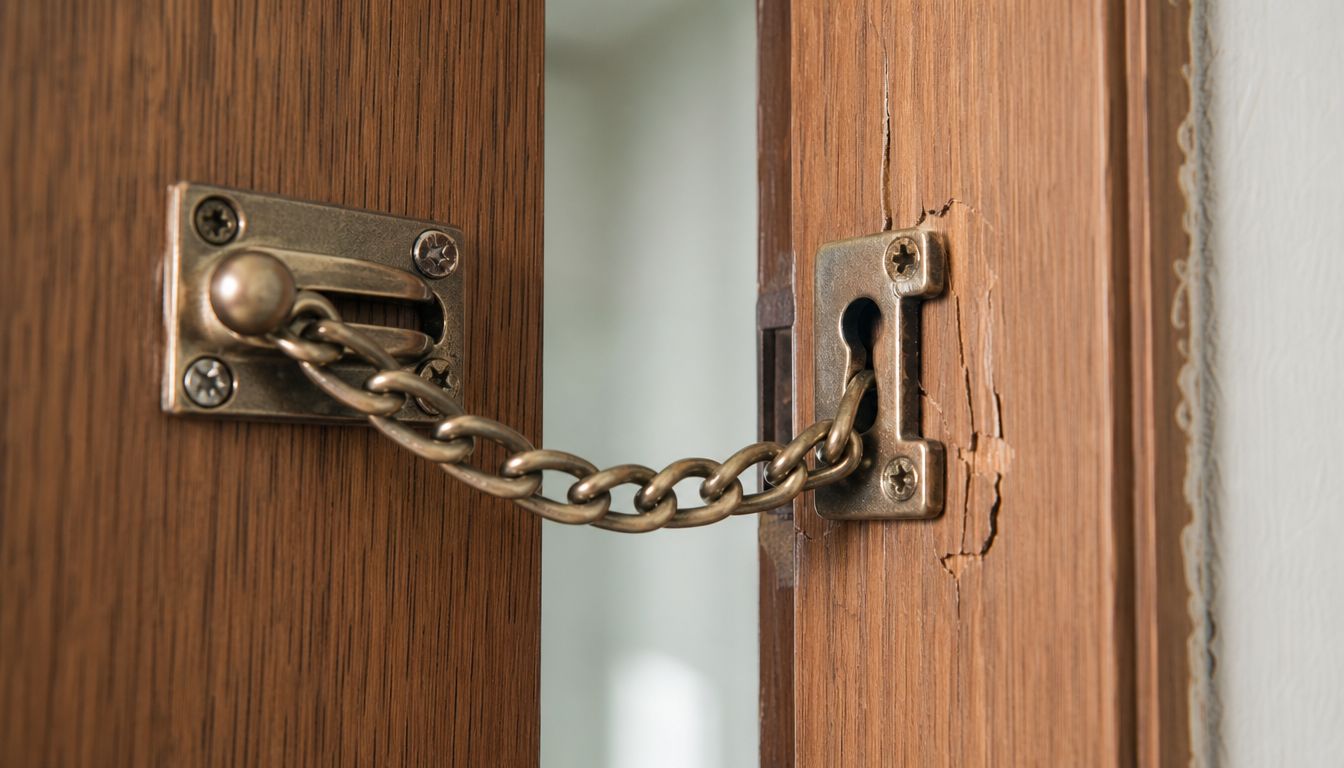
The usual problems
One common job is the packet-screw install. The chain looks straight enough, but the frame plate is only held by short screws in a weak surface layer. A firm shove on the door can pull the whole plate loose with a chunk of timber attached.
Another is decorative moulding. The installer picks the neatest-looking spot rather than the strongest one, and the plate ends up sitting on trim that was never meant to take load.
Then there's poor alignment. The slide and plate don't line up properly, so the chain catches, scrapes, or only engages halfway. That sort of install usually gets forced into use until the screws loosen and the paint chips away.
What actually works better
- Use the frame structure, not the trim: The neatest visual position isn't always the strongest.
- Replace weak supplied screws where needed: Longer, suitable screws on the frame side usually make the difference.
- Check operation before final tightening: A few test runs save a lot of patching later.
- Choose decent hardware from the start: A poor-quality chain can look solid in the packet and feel loose once mounted.
A badly installed chain often causes damage beyond the hardware itself. Split timber, torn paint, stripped screw holes, and dented mouldings are all common clean-up jobs after a rushed DIY attempt.
When to Call a Professional Locksmith
Some chain lock installation jobs are straightforward. Others look simple until the drill comes out. If the door is metal, the frame is thin, the alignment is awkward, or the door doesn't close cleanly, it's usually smarter to stop before extra holes are made.
There's also the legal side in NSW. Any person installing, maintaining, or repairing security equipment, including locks, as a service must hold a Class 2C security licence under the Security Industry Regulation 2016 and NSW Police guidance. That matters if the job is being done for someone else, as part of paid work, or where proper licensed installation is required.
It's time to book a locksmith when
- The door or frame is metal: Different drilling and fixing methods are often needed.
- The frame feels hollow or weak: The plate may not have enough substance behind it.
- The door is already warped or misaligned: Adding a chain won't fix the underlying issue.
- It's a strata property: Approval may be needed before changing door hardware.
- There's doubt about the right fixing point: Guessing isn't worth it on a security fitting.
Anyone getting ready to book help should read what to know before calling a locksmith in Sydney's North Shore so the conversation is quicker and clearer from the start.
For homeowners in St Ives, it also helps to look at the local service area details on the St Ives NSW locksmith page and the broader residential locksmith services page to see which types of door and home security work can be handled properly on site.
If the door chain needs to be done neatly, safely, and with the right hardware in the right part of the frame, Lock, Stock & Barrel Locksmiths can help. For homes in St Ives and across Sydney's North Shore, call to book a locksmith or request a quote online for residential lock advice and installation.