- 24 Hour Emergency Services
- Servicing Sydney's North Shore
- View On Map

-
Mail Us On
info@lsblocksmiths.com.au
-
Make a Call
0411 700 072
- View On Map
- 24 Hour Emergency Services
- Servicing Sydney's North Shore
- View On Map
-
Mail Us On
info@lsblocksmiths.com.au
-
Make a Call
0411 700 072
- Contact Us
Door Lock Not Working: North Shore Troubleshooting Guide

Lock, Stock & Barrel Locksmiths
On August 15, 2026
You turn the key, feel it catch, and the door still won't open. The handle moves, the cylinder feels stiff, or a smart lock flashes once and goes quiet. On a North Shore property, the fault may be in the key, the lock mechanism, the door alignment, or the power supply. Treating all four problems the same is how a small fault becomes a damaged cylinder, bent key, or compromised entry door.
Lock, Stock & Barrel Locksmiths is a father-and-son Master Locksmith business based in Turramurra and servicing Sydney's Upper North Shore, Hills District, and Lower North Shore. The practical approach is simple: identify whether the problem is mechanical or electronic first, try only low-risk checks, and stop before forcing hardware that needs proper diagnosis.
Quick Checks You Can Do Right Now
Start with the door in its normal closed position, then test it again with the door open if access allows. That comparison quickly shows whether the lock itself is failing or whether the door and frame are putting pressure on the latch or bolt.
Work through the simple causes first
- Use the correct key: Check that the key belongs to this lock and that it's inserted fully. A similar-looking key can enter a cylinder but fail to rotate, while a bent or worn key may turn inconsistently.
- Try a spare key: If the spare works smoothly, the original key is the likely problem. Don't keep twisting a damaged key, because it can snap inside the cylinder.
- Test the handle and latch: With the door open, turn the handle and watch whether the latch retracts completely. A latch that only moves part-way points towards a handle, spring, or internal lockset fault.
- Look at the strike area: Check for paint, dirt, swelling timber, loose screws, or an object pressing against the latch. The latch should enter the strike opening without scraping or being forced sideways.
- Take pressure off the door: While turning the key, gently push, pull, or lift the door. If the key turns only when the door is moved, the lock may be sound and the alignment may be causing the bind.
Practical rule: If the key won't turn with the door open, stop adjusting the frame and investigate the cylinder or lock body. If it works open but not closed, look at alignment before replacing the lock.
Don't spray household oil into the keyway, hammer the key, or lean on the handle. Those actions can move a repairable fault into broken hardware. Australian homes commonly rely on several layers of door and window security rather than one lock alone. ABS figures for NSW in 2017–18 recorded deadlocks, security screens, and keyed window locks across both houses and apartments, which is a useful reminder that a door lock should be assessed as part of the entry system, not in isolation. The ABS residential security data records 73% of houses or semi-detached houses with a deadlocked door, 72% with a security-screened door, and 66% with a keyed window lock. For flats and apartments, the corresponding figures were 69%, 64%, and 62%.
Mechanical Lock Problems and How to Fix Them
Most ordinary lock faults begin with resistance. The key feels rough, the latch doesn't retract fully, or the door needs to be lifted before it locks. Those symptoms don't automatically mean the entire lock has failed. They often show that alignment, dirt, loose fixings, or wear has gradually increased the load on the mechanism.
Diagnose the door before dismantling the lock
Open the door and operate the key or handle. If the mechanism works freely while open, inspect the strike plate and hinges rather than pulling apart the cylinder. Door drop, hinge movement, swelling timber, and pressure from a door closer can shift the latch line enough to create repeated sticking.
A Turramurra timber entry door may behave differently after wet weather, while an older Gordon or Wahroonga property can develop recurring pressure at the strike because the frame and hinges have moved over time. The correct response isn't automatically to file a large opening into the frame. First check whether screws are loose, whether the hinges sit squarely, and whether the latch throw is complete.
Use this order before replacing hardware:
- Verify alignment: Test the door open and closed, then look for rubbing marks around the latch and strike.
- Check latch throw: Confirm that the latch or bolt travels fully and returns under spring pressure.
- Confirm key and cylinder rotation: A rough key insertion or intermittent rotation suggests cylinder contamination, key wear, or internal wear.
- Inspect fixings: Tighten loose handle, hinge, strike, and lock-body screws carefully. Over-tightening can distort some lock cases.
The NSW Department of Education maintenance standard uses at least five years as the full-scope testing interval for mechanical locksets, while high-use or corrosive environments need shorter preventive intervals. Its sequence supports checking alignment, latch movement, cylinder rotation, and fixings before replacement, because binding and intermittent operation can reflect maintenance drift rather than total failure. The NSW door hardware maintenance standard provides that benchmark.
Lubrication is not a cure-all
Graphite powder is often recommended for cylinders, but loose powder can combine with dirt and create a gritty paste, especially in exposed entrances. Fluid or aerosol products can also travel into parts that shouldn't be wet. Use only a lubricant approved for the specific cylinder and apply it sparingly, following the manufacturer's instructions.
A key that remains difficult after cleaning, correct alignment, and a known-good spare usually indicates worn pins, a damaged cam, or a cylinder nearing the end of its service life. A locksmith can often repair, rekey, or replace the cylinder without changing every piece of door hardware. If a key breaks during testing, the safe next step is what to do if a key breaks off in the lock, rather than pushing the fragment farther inside.
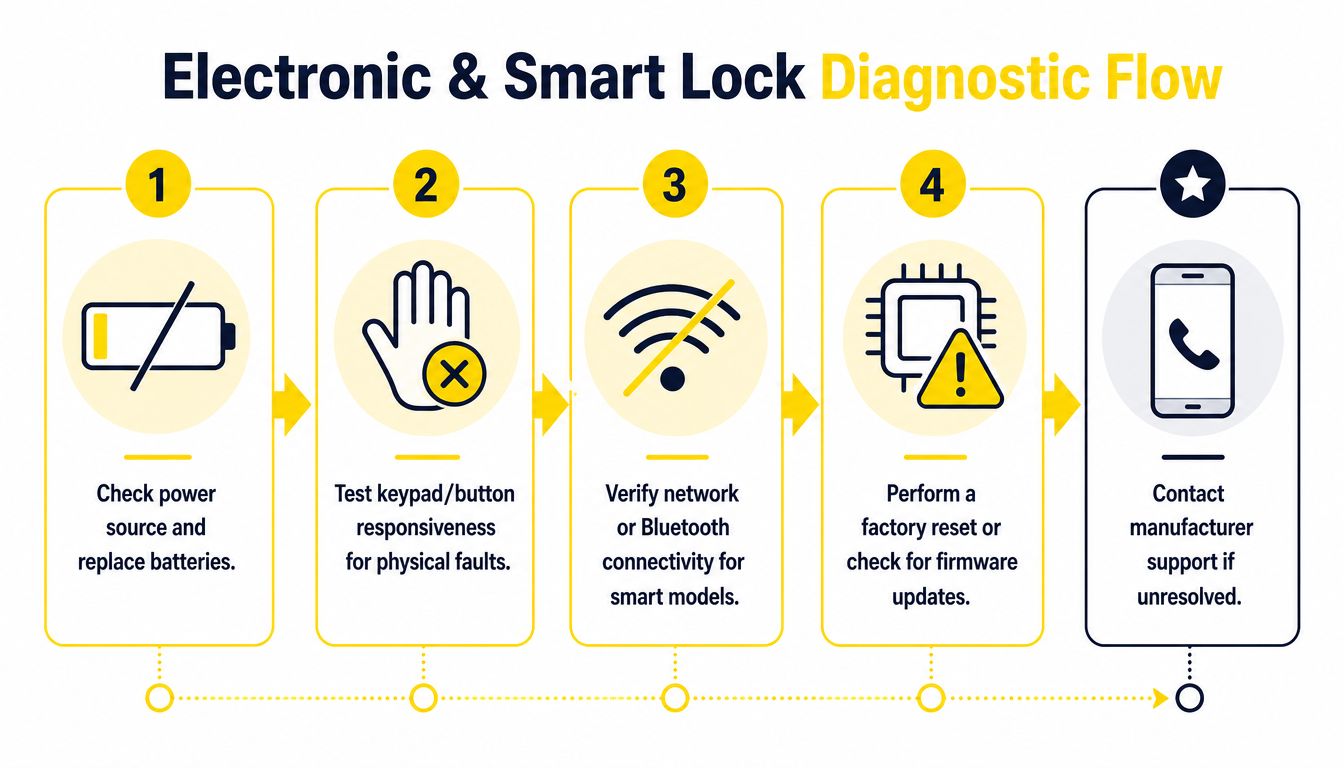
Electronic and Smart Lock Troubleshooting
A smart lock can look like a mechanical failure while the fault sits in the battery pack, wiring, controller, or power supply. The useful distinction is whether the lock is dead, powered but unresponsive, or responding but unable to move the bolt.
Follow the power path
Start with the indicator light, keypad, reader, or heartbeat LED. No light, sound, or response suggests a battery or supply issue. Replace batteries with the type specified by the manufacturer, then test the lock before changing settings or attempting a reset.
If the lock is wired, a qualified technician can check whether the door is receiving the expected supply. Australian troubleshooting guidance for electronic mortise systems specifically identifies 9–28VDC at the door, heartbeat LED behaviour, wiring faults, power loss, and a USB power test as separate diagnostic checks. The Lockwood Selector troubleshooting guide also distinguishes a lock that remains functional after temporary USB power from one that stays unresponsive.
Separate electronic and mechanical symptoms
- No response at all: Check batteries, the external power point if the model has one, fuses, connections, and the power supply.
- Lights or beeps but no bolt movement: The electronics may be operating while the latch is binding against the frame.
- A successful code or credential with no opening: Check alignment and the motor's ability to retract the bolt. Don't keep repeating the command against a jammed door.
- One access method works and another doesn't: A keypad, card, Bluetooth connection, or fingerprint reader can fail independently from the lock body.
- Recent installation or wiring change: Suspect loose connections, incorrect polarity, programming, or a reset requirement before assuming the mortise case is defective.
A factory reset should be treated as a last resort. It can erase users, codes, permissions, and site settings, which creates extra work for a household, office, or strata building. Model-specific instructions matter, particularly where the lock forms part of a larger access-control system. Further context on choosing and assessing these systems appears in smart locks and whether they're worth it.
Temporary Fixes to Restore Access Safely
A temporary solution should restore legitimate access while leaving the property secure. It shouldn't defeat the lock, leave a door unsecured, or conceal a fault that could strand the next person using the entrance.
If another authorised entry exists, use it and secure the affected door from inside where possible. For a smart lock, use the manufacturer's approved backup method, such as a physical key or external emergency power facility if the model provides one. Keep the manual available, because emergency terminals and reset procedures vary between products.
Choose the least damaging workaround
- Alignment pressure: If the door opens when gently pushed or pulled, avoid forcing the key. Relieving pressure may restore operation temporarily, but the alignment still needs attention.
- Loose hardware: A careful adjustment of visibly loose screws may stabilise a handle or strike. Stop if the screw spins, the timber is damaged, or the lock body shifts.
- Electronic power loss: Fresh batteries or an approved temporary power test can confirm whether the lock has lost supply. Don't connect an improvised power source to a wired system.
- Complete mechanical seizure: Don't drill, pry, kick, or use tools against the door unless a licensed professional has assessed the situation. Damage to the door, frame, cylinder, and surrounding finishes can exceed the original repair.
A door that opens after a temporary adjustment still has a fault. Access restored is not the same as security restored.
Strata and commercial premises need extra care. A temporary change can affect master keys, restricted cylinders, fire-door operation, privacy, or the access permissions of other users. Record what happened, keep removed parts, and tell the owner, strata manager, or facilities contact before someone makes a second alteration.
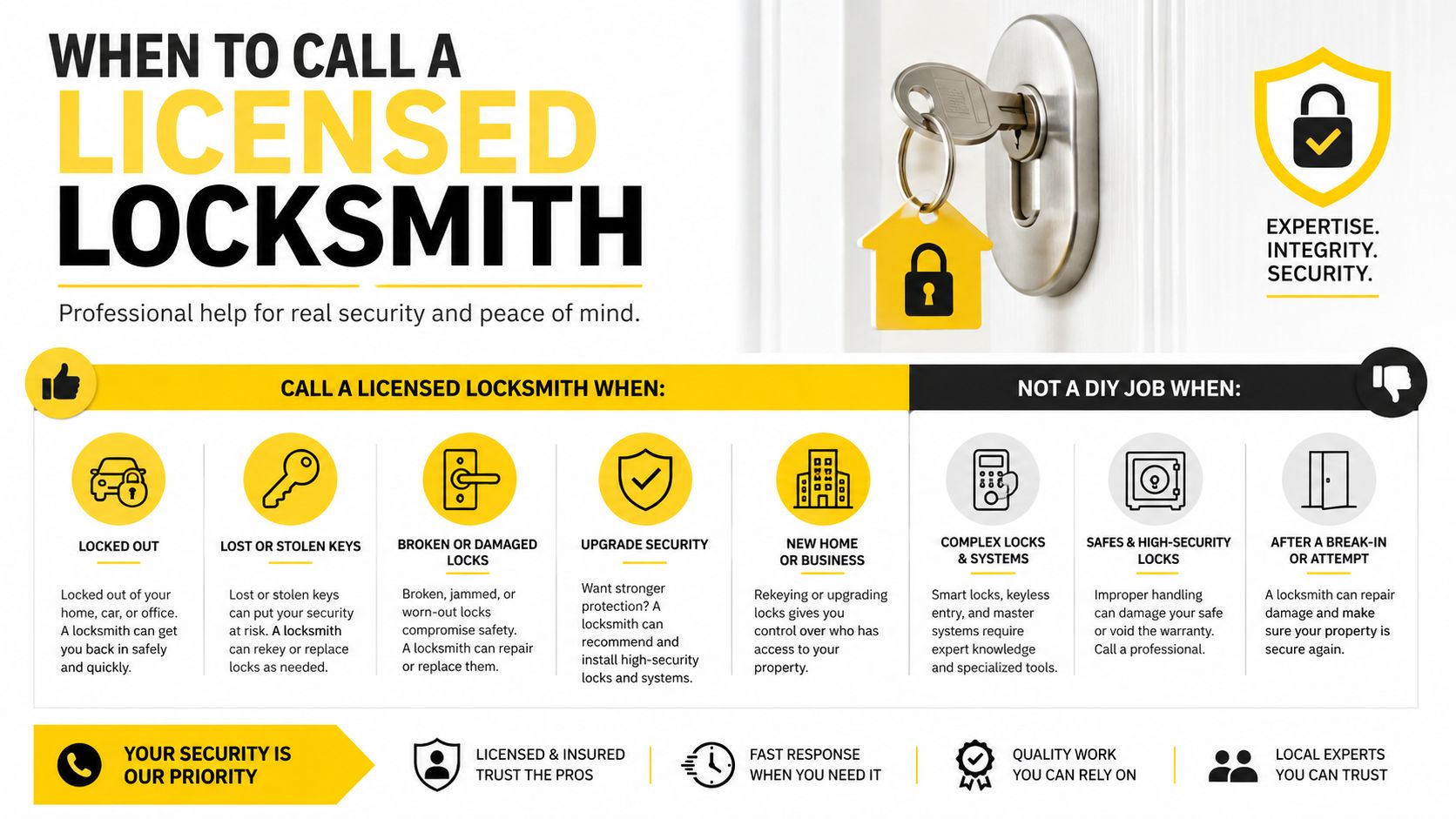
When to Call a Licensed Locksmith
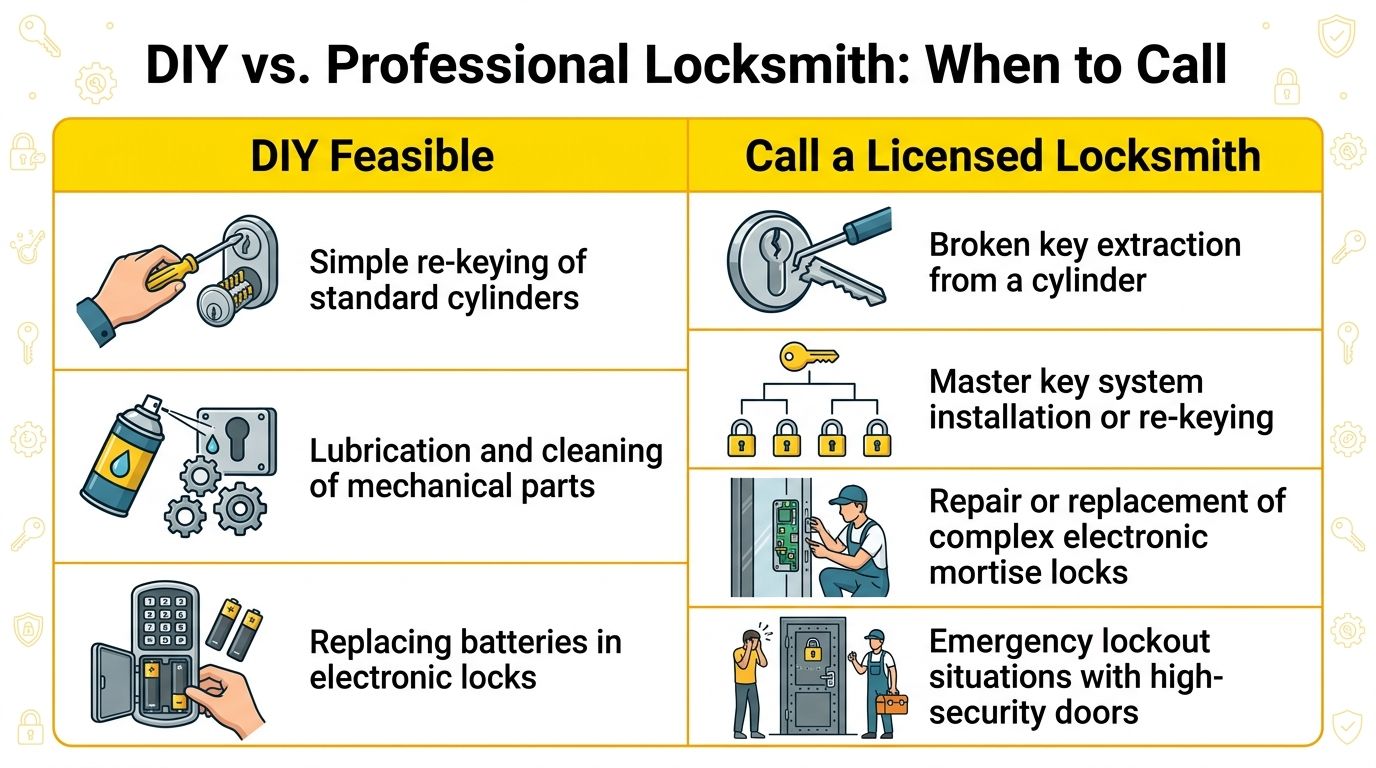
DIY troubleshooting ends when the next step involves destructive entry, restricted key control, electrical testing beyond the manufacturer's instructions, programming, or a security decision affecting other people. A standard residential cylinder may need only a key or alignment assessment. A master-keyed office, electronic mortise lock, strata entrance, or high-security door needs a controlled process that protects the whole access system.
Compare the job with the risk
| Situation | Sensible next step |
|---|---|
| Worn key, visible dirt, or a small alignment issue | Try the low-risk checks, then arrange service if the fault returns |
| Broken key inside the cylinder | Stop turning the lock and use a locksmith for extraction |
| Restricted key or master-key system | Use the system's authorised locksmith and preserve key control |
| Smart lock with power, wiring, or programming symptoms | Arrange electronic lock diagnostics rather than repeated resets |
| Locked out with no safe alternative entry | Call an emergency locksmith rather than forcing the door |
| Strata or commercial access failure | Notify the responsible manager and document the fault before changes |
In NSW, locksmiths must be licensed through the Security Licensing and Enforcement Directorate. NSW Police states that a locksmith working in the security industry needs a Class 2C licence. The NSW Police locksmith licensing guidance supports checking licensing before engaging someone for lock repair, rekeying, or access-control work.
There are no honest universal prices or response times for every North Shore callout. The work depends on access, lock type, damage, key control, time of service, and whether parts or programming are needed. A reputable provider should explain the proposed method and any likely hardware requirement before proceeding, rather than promising a fixed repair without seeing the door.
Preventing Future Lock Failures
Small changes in operation usually appear before a lock stops working. A key that needs wiggling, a latch that catches, or a smart lock that responds slowly deserves attention while the door still opens.
In high-use facilities, Australian hardware guidance recommends checking latch and lock engagement monthly and confirms that doors should operate freely without undue friction. The same guidance warns against using the wrong lubricant or putting fluid or aerosol lubricant inside a cylinder. For high-traffic or harsh environments, cleaning and inspection may need to move from annual servicing to about six-monthly intervals. The Australian hardware care guidance sets out those maintenance principles.
A homeowner can watch the latch line, test a spare key, clear surface dirt, and report recurring movement. A strata manager should also track shared doors, user complaints, closer pressure, and changes after tenant turnover. Owners of older homes around Hornsby, St Ives, and Pymble should treat repeated seasonal sticking as a building and alignment issue, not as a reason to keep forcing the same cylinder. Practical routines for hinges, cylinders, handles, and lock faces are covered in how to maintain door locks.
Lock, Stock & Barrel Locksmiths diagnoses and repairs mechanical door locks, electronic systems, lockouts, rekeying, and access hardware across Turramurra and Sydney's North Shore. When a door lock isn't working, call or request a quote from Lock, Stock & Barrel Locksmiths before forcing the door or replacing hardware that may only need alignment or proper servicing.