- 24 Hour Emergency Services
- Servicing Sydney's North Shore
- View On Map

-
Mail Us On
info@lsblocksmiths.com.au
-
Make a Call
0411 700 072
- View On Map
- 24 Hour Emergency Services
- Servicing Sydney's North Shore
- View On Map
-
Mail Us On
info@lsblocksmiths.com.au
-
Make a Call
0411 700 072
- Contact Us
Door Lock Tumbler Replacement: A North Shore Guide

Lock, Stock & Barrel Locksmiths
On August 5, 2026
A sticky key on the back door, a cylinder that turns partway and then grinds, or a lock that only misbehaves when the door's shut. That's the moment to start thinking about door lock tumbler replacement, but the lock body itself isn't always the culprit. On Sydney's North Shore, the sensible first move is to identify whether the trouble sits in the tumblers, the cylinder, or the door hardware around it before any part comes apart.
What Door Lock Tumblers Actually Do
A key that slides in but won't turn usually sends people straight to the idea of “a broken lock.” Inside a pin-tumbler lock, though, the problem is more specific. The key doesn't just open the door by magic, it lifts a stack of spring-loaded pins to the shear line, and that's what lets the plug rotate, as described in technical lock references on the pin-tumbler mechanism Wikipedia's pin-tumbler lock overview.
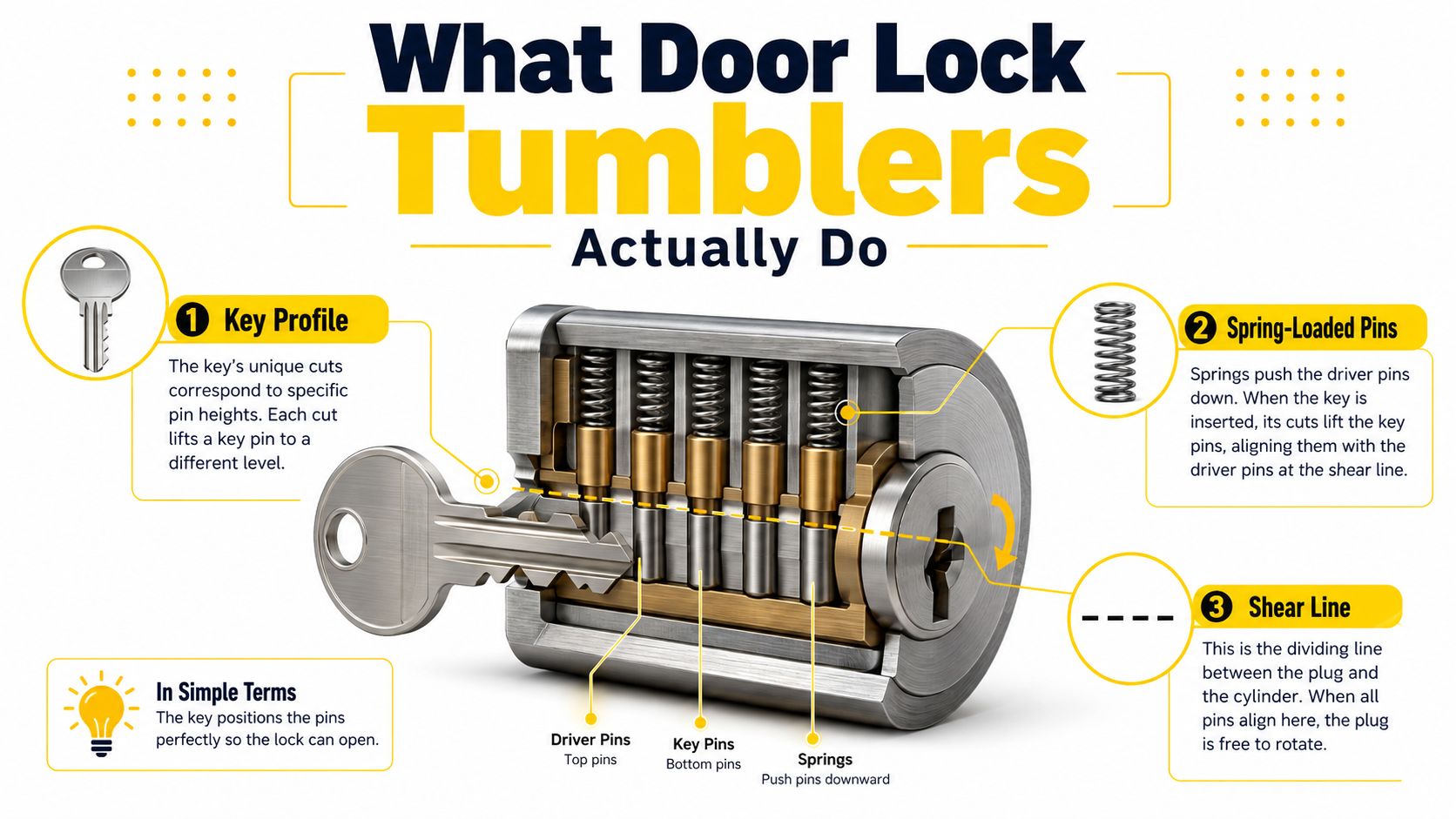
The parts inside the cylinder
The cylinder is the part that accepts the key. Inside it sit the tumblers, more accurately the key pins and driver pins, which have to match the key cut profile closely enough for the plug to move. If the pin heights don't line up, the plug stays locked, which is why a changed key profile needs the tumblers reset or replaced rather than just “fiddled with” from the outside.
That mechanical relationship is why tumbler work is not cosmetic work. It's the core access control in the lock. In Australian homes, offices, and strata buildings, this same mechanism keeps turning up because it's simple, durable, and easy to reset without replacing the whole door set.
Practical rule: if the key profile is correct but the pin heights are wrong, the lock won't behave properly no matter how hard the key is turned.
For homeowners, the useful takeaway is simple. If a door lock tumbler replacement is done correctly, the key that belongs in the cylinder will again match the internal pin stack and open the lock cleanly. If the key still fights the lock after that, the problem may be elsewhere in the door hardware.
Diagnosing the Source of the Problem Before Replacing Anything
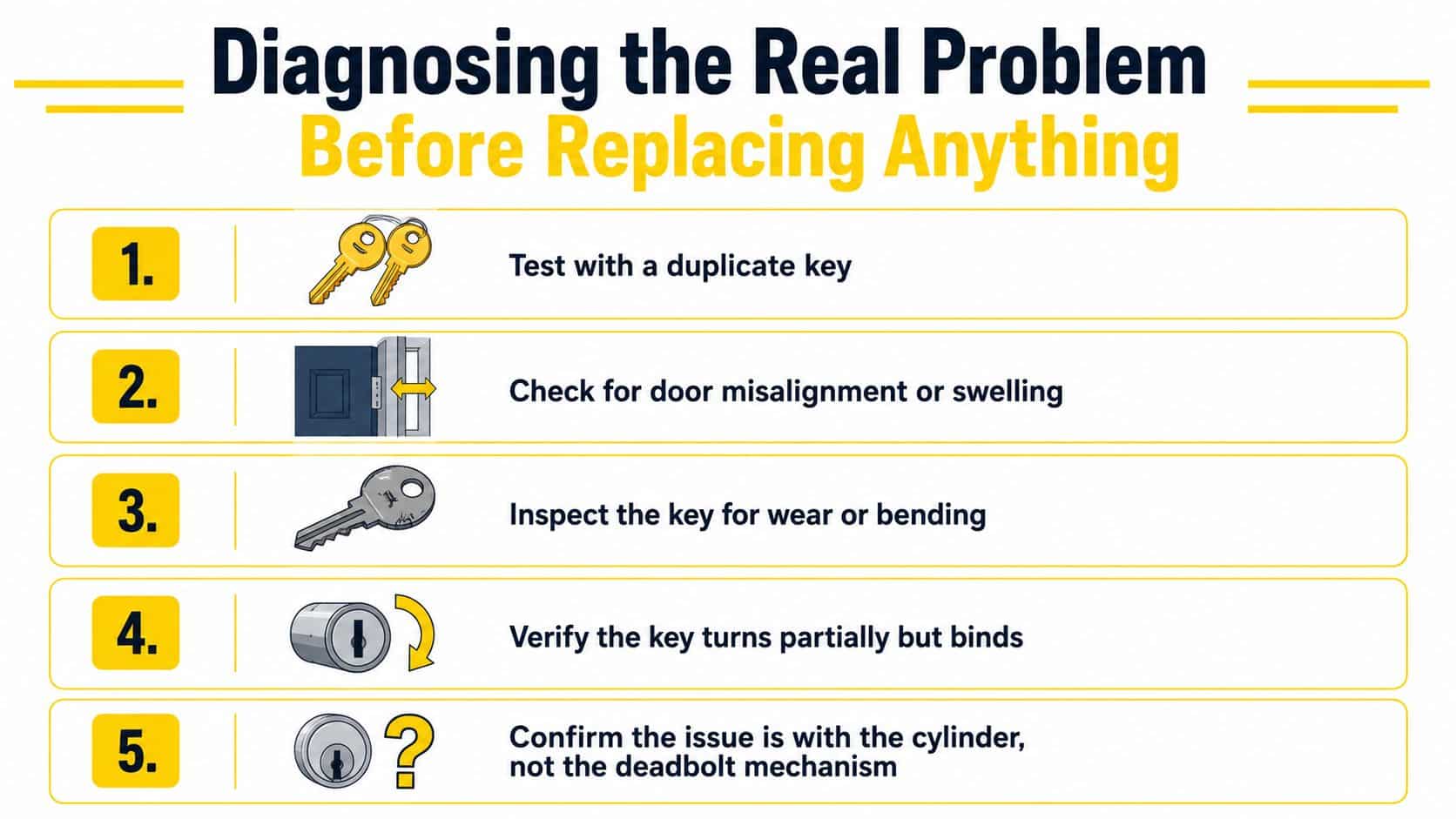
A lot of locks blamed on “bad tumblers” are innocent. Door and frame misalignment, worn springs, debris, corrosion, or internal pin wear can all make a cylinder feel tired even when the tumblers are not the root cause, as noted in general broken-lock troubleshooting guidance from Angi's lock diagnosis article. A quick diagnosis saves money and stops you swapping parts that were never faulty.
What the symptom usually means
A key that works with the door open but binds when the door is closed usually points to alignment, not the cylinder. If the key goes in but grinds, debris or corrosion may be in the plug. If the key will not start properly, check key wear or bending before assuming the cylinder has failed.
A key that turns partway and then stops can mean the plug is fighting misalignment, a worn spring, or internal pin wear. If the deadbolt itself feels stiff, the issue may sit in the bolt mechanism rather than the cylinder at all. That distinction matters, because changing tumblers will not fix a jammed deadbolt throw.
The checks that separate one fault from another
A fresh duplicate key is the first comparison worth making. A worn or bent original key often looks like cylinder failure, and a good spare shows that difference straight away. Then open and close the door while you test the lock, because a lock that behaves differently by door position is usually telling you the frame and latch are not sitting right.
Start with these checks:
- Test a spare key first. A worn or bent original key can mimic cylinder failure.
- Check the door edge and frame gap. If the latch only binds when the door is shut, alignment is suspect.
- Feel for grit or scraping. That points more to debris or corrosion than to a pure tumbler issue.
- Compare the deadbolt and cylinder separately. One can be faulty while the other is fine.
Look at the keyway itself as well. If the key starts well but feels rough partway in, the plug may be dirty or the pins may be sticking. If the lock feels inconsistent from one turn to the next, the issue can also be in the surrounding hardware, not just the cylinder core. For a homeowner wanting a replacement path after diagnosis, a cylinder lock replacement guide is useful once the fault has been narrowed down.
In strata and apartment settings, this diagnostic-first habit matters even more. Hardware has to function, not just be replaced for appearance. A quick swap that ignores the actual fault can leave the owner with the same problem and a lighter wallet.
The Professional Tumbler and Cylinder Replacement Sequence
Once the fault really is inside the cylinder, the work becomes mechanical and exact. The standard rekeying sequence for a pin-tumbler cylinder is well established in locksmith instructions: remove the knob or cylinder, rotate the key to the service position, withdraw the plug with a follower, dump and repin the chamber using a key gauge, then reinsert the plug and retest before reassembly Quick Locksmith's tumbler-changing guide.
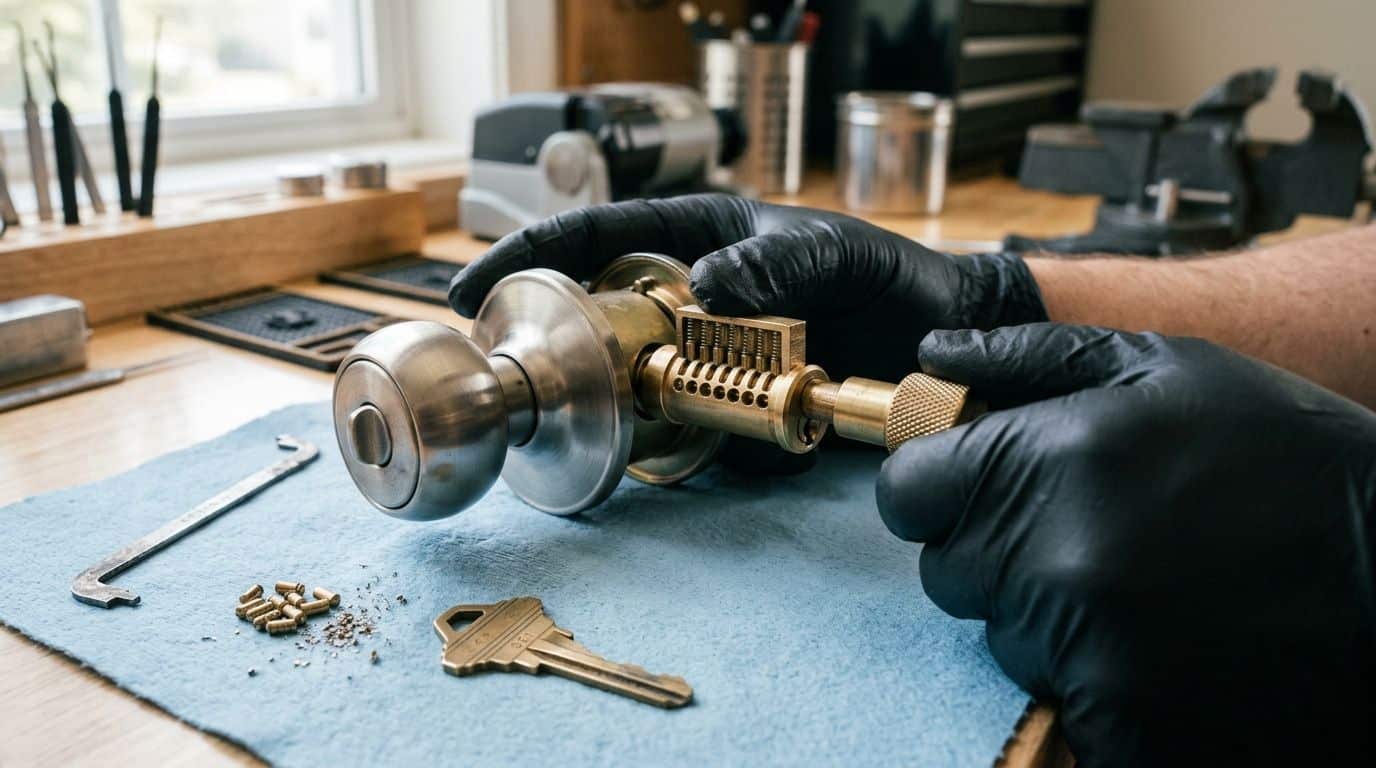
Where DIY work usually goes wrong
The follower step is the part most homeowners skip, and that's where the mess starts. Without it, the top pins and springs can scatter as the plug slides out, and then the lock goes from a controlled repair to a bench full of loose parts. That's the common failure mode in DIY rekeying because preserving spring and pin order is the whole game.
The plug has to come out in a controlled line. Let it tilt, and the pin stack is no longer organised.
A lock cylinder replacement also has a fit-up step that matters before anything is tightened. The new cylinder has to match the old cylinder's type and length, and the cam or linkage must line up with the lock body. Removal and reinsertion generally use only a small key turn, about 10 to 15 degrees, so the cam clears the housing, then the lock is tested with the door open before the trim is tightened, as described in cylinder replacement guidance from Hardware N Sealant.
What a proper sequence protects
That sequence protects three things. It keeps the pins in order, it avoids cam damage, and it confirms the new cylinder seats correctly before the door is shut. The final test with the door open is the part people rush, and it's the part that saves a callback if the cam has bound or the retaining screw hasn't seated properly.
For a homeowner, the logic is simple. If the job is just rekeying and the lock is standard, the work is possible with care and the right kit. If the cylinder is non-standard, restricted, or badly mounted, the safe move is to stop before the plug comes apart.
If the hardware is already out of the door, the service page at Locksmith cylinder lock replacement is the relevant reference point for the kind of work that sits at this level.
Rekeying Versus Full Cylinder Replacement
Rekeying and replacing the whole cylinder solve different problems. Rekeying keeps the existing cylinder body and changes the internal pins so the old key no longer works. Full cylinder replacement swaps the complete unit, which makes sense when the old cylinder is worn, damaged, or incompatible with the access control you need.
Australian pricing guidance shows the practical difference clearly, with rekeying at $40 to $90, changing to a new cylinder at $70 to $150, and full lock cylinder replacement at $100 to $180 for standard work pricing benchmark. Those figures are market benchmarks, not a regulated tariff, but they're a useful way to think about the trade-off.
A quick comparison
| Factor | Rekeying Existing Tumblers | Full Cylinder Replacement |
|---|---|---|
| What changes | Internal pins only | Entire cylinder unit |
| Usual reason | Lost key, tenant turnover, access reset | Worn, damaged, incompatible, or upgraded hardware |
| Typical cost position | Lower | Higher |
| Mechanical scope | Less invasive | More parts and fit-up checks |
| Best fit | Working lock with healthy hardware | Cylinder that's worn, mismatched, or not worth resetting |
Rekeying is often the right call when the lock body is sound and only key control has changed, such as after a tenant turnover or a lost key. Cylinder replacement makes more sense when the barrel is worn, the keyway is damaged, or the new hardware has to match a different level of security or a different cam orientation. For a broader security decision, the article on rekeying versus replacing residential locks sits in the same decision space.
The important technical point is compatibility. A new cylinder still has to match the old cylinder's dimensions and linkage, or the door won't operate cleanly. That's where a cheap-looking part can become an expensive mistake.
When to Call a Licensed Locksmith Instead
Some tumbler jobs are straightforward. Others need a licensed locksmith because the hardware, access system, or property setup raises the stakes. Swinging doors should use a deadbolt with at least a one-inch throw and be mounted with through-the-door machine screws or other non-removable bolts rather than wood or sheet-metal screws, according to older physical-security guidance from the U.S. Office of Justice Programs deadbolt mounting guidance.
When the job is bigger than the cylinder
If the door hardware is part of a master key system, a restricted keyway, or a strata access arrangement, the cylinder isn't a private DIY part anymore. The wrong repin can create access problems for other occupants, not just the door in front of you. That's why buildings with shared hardware need a cautious approach rather than a quick swap.
Rule of thumb: if key control affects more than one occupant, don't treat the lock like a simple household repair.
The same caution applies when the mounting itself is weak. A perfect tumbler reset won't compensate for poor fixings or a deadbolt that doesn't project correctly into the strike. If the lockset is insecure at the screw or throw level, the whole assembly still needs attention.
For North Shore homes and strata properties, what to know before calling a locksmith in Sydney's North Shore is the right sort of local reference point when the job is moving beyond a simple cylinder reset.
Lock, Stock & Barrel Locksmiths also handles lock changing and lock repair on the North Shore, which is the kind of service that fits these more involved cylinder and tumbler jobs without pretending every case is a quick DIY fix.
Your Lock Maintenance Action Plan
If the key is worn, get a high-quality duplicate cut from the original before blaming the lock. If the lock feels gritty, clean and lubricate the cylinder carefully, then retest with the door open. If neither of those changes the feel, the cylinder should be inspected properly before more parts get replaced.
A good maintenance habit is simple, keep the key profile healthy, keep the cylinder free of grit, and pay attention to any change that only appears when the door is closed. If the lock is in a strata building, or if the hardware is already old and the symptoms keep returning, a licensed inspection is the safer call. A cylinder that keeps sticking is usually telling you it's nearing the point where diagnosis matters more than another turn of the screwdriver.
For a proper on-site diagnosis, rekeying, or cylinder work on Sydney's North Shore, Lock, Stock & Barrel Locksmiths can inspect the lock, confirm whether the tumbler is the problem, and carry out the repair or replacement that fits the hardware. Visit Lock, Stock & Barrel Locksmiths to request a quote or book a locksmith who works through the fault before changing parts.