- 24 Hour Emergency Services
- Servicing Sydney's North Shore
- View On Map

-
Mail Us On
info@lsblocksmiths.com.au
-
Make a Call
0411 700 072
- View On Map
- 24 Hour Emergency Services
- Servicing Sydney's North Shore
- View On Map
-
Mail Us On
info@lsblocksmiths.com.au
-
Make a Call
0411 700 072
- Contact Us
Emergency Key Replacement: What to Do When You’re Locked Out

Lock, Stock & Barrel Locksmiths
On August 16, 2026
At 9pm on a North Shore street, a lost key can turn a normal evening into a difficult one very quickly. A tenant may be standing beside the front door with a flat phone battery, a child waiting in the car, and no clear idea whether the landlord, agent, strata manager, or locksmith is allowed to authorise entry. Calling the first number in a search result can create a second problem if the price is vague or the person at the door can't verify who lives there.
Emergency key replacement is not always a matter of cutting another key. The sensible decision usually happens in three stages: confirm who has authority, inspect the existing lock, then choose between cutting a key, rekeying the cylinder, or replacing the hardware. The following approach is designed for homeowners and tenants around Turramurra, Wahroonga, Gordon, Killara, and the wider North Shore, where a calm verification process is safer than forcing the door.
The First Five Minutes After a Lost Key or Lockout
A tenant on a North Shore street recently found herself locked out after a late appointment. The key wasn't in her handbag, the front door was deadlocked, and the first instinct was to call a locksmith immediately. Before doing that, she checked the back door, garage access, and a window that had been left unsecured. The property still couldn't be entered safely, but those checks ruled out an unnecessary destructive response.
That first pause matters. A locksmith needs to know whether the problem is a lost key, a broken key, a failed cylinder, or a locked door with another lawful entry route available. Searching every practical access point can also prevent a callout becoming more involved than it needs to be.
A calm order of operations
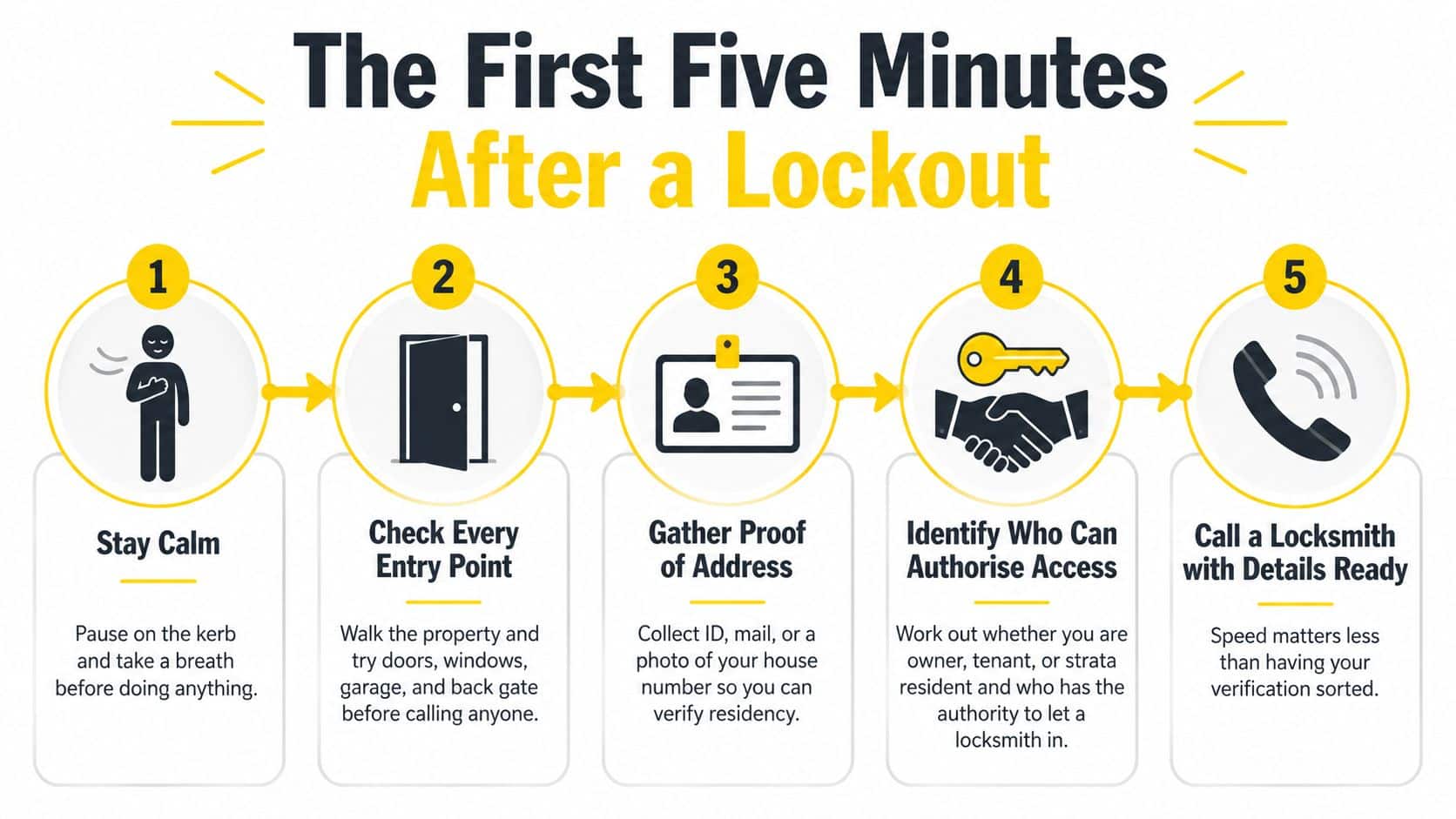
Use this sequence before making the call:
- Stop and assess the immediate risk. Move away from traffic, keep children and pets close, and check whether anyone is inside who needs urgent help. A medical emergency or a child locked inside is a matter for emergency services first.
- Check every reasonable entry point. Look at the front and rear doors, garage, side gate, and accessible windows. Don't climb, force a window, or damage a door in the dark.
- Gather proof of residence. Have photo identification, a tenancy document, utility correspondence, mail, or a clear photo showing the property number available. The exact document will depend on the situation.
- Work out who can authorise access. An owner can generally confirm their own authority. A tenant may need the property manager or landlord. An apartment resident may need a building manager or strata contact, particularly where common-area access is controlled.
- Call with useful details ready. Give the locksmith the suburb, property type, lock problem, time of day, and whether the caller has identification and authority to enter.
Practical rule: Speed helps only after the right person has been identified. Verification prevents a rushed call from becoming an unauthorised entry or an unexplained invoice.
The caller should also record whether the key was lost nearby, stolen, broken in the lock, or left inside. Those details affect the security response. A stolen key may justify rekeying even when the lock still works, while a snapped key may require extraction before a replacement can be made.
Who Can Authorise Access in a Home, Apartment, or Strata Building
A locksmith isn't there to decide who owns or occupies a property. The locksmith must establish that the person requesting entry has a lawful reason to be inside, then use the least damaging method available. That decision is straightforward for some freestanding homes and more complicated in rental and strata buildings.
Freestanding owner-occupied homes
An owner-occupier should have photo identification and something connecting them to the address. A rates notice, licence address, recent mail, or another reasonable proof may help, although a locksmith may still ask questions before touching the lock.
The owner should explain whether the key is missing, the lock has failed, or someone is trapped inside. If the lock is intact, non-destructive entry may be possible. If damage has already occurred, photographs and an insurer notification may become relevant later.
Rentals and townhouses
A tenant should contact the property manager or landlord before authorising work where possible. The manager may hold a spare key, know the lock arrangement, or be able to confirm the tenancy directly. After hours, the tenancy agreement, agency emergency number, or building contact list may provide the right route.
A tenant shouldn't assume that paying the locksmith makes every action authorised. Written confirmation of the work can protect both tenant and owner, especially if a cylinder is changed or a shared access system is affected.
Apartments and strata buildings
Apartment lockouts involve two separate access questions. The resident may need lawful access to the private lot, but the locksmith may also need to pass through a secured foyer, lift, car park, or basement. A building manager, strata manager, landlord, or nominated after-hours locksmith may control that process.
Australian strata guidance highlights that residents may need prior permission and identity or tenancy proof, while some buildings restrict after-hours work to nominated locksmiths. The apartment key and access guidance from StrataYou explains why the first call may need to go to building management rather than directly to a tradesperson.
A clear authority chain avoids a locksmith arriving at a locked foyer with no way to verify the resident. It also reduces the risk of changing a lock that forms part of a master-key or common-area system.
Key Cutting, Rekeying, or Full Lock Replacement
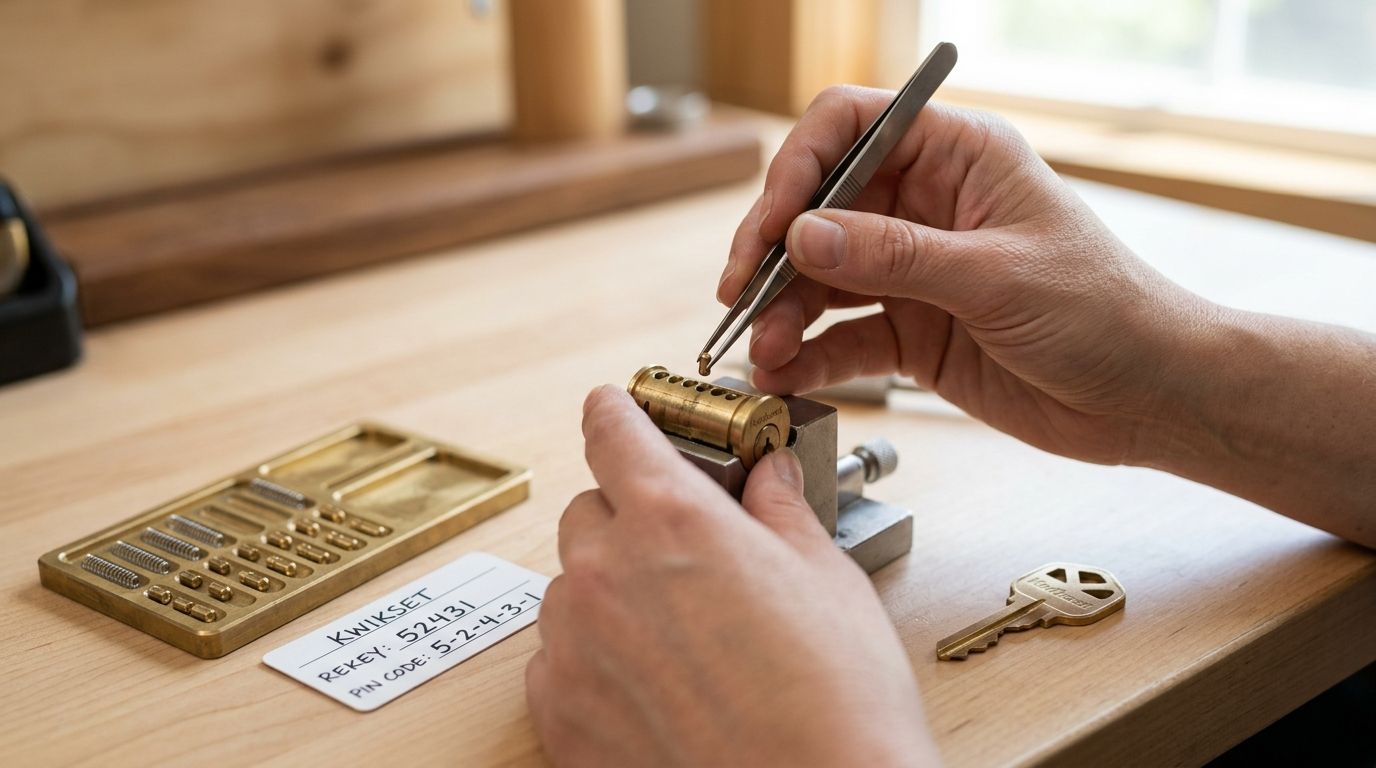
The right job depends on two things: the lock's condition and whether a missing key must be disabled. Key cutting makes a usable key. Rekeying changes the cylinder's internal pin or tumbler arrangement, so the old key no longer operates it. Full replacement removes the existing hardware and installs a new lock or cylinder.
When key cutting is enough
Key cutting works when a usable original remains or a reliable key code is available. It does not remove access held by a stolen or misplaced key. Cutting another copy in that situation leaves the missing key active.
A broken key may need to be extracted first. The locksmith should check whether the break is clean, whether the cylinder has been damaged, and whether the recovered key still provides a suitable pattern. If the key is badly worn, copying it can reproduce the same fault.
Why rekeying often fits the situation
Rekeying is usually suitable for an intact lock when the household needs to disable a missing key without changing the entire lock body. Sydney benchmarks place rekeying at approximately A$70 to A$130 per lock, according to this Sydney locksmith pricing guide. The locksmith resets the cylinder's pins or tumblers and supplies keys that match the new arrangement.
That choice can suit a tenant changeover, a lost handbag, or an unclear key trail. Existing compatible hardware stays in place, and fewer parts may be needed than with a complete replacement. The cylinder still requires inspection. Worn, damaged, or non-standard hardware can make rekeying poor value, even when the lock initially appears serviceable.
When replacement is justified
Full replacement is more appropriate when the cylinder is damaged, the lock body is worn, the hardware is non-standard, or the required security arrangement has changed. It may also be the only dependable option when the existing lock cannot be rekeyed or no longer suits the door.
The practical question is whether the current hardware can deliver the required security result. A competent locksmith should explain why rekeying will not meet that result before recommending replacement. The written quote should separate labour from hardware, so the homeowner can see what is being changed and why.
What Happens When a Mobile Locksmith Arrives On-Site
A professional mobile visit should feel organised rather than mysterious. The van normally carries cylinders, pins, keys, extraction tools, picks, tension tools, screwdrivers, drills for controlled last-resort entry, measuring equipment, and replacement hardware suited to common residential and commercial doors. The exact parts depend on the building and lock brand.
The arrival and verification
The locksmith should first confirm the address and speak with the person requesting access. Identification, tenancy evidence, owner confirmation, or contact with an authorised manager may be required. The locksmith should also ask what happened, whether the key is missing or broken, and whether the caller wants the old key disabled.
The lock is then inspected before any drilling or replacement is proposed. A sound cylinder may be opened without damage. A failed mechanism, damaged keyway, or restricted strata arrangement may require a different method.
The quote comes before the work
A written quote should identify the callout, labour, expected hardware, and any known access or parking charge. The customer should be able to ask what happens if the cylinder cannot be rekeyed, whether a replacement is optional, and whether the price changes after hours.
The service approach described in what happens when you call a locksmith is useful because it gives customers a clear picture of the visit rather than leaving the process to guesswork.
The job itself may involve picking or bypassing the lock, extracting a broken key, rekeying the cylinder, fitting a new lock, or cutting keys on the vehicle. Afterward, the locksmith should test the new key from both sides where relevant, check the latch and deadbolt, confirm the door closes correctly, and make sure the key doesn't bind.
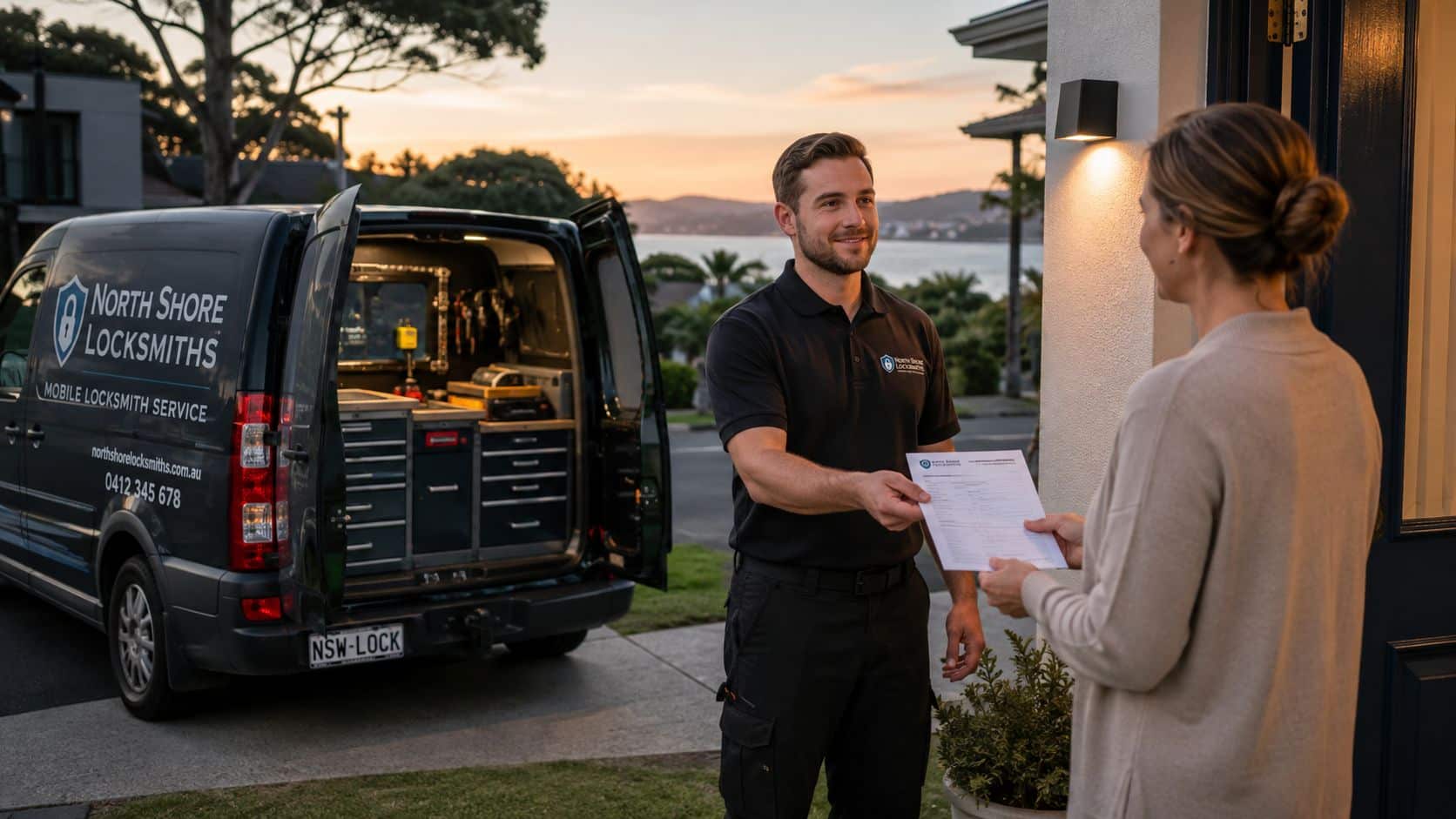
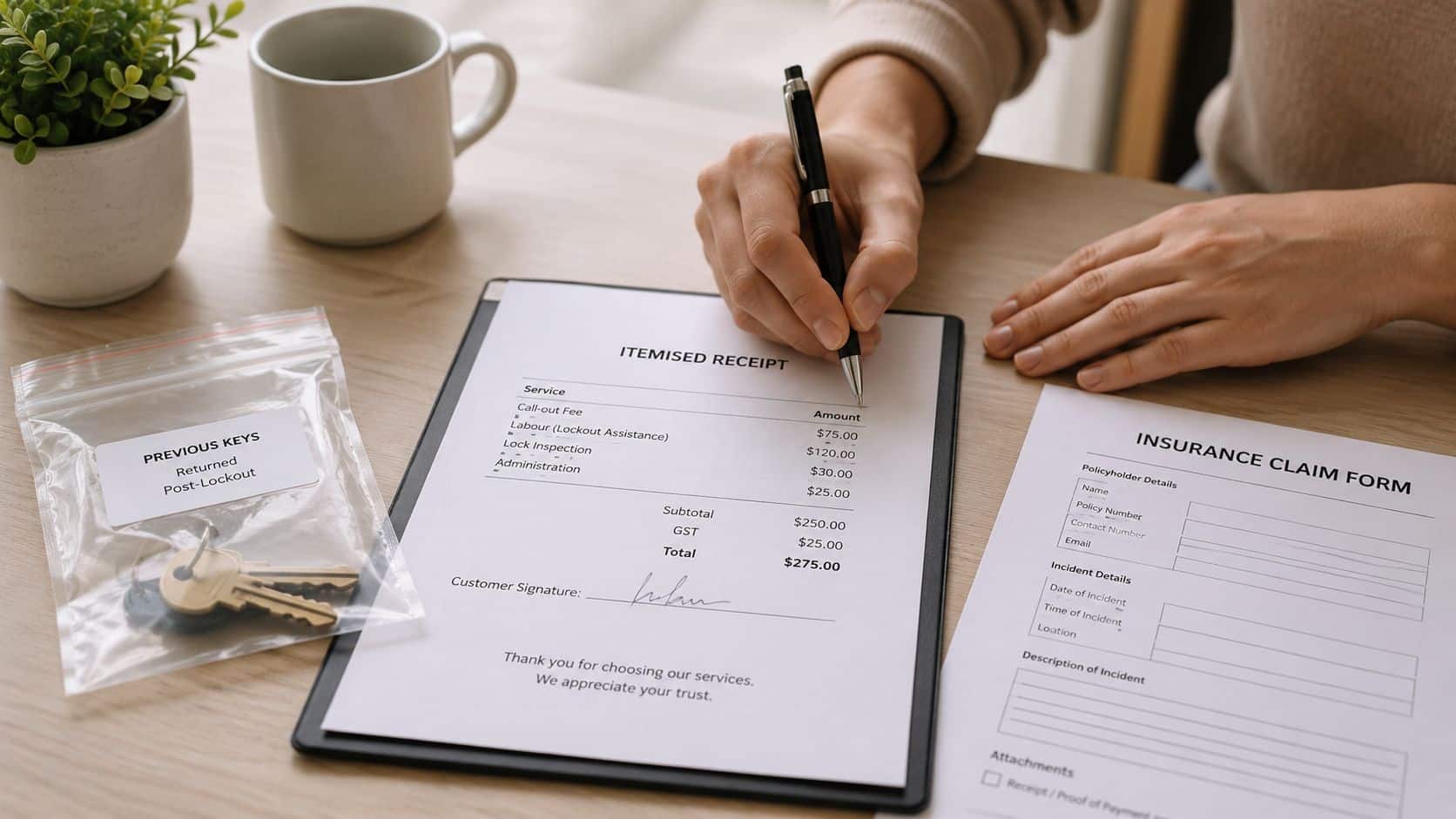
The customer should receive an itemised receipt. If a cylinder was rekeyed, the old key should be treated as invalid, and any removed component should be returned or disposed of according to the customer's preference. A clean handover matters because the invoice may later support a rental record, strata notification, or insurance claim.
What Emergency Key Replacement Actually Costs on the North Shore
A North Shore lockout invoice usually comes from four decisions: the callout, the time of day, the hardware response, and the access conditions. A single unexplained total gives you no way to judge the quote. Before work starts, ask what each charge covers and which parts of the job are still optional.
Sydney benchmarks put rekeying at about A$70 to A$130 per lock, while after-hours emergency lockouts commonly fall around A$150 to A$350 or more. Broader Australian pricing guidance places standard business-hours lockouts at approximately AUD 120 to 300 and after-hours emergency service at AUD 200 to 500, as outlined in this Australian locksmith cost guide.
| Option | Business Hours | After Hours | Best For |
|---|---|---|---|
| Key cutting | Quote depends on key type and whether an original or code is available | Quote depends on key type and mobile attendance | A working original remains |
| Rekeying | About A$70 to A$130 per lock | Add the agreed emergency callout and after-hours labour | The cylinder is intact and the old key must be disabled |
| Lockout or full replacement | Standard service or hardware quote | About A$150 to A$350 or more for an emergency lockout, with replacement hardware quoted separately | Failed, damaged, unsuitable, or non-standard hardware |
Time changes the price because after-hours attendance carries a premium. The Australian comparison places that premium at roughly 67% or more over business-hours work. Parking may also affect the total, with CBD and inner-city surcharges of A$20 to A$50 sometimes added in the Sydney benchmark.
Reading the quote properly
Ask the locksmith to separate:
- Callout: attendance and travel.
- Labour: entry, extraction, rekeying, or installation.
- Hardware: cylinder, lock body, keys, or other parts.
- Access charges: parking, building access, or other stated additions.
A higher evening price is not automatically unfair. The warning signs are a refusal to explain the charge, pressure to replace hardware before inspection, or a total that changes without a clear reason. If the key is missing rather than locked inside, review this lost key replacement service information before approving work, so the response matches the actual security risk.
Security and Insurer Considerations After the Lockout
Getting back inside is only the immediate result. The household still needs to close the security gap created by the missing key, document any damage, and tell the right property or insurance contact what happened.
If forced entry occurred, photograph the door, frame, strike plate, and damaged lock before repairs where it is safe to do so. The insurer may require written notice, supporting photographs, and a police report, depending on the policy and circumstances. The customer should ask the locksmith for an itemised receipt describing the work without overstating what caused the damage.
Close the key-control gap
After rekeying or replacement, update the household's key register. Record who received each new key, collect old spares, and destroy or mark obsolete copies so nobody mistakes them for active keys. A photograph of the new key and receipt can help maintain a clear record, but the photograph shouldn't be shared publicly.
Tenants should send written confirmation to the agent or landlord. Apartment residents should notify the building manager or strata manager if the key affects a common entrance, restricted key system, garage, or master-key arrangement. Australian strata guidance notes that owners and tenants may be liable for replacing keys, locks, or security devices, and some buildings nominate particular locksmiths for after-hours work. The home rekeying guidance from Lock, Stock & Barrel Locksmiths sets out the broader reasons a household may choose rekeying after a key-control change.
Confirm the hardware
Ask whether the replacement or retained lock is compatible with Australian Standard AS 4145.2 requirements where that standard is relevant to the installation and insurer expectations. Compatibility isn't the same as a generic claim that a lock is “secure”. The locksmith should explain what was fitted, what was retained, and what the customer should monitor.
A clean emergency job ends with more than a working key. It leaves the property manager informed, the key register corrected, the insurer position documented where necessary, and the household clear about which keys now work.
Preventing the Next Lockout and Choosing a Locksmith You Trust
Prevention starts with controlled spares, not a key hidden under a pot. Keep a spare with a trusted person or in a properly managed location, and don't label it with the full address. A restricted key system can also limit casual duplication where several people need access.
Store an emergency contact card in a wallet or phone case with the property address, agent or strata contact, building manager, and a locksmith number. The card should identify the property without exposing more information than necessary.
Check the licence before the emergency
NSW Police SLED states that locksmiths working in the security industry must hold a Class 2C licence, and customers can ask for the licence number and check it on the public register using the NSW Police locksmith licence guidance.
The national occupation profile records about 2,700 employed locksmiths, including 850 in New South Wales, where locksmiths represent 31.1% of the national locksmith workforce. Those figures come from Jobs and Skills Australia. The emergency service market is also fragmented, with 86.31% of providers operating as single-owner businesses, according to the Australian emergency locksmith services directory data.
That makes a pre-emergency relationship useful. Keep the licensed provider's details, ask how quotes are itemised, and confirm whether the business handles residential, rental, strata, and after-hours access. On Sydney's Upper North Shore, Lock, Stock & Barrel Locksmiths operates as a mobile locksmith business serving homes, businesses, and strata properties from Turramurra and surrounding suburbs.
For emergency key replacement, lockout entry, rekeying, broken key extraction, and replacement hardware across Turramurra, Wahroonga, Gordon, Killara, and Sydney's North Shore, call Lock, Stock & Barrel Locksmiths for a clear quote before work begins. Visit Lock, Stock & Barrel Locksmiths to request service details and keep the contact information ready before the next lost key becomes an after-hours problem.