- 24 Hour Emergency Services
- Servicing Sydney's North Shore
- View On Map

-
Mail Us On
info@lsblocksmiths.com.au
-
Make a Call
0411 700 072
- View On Map
- 24 Hour Emergency Services
- Servicing Sydney's North Shore
- View On Map
-
Mail Us On
info@lsblocksmiths.com.au
-
Make a Call
0411 700 072
- Contact Us
How to Install Window Locks in Hornsby & NSW

Lock, Stock & Barrel Locksmiths
On July 21, 2026
On a warm evening in Hornsby, plenty of people leave a window cracked for airflow and assume that's close enough to secure. Then the second thought kicks in. Is that window locked, and if there are kids in the home, is it opening farther than it should?
That's where window locks stop being a minor hardware job. They do two jobs at once. They help secure the house, and in many NSW homes they also need to satisfy child safety rules that aren't optional in strata settings.
Lock, Stock & Barrel Locksmiths works across Sydney's North Shore every day, and the jobs are rarely as simple as “screw this bit on here”. Some windows are out of square. Some old locks have failed inside the sash. Some openings need to be restricted without losing normal ventilation. Knowing how to install window locks properly means matching the lock to the window, drilling in the right place, and checking whether the window should have a compliant safety device rather than a basic security latch.
For strata owners and committees, the legal side matters as much as the fitting. The mandatory deadline for all residential strata schemes in NSW to install compliant child window safety devices was 13 March 2018, and from that date owners corporations became legally required to have fitted devices on all applicable common property windows, as set out in the Strata Schemes Management Amendment (Child Window Safety Devices) Act 2013.
Securing Your Home Beyond the Front Door
Window security usually gets attention after something goes wrong. A lock sticks. A key goes missing. A window won't stay shut. In Hornsby and nearby parts of the North Shore, it's also common to find older aluminium sliders that still run, but the original locking hardware is worn or loose.
That matters because a window lock isn't just there to make the frame look finished. If it doesn't engage properly, the window may still be vulnerable. If it's the wrong style for the opening, it can bind the sash, scrape the frame, or leave the window unable to close cleanly.
Why this job needs more care than most people expect
A lot of DIY jobs go off track because the lock is treated like a universal part. It isn't. Sliding aluminium windows, double-hung windows, and casement windows all use different hardware and need different fitting methods.
A decent installation usually comes down to a few practical checks:
- Window type first: Sliding windows need a different approach from double-hung or casement styles.
- Frame condition matters: If the sash is twisted or the tracks are worn, a new lock won't fix the underlying problem.
- Safety use is separate from security use: A lock that secures a shut window isn't automatically a compliant child-safety restrictor.
- Operation has to stay smooth: The right setup should secure the window without making everyday opening and closing awkward.
Practical rule: If a new lock only works when the window is forced into place, the problem usually isn't the lock. It's the window.
What works and what usually causes trouble
Simple jobs go well when the hardware suits the frame and the frame is still square. Trouble starts when people reuse old screw holes that don't line up, fit a restrictor to a damaged sash, or buy a lock based only on appearance.
The better approach is to slow down at the start. Check the frame, choose hardware that suits the window style, and drill only after the lock position has been tested with the sash moving normally. That's the difference between a lock that merely sits on the window and one that secures it.
Pre-Installation Checks and Essential Tools
Before any drilling starts, the window needs to be checked like a tradesperson would check it on site. That means opening and closing it several times, looking at the clearances, and checking whether the sash sits evenly in the frame. A lock can only work properly if the window is already moving the way it should.
About 22% of aluminium sliding windows in Sydney's older North Shore suburbs show frame distortion. Installing locks on those compromised frames can cause binding, premature failure, or even glass breakage, and restrictors aren't allowed on damaged windows under NSW window safety standards, as noted in this window lock guide on frame distortion and safety.
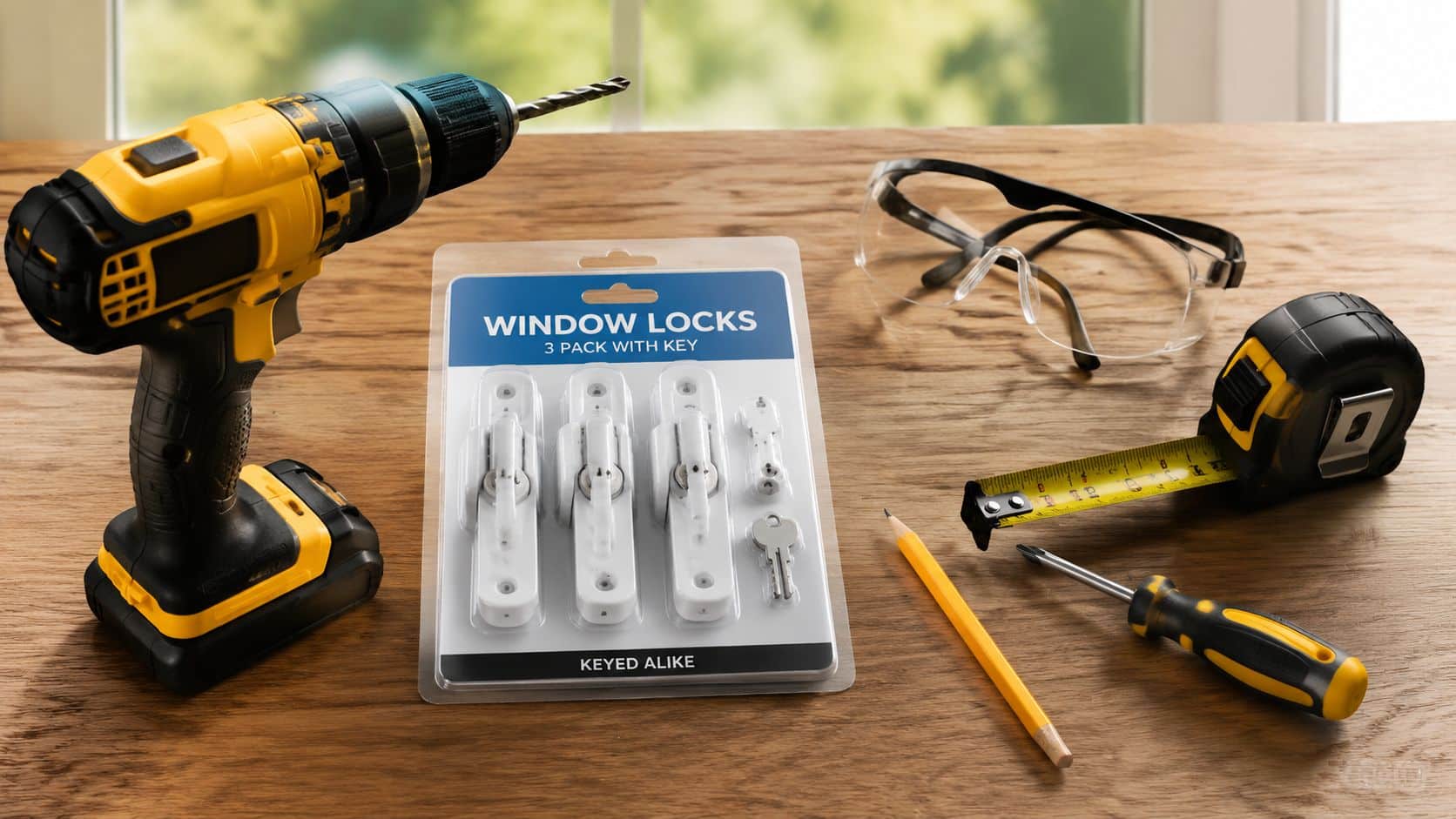
What to put on the bench before starting
A tidy setup makes this job easier. The usual gear includes:
- Cordless drill: With enough control for aluminium frames.
- Drill bits: Match the lock manufacturer's instructions rather than guessing.
- Tape measure and pencil: For marking hole positions cleanly.
- Screwdriver or driver bit: To seat fixings without stripping them.
- Safety glasses: Aluminium swarf and burrs are sharp.
- Lock body, keeper, and supplied fasteners: Keep the full kit together before starting.
For other household security hardware around openings and access points, this guide to chain lock installation is also relevant where a secondary restraint is needed on doors rather than windows.
The check that saves most headaches
The frame inspection matters more than the tool list. If the sash scrapes, rocks, or needs lifting to close, a new lock often makes the problem more obvious, not less. Old rollers, bent channels, and movement in the frame need attention first.
A quick pre-install checklist helps:
| Check | What to look for | Why it matters |
|---|---|---|
| Sash movement | Smooth travel without lifting or grinding | A lock won't compensate for poor alignment |
| Frame shape | Even gaps and no visible twist | Distortion affects bolt engagement |
| Existing holes | Old fixings, enlarged holes, cracks | Reusing bad holes weakens the install |
| Glass clearance | Enough space from the drilling point | Prevents damage during fitting |
If the window doesn't close square without the lock, fitting hardware straight onto it is asking the lock to solve a carpentry problem.
Installing Locks on Sliding Aluminium Windows
Sliding aluminium windows are one of the most common jobs across the North Shore, and they're also where poor fitting shows up fastest. If the bolt doesn't seat properly, the lock might feel engaged while only barely catching.
The professional method for this style is more exact than most DIY guides suggest. Proper installation requires drilling a 7mm bolt hole through the frame sash to a depth of at least 6mm, and a second 7mm hole drilled 100mm from the first allows a fixed venting position. That dual-hole method is set out in the Romak assembly instruction for sliding window lock installation, and it helps prevent the single-point failure seen in up to 30% of DIY installations.
A good visual makes the sequence easier to follow.
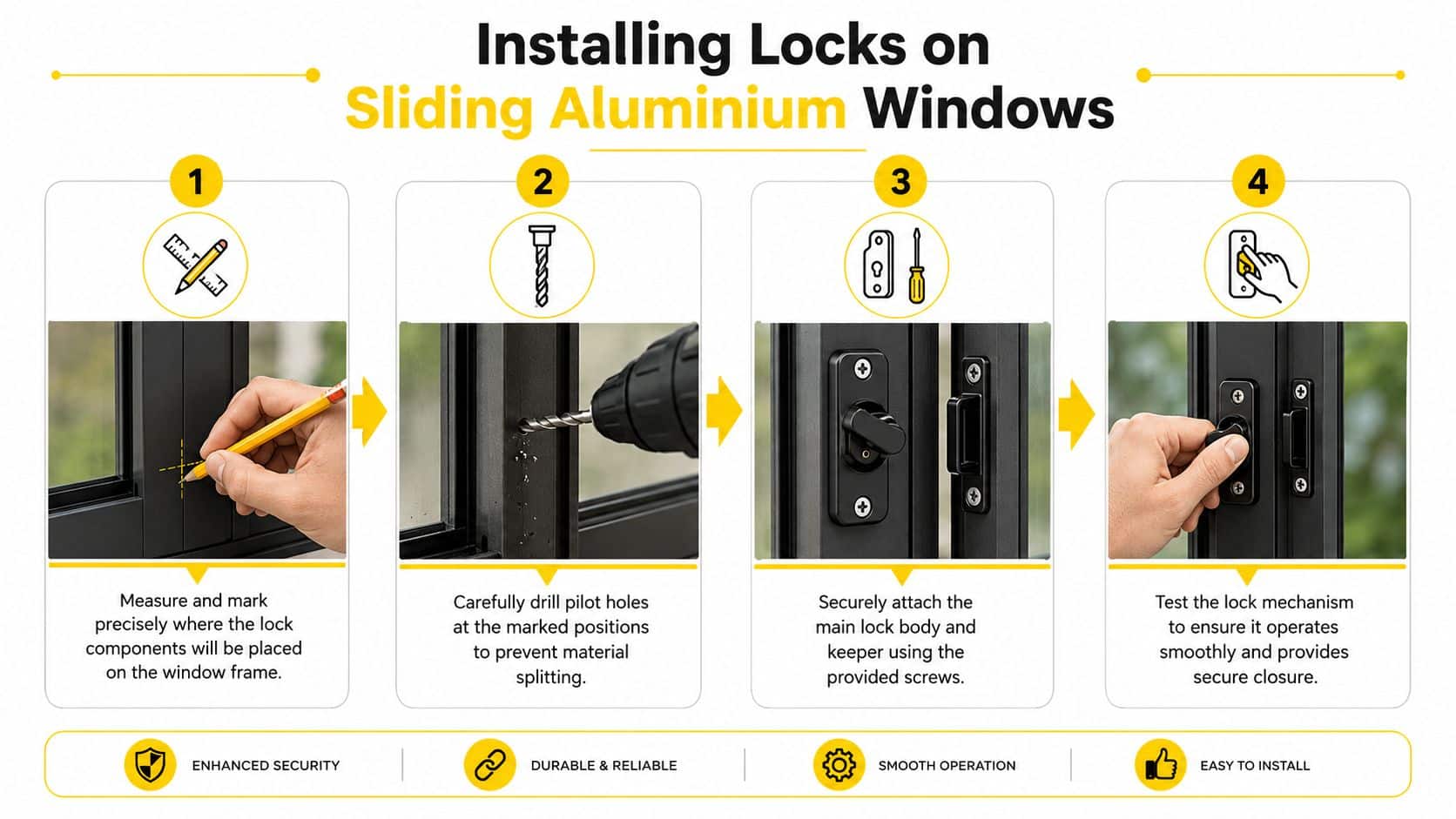
Marking and drilling the lock position
Start with the window fully closed and sitting naturally in the frame. Don't push it hard into one corner just to line up the lock. Mark the point where the bolt will pass cleanly through the sash frame and engage without rubbing.
The main drilling points are straightforward once marked correctly:
- Primary bolt hole: Drill a 7mm hole through the frame sash.
- Minimum depth: Make sure the bolt hole reaches at least 6mm depth so the locking bolt can fully engage.
- Screw clearance: The fitting also needs a 4mm clearance hole for the screw shank where the specification calls for it.
That combination is what gives the bolt proper purchase. A shallow hole is one of the common reasons a lock feels secure but isn't really seated.
Adding the vent position properly
A lot of homeowners want a secure “open a bit” setting for airflow. That's sensible, but it needs to be planned into the fitting rather than improvised. The second 7mm hole goes 100mm from the first and creates a fixed venting position.
That's useful because the window can be secured in two modes:
| Position | Purpose |
|---|---|
| Fully closed hole | Normal locked position |
| Secondary hole | Restricted ventilation position |
The restricted setting is practical for everyday use, especially in bedrooms and living rooms where airflow matters. For hardware examples in this category, the aluminium sliding window lock in black is one type of lock used on suitable aluminium sliders.
A sliding window lock should click into place without forcing the sash sideways. If the bolt needs persuasion, stop and recheck the mark.
What usually goes wrong
The most common mistakes are simple. The mark is taken from a skewed sash, the hole is drilled too shallow, or the installer skips the second locking point and relies on one position only. Another frequent issue is drilling too close to the glass line, which leaves no margin for error.
Clean the burrs after drilling, fit the lock body squarely, and test it several times in both positions. The sash should still travel smoothly, and the bolt should engage with a definite, clean action.
Fitting Locks to Double-Hung and Casement Windows
Not every window on the North Shore slides sideways. Weatherboard homes and older brick homes often have double-hung windows, while some newer builds use casement windows with a lever or winder. The hardware is different, so the fitting method changes as well.
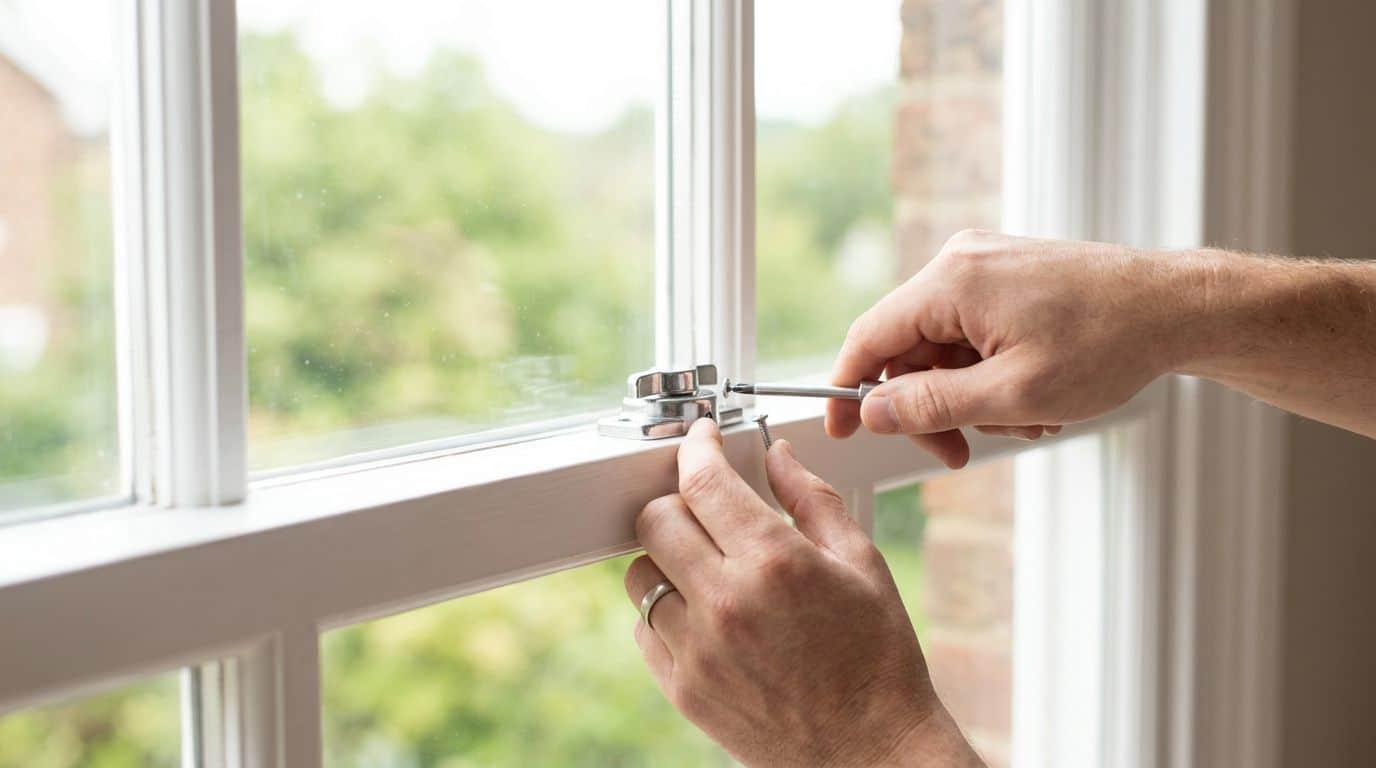
Double-hung windows
A double-hung window usually takes a sash lock mounted where the two sashes meet. The aim is to pull the sashes together tightly enough that the lower sash can't be lifted from outside and the meeting rails stay firm.
The fitting process is less about deep drilling and more about alignment. The lock body and keeper have to meet squarely when the window is fully shut. If they're offset, the latch may fasten but won't draw the sashes together properly.
Good practice on a double-hung window usually looks like this:
- Close both sashes fully: Check that the meeting rails sit flat against each other.
- Mark the centre line carefully: A sash lock that's off-centre can twist as it tightens.
- Pre-drill where needed: Especially on older timber to reduce splitting.
- Test for pull-down pressure: The latch should bring the top and bottom sashes into a snug fit.
Casement windows
Casement windows open outward, so the lock usually secures the handle, lever, or winder operation rather than blocking a sliding movement. Some use keyed hardware. Others use a lockable chain or restricting device suited to the opening style.
The key point is that the lock must secure the window in its natural closed position without fighting the hinges or winder arms. If the sash is already dropping or the hinges are worn, the lock may seem stiff when the fault is elsewhere.
On casement windows, stiffness at the key or handle often points to hinge or alignment problems before it points to a faulty lock.
A neat install on either style should look almost boring. The lock lines up, the screws seat cleanly, and the window still works like a window instead of needing a special trick to close.
Meeting NSW Window Safety and Strata Laws
Security hardware and child-safety hardware overlap, but they aren't the same thing. In NSW, a window that falls into the high-risk category must have a device that meets a specific standard. For apartment owners, landlords, and strata committees, it becomes evident that a basic “lock the window shut” mindset can miss the mark.
The legal test is precise. A complying NSW window safety device must restrict the opening so a 125mm sphere cannot pass through and must resist an outward force of 250 newtons (around 25kg). A window is only considered high-risk if it is less than 1.7m from the internal floor and has a drop of 2m or more to the ground outside, as stated in the NSW Child Window Safety Devices Regulation.
This visual sums up the compliance basics.
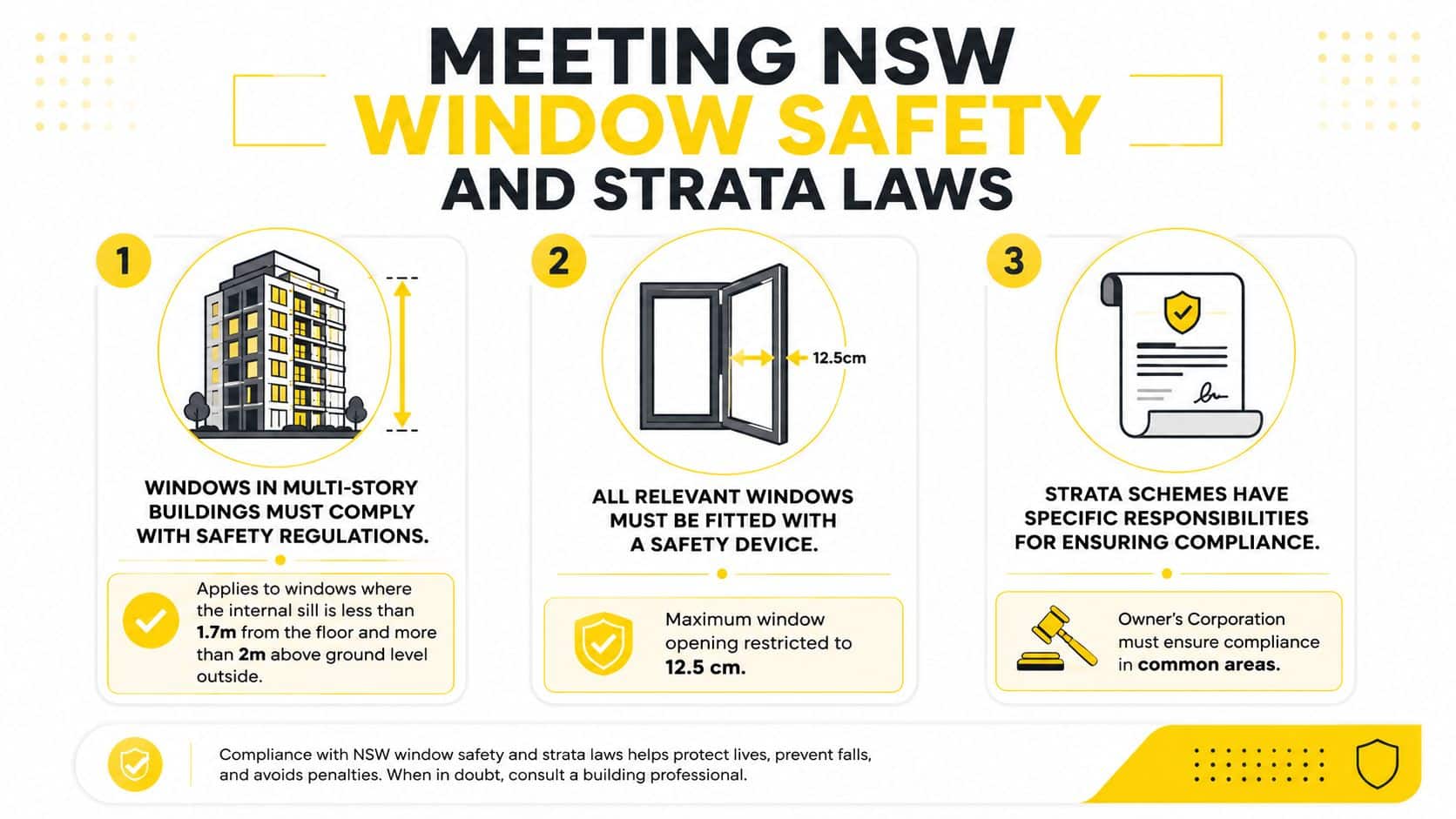
The rules in plain English
The practical takeaway is simple. If the window is within a child's reach inside and the drop outside is significant, the opening needs to be restricted to a safe limit with compliant hardware.
That means checking three things:
- Reach from inside: Is the opening point under 1.7m from the internal floor?
- Fall risk outside: Is the external drop 2m or more?
- Device performance: Does the fitted device restrict the gap and resist the required outward force?
A standard latch may help with security, but it won't necessarily satisfy those requirements.
Why strata owners shouldn't guess
Many owners face a common pitfall. A neat-looking lock from the hardware shop might secure a sash, but that doesn't make it a compliant safety device. In strata properties, it's worth being exact because window replacements, renovations, and hardware changes can affect compliance.
For building-specific guidance and installations, the dedicated window safety devices in NSW page covers the service side in more detail.
Compliance isn't about making a window unusable. A proper device restricts the opening when engaged, while still allowing normal operation when it's not activated.
That balance matters. Adults still need ventilation and access to open and close windows normally, but the device has to control the opening in the safety position. Getting that wrong can leave a household with hardware that feels secure but doesn't meet the actual requirement.
When to Call a Professional Locksmith
Some window locks are a fair DIY job. Others really aren't. The line is usually clear once the sash starts binding, the frame shows movement, or the job involves child-safety compliance rather than simple security.
Professional help makes sense in a few situations:
- The frame is damaged or out of square: Hardware shouldn't be fitted onto a window that needs repair first.
- The window is in a strata property: Compliance questions are easier to handle properly from the start.
- The old lock has failed inside the sash: Replacement can involve dismantling parts of the window rather than just screwing on a new lock.
- The drilling position is close to glass or thin aluminium sections: A bad hole can turn a small job into a more expensive repair.
There's also a plain practical reason to hand it over. Window locks only work when the bolt engagement, frame condition, and daily operation all line up together. If one part is off, the lock may still install, but it won't do the job well.
For local help with homes and units in the area, the Locksmith Hornsby page is the right place to start.
If a window lock needs to be fitted, replaced, or checked for NSW child-safety compliance, Lock, Stock & Barrel Locksmiths can help with a call-out or a quote request across Sydney's North Shore. Call to discuss the window type and issue, or send through a quote enquiry for the hardware and installation needed.