- 24 Hour Emergency Services
- Servicing Sydney's North Shore
- View On Map

-
Mail Us On
info@lsblocksmiths.com.au
-
Make a Call
0411 700 072
- View On Map
- 24 Hour Emergency Services
- Servicing Sydney's North Shore
- View On Map
-
Mail Us On
info@lsblocksmiths.com.au
-
Make a Call
0411 700 072
- Contact Us
How to Secure Documents: A 2026 Guide for Sydney Homes

Lock, Stock & Barrel Locksmiths
On August 8, 2026
The usual panic starts in a small, ordinary moment. A homeowner reaches for the insurance papers after a leak, a strata manager needs a tenancy file before a contractor arrives, or an office assistant discovers the cabinet key is in the hands of someone who left months ago. That is when how to secure documents stops being an abstract admin task and becomes a real test of whether the records are protected.
The hard truth is that document security is never just one thing. Paper needs physical protection, people need controlled access, and important files need a digital backup that can survive fire, flood, theft, and staff turnover. In Australia, poor document control can also become a reportable privacy problem under the Privacy Act 1988 and the OAIC's mandatory data breach scheme, which has produced sustained national notification volumes, including 527 notifications in January to June 2024, 483 in July to December 2024, and 595 in January to June 2025 (OAIC guidance on document security and breach reporting).
For North Shore homes, strata offices, real estate agencies, and compact small offices, the right answer usually blends locked storage, key control, logging, and sensible digital backups. That mix sounds simple, but in practice it's where corners are cut.
Why Document Security Matters More Than You Think
A filing cabinet looks fine until someone finds the spare key in a kitchen drawer, notices the lease folder on a receptionist's desk, or discovers that the only copy of a title-related document disappeared during a move. Those are ordinary failures, and ordinary failures are what expose documents. In a North Shore household, the risk might be a storm, a burglary, or a cleaner who has more access than anyone intended. In a small office, the pattern is usually different, staff turnover, shared passwords, and cupboards nobody has checked in years.
Physical files create physical risk
Paper still carries real exposure because it often holds leases, IDs, financial records, contracts, and floor plans, the exact records that cause trouble if they end up in the wrong hands. If a document can be used to prove identity, show ownership, or reveal access details, it needs more than a tidy drawer. For practical storage decisions, a safe selection guide for home documents helps match the cabinet, box, or safe to the level of risk instead of guessing.
The Australian privacy regime treats document mishandling seriously when it can lead to serious harm. That matters because paper files often contain sensitive information that should stay out of casual reach. The basic discipline is straightforward, take stock, scale down, lock it, then restrict access to people with a legitimate need.
Practical rule: if a document would create a headache in the wrong hands, it needs a better home than a drawer, loose shelf, or desk pedestal.
A secure document setup is never just about stopping theft. It also has to make sure the right person can find the right file, at the right time, without letting everyone else wander through it.
Good security balances speed and restraint
A strong setup keeps records usable without making them easy to misuse. A folder for the accountant should not sit beside medical or tenancy paperwork, and a master key should not open every cabinet in a mixed-use office unless there is a clear reason for that access. The storage method also has to suit the site, because a wall safe in a timber-framed home behaves differently from a locked cabinet in a small commercial tenancy.
For North Shore properties, the practical question is simple. What needs to stay close, what needs to stay hidden, and what needs to stay recoverable if the building is damaged or the staff change?
Choosing and Installing the Right Physical Storage
A lot of advice on how to secure documents jumps straight to cloud tools and forgets the simple fact that many important papers still live on paper. In a home or small office, the hardware choice should follow the risk. A lockable filing cabinet can be enough for low-risk internal papers. A fire-resistant document box helps when the main concern is disaster recovery. A wall or floor safe is the better option when theft, concealment, and controlled access all matter at once.
Match the container to the document type
Insurance papers, estate documents, passport copies, and signed contracts do not all need the same level of protection. A cabinet with a decent lock may be fine for files that are frequently accessed but not highly sensitive. A safe makes more sense when the documents are valuable, irreplaceable, or exposed to visitors, contractors, or flatmates. For households and compact offices, an internal layout that keeps papers central but not obvious usually works better than a flashy safe in plain view.
The industry baseline for business document storage is to classify the records first, then apply strong encryption at rest and in transit, role-based access with MFA, and logging for later review (secure document storage guidance). For physical items, the same discipline applies in a simpler form. Only store what needs to be stored, and put the rest into secure destruction.
Anchoring matters more than branding
A safe that can be carried out is only a heavy box. It needs to be fixed to the building structure, not just parked in a corner. On North Shore jobs, anchoring is usually straightforward in commercial fit-outs and slab-based spaces, but it can be more awkward in timber homes, apartments, and renovated rooms where the floor structure or wall lining limits fixing points. That's where a proper assessment saves trouble later.
A concealed safe is only useful if it stays where it was installed.
Placement is a trade-off. A wardrobe hide-away may be discreet, but it can be awkward in a fire or during a rushed evacuation. A safe in a study is easier to reach, but it also makes the storage pattern obvious to anyone spending time in the room. The right answer is usually the one that balances concealment, access, and anchoring against the actual building layout.
For readers comparing options, a practical starting point is the safe selection guide for home storage, especially if the document set includes papers that can't be replaced easily. In a North Shore context, the best choice is rarely the most expensive one. It's the one that fits the room, the slab, and the risk.
Controlling Who Can Access Your Documents
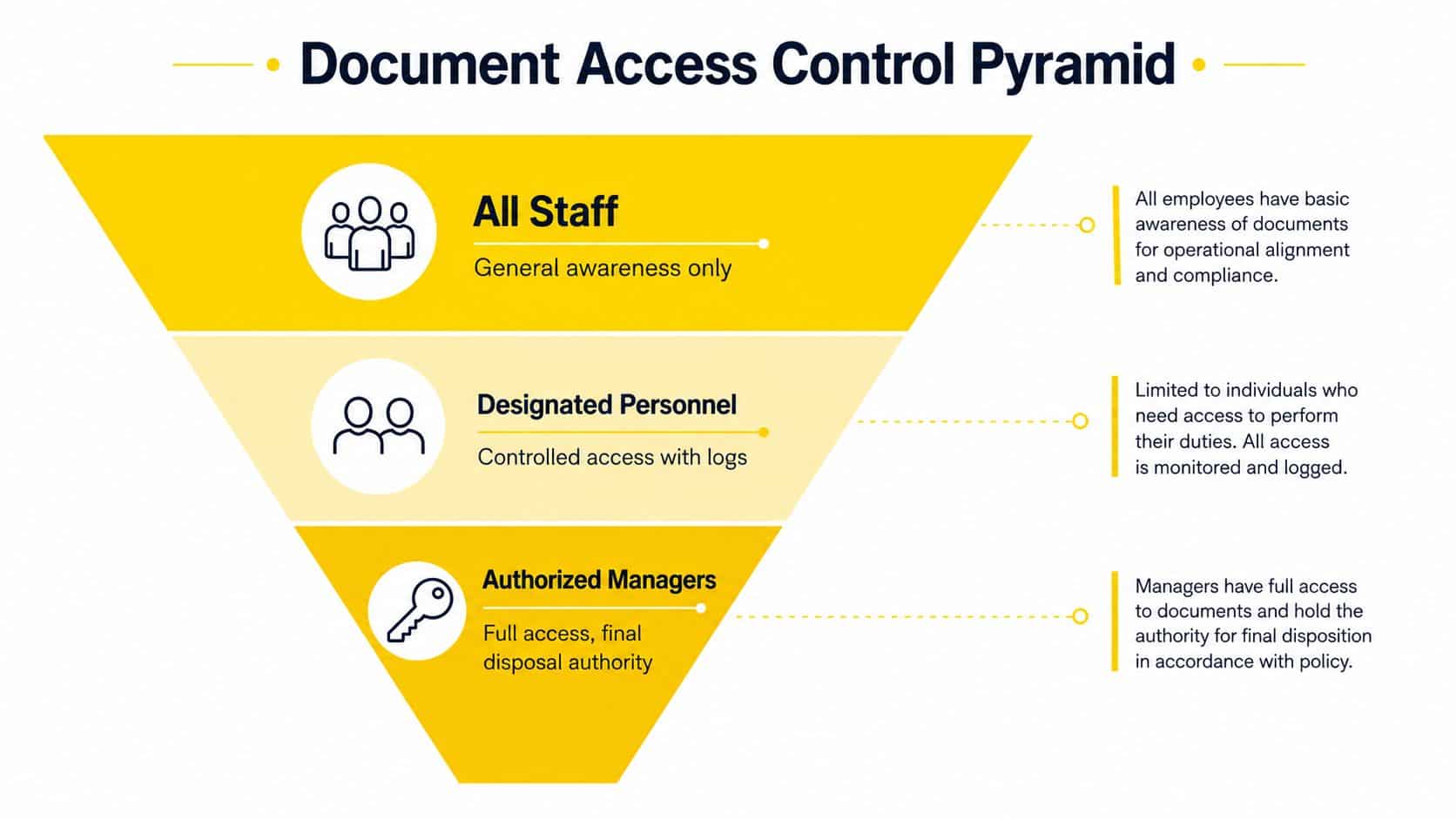
A locked cabinet only works if the wrong people cannot get to the key, the code, or the spare. In offices, strata settings, and rental operations, the main problem is usually key control, not the cabinet itself. When staff, contractors, cleaners, or agents all have some kind of access, documents stay protected only if the access hierarchy is clear and enforced.
Use a key hierarchy that mirrors real responsibility
A master key system works because not every person needs the same reach. A grand master key can open everything, a sub-master can open a defined zone, and an individual key should open only the lock assigned to that user. That structure suits a real estate office with separate archive, front-of-house, and management areas, or a strata environment where committee files, building plans, and turnover records should not all sit behind the same key.
The point is not to multiply keys. It is to cut confusion and limit exposure. Every extra key in circulation creates another handover point, another duplication risk, and another chance that someone keeps access after they should have lost it. Restricted key systems help here because they prevent casual copying, since duplicate cutting can only happen through an authorised locksmith. The practical benefit is control, not ceremony.
For filing furniture, the same logic applies to cabinet and desk lock servicing. A tired lock on a drawer full of personal records is an open invitation to misuse, especially if the room itself is shared.
Log access like it matters, because it does
A simple register for who holds which key, who may open which cabinet, and who can release a file is often enough to expose weak spots before they become incidents. That is also where turnover gets handled cleanly. When someone leaves, their access is removed immediately, not “when there's time”.
The counterintuitive part is that digital sharing can be worse than a physical key in a small operation if nobody tracks it properly. Shared folders, copied PDFs, and forwarded scans can spread faster than anyone notices. A controlled physical system with a log can be safer than a messy digital one, especially for records that are sensitive but not meant for broad circulation.
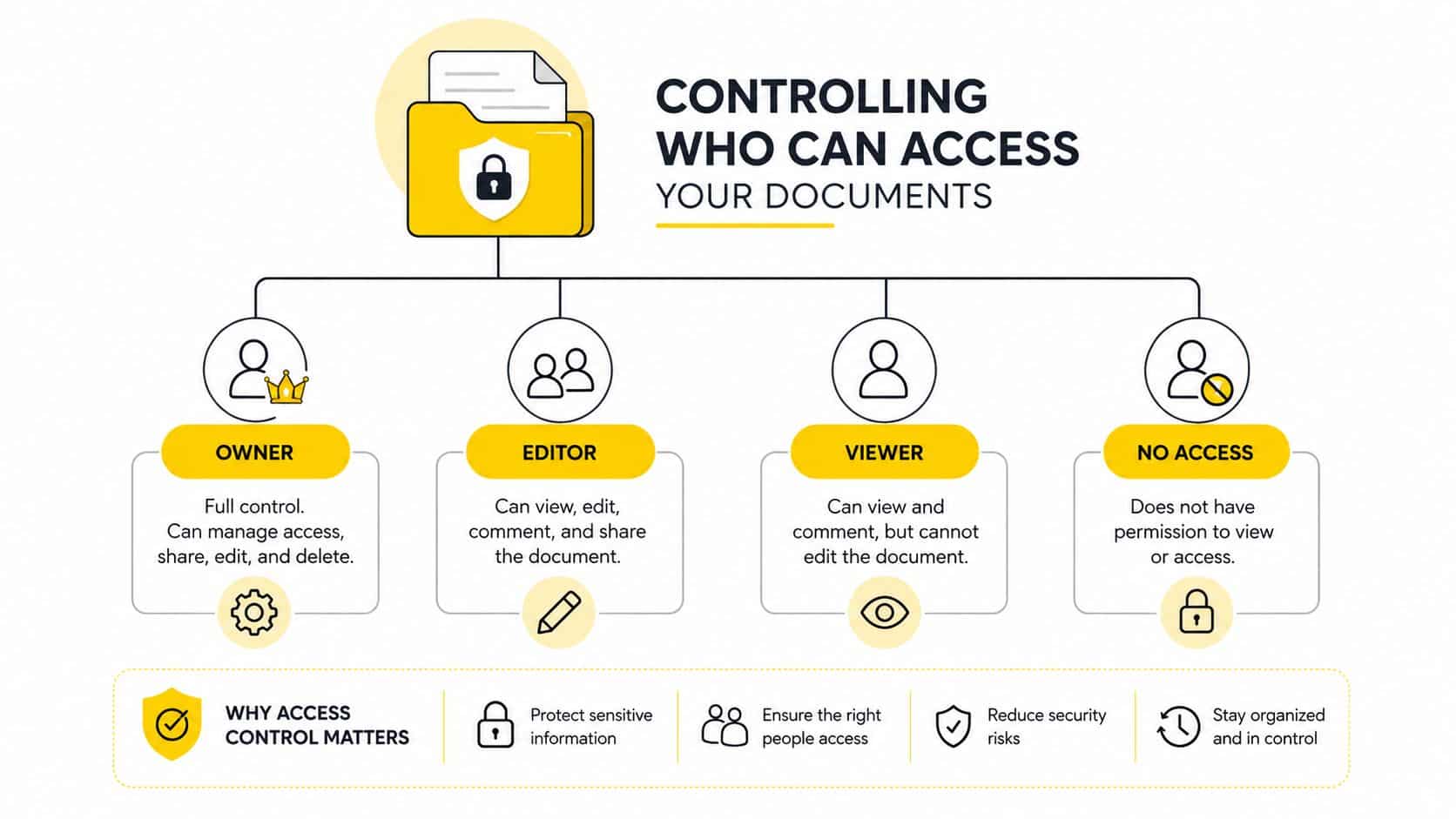
Access should follow responsibility, not convenience.
Secure Transport and Disposal of Sensitive Papers
Documents are often least secure when they're moving. A folder in the car, a box headed to an accountant, or papers waiting for shredding can be easier to lose than files sitting in a locked cabinet. That is why transport and disposal need their own rules, not just the same storage habits.
Handle movement like a chain of custody
For sensitive records, the safest approach is direct. Use a sealed bag or box, assign one person to carry it, and record what left the site and when it moved. Keep as few people handling the material as possible, and note its condition before it leaves, using photos, video, sketches, or written notes where needed (documentary evidence guidance). The same discipline works for legal, tenancy, and insurance files, especially when they need to pass between home, office, and external providers.
That approach matters during clean-outs too. A file handed to the wrong driver, left in an office foyer, or mixed into general recycling is no longer secure. If the record cannot be accounted for at each step, the transport process has already failed.
Destroy paper properly, not casually
Shredding is the final control, but only if it is done well. Cross-cut shredders are adequate for many routine business papers, while more sensitive records justify tighter destruction. The point is to destroy the document so reconstruction is not realistic. For small offices and strata managers, the safer policy is to define what gets shredded, when it gets shredded, and who confirms it was done.
Keep only what is needed, lock what must be retained, and destroy what no longer has a legal or operational purpose (OAIC guidance). If papers are being collected for destruction, treat them like any other sensitive transfer, not something that can sit in a foyer or loading bay. For the point where physical handling and cyber risk meet, this practical note on document security and cyber attacks is a useful reminder that paper leaks often start with weak routines, not just weak software.
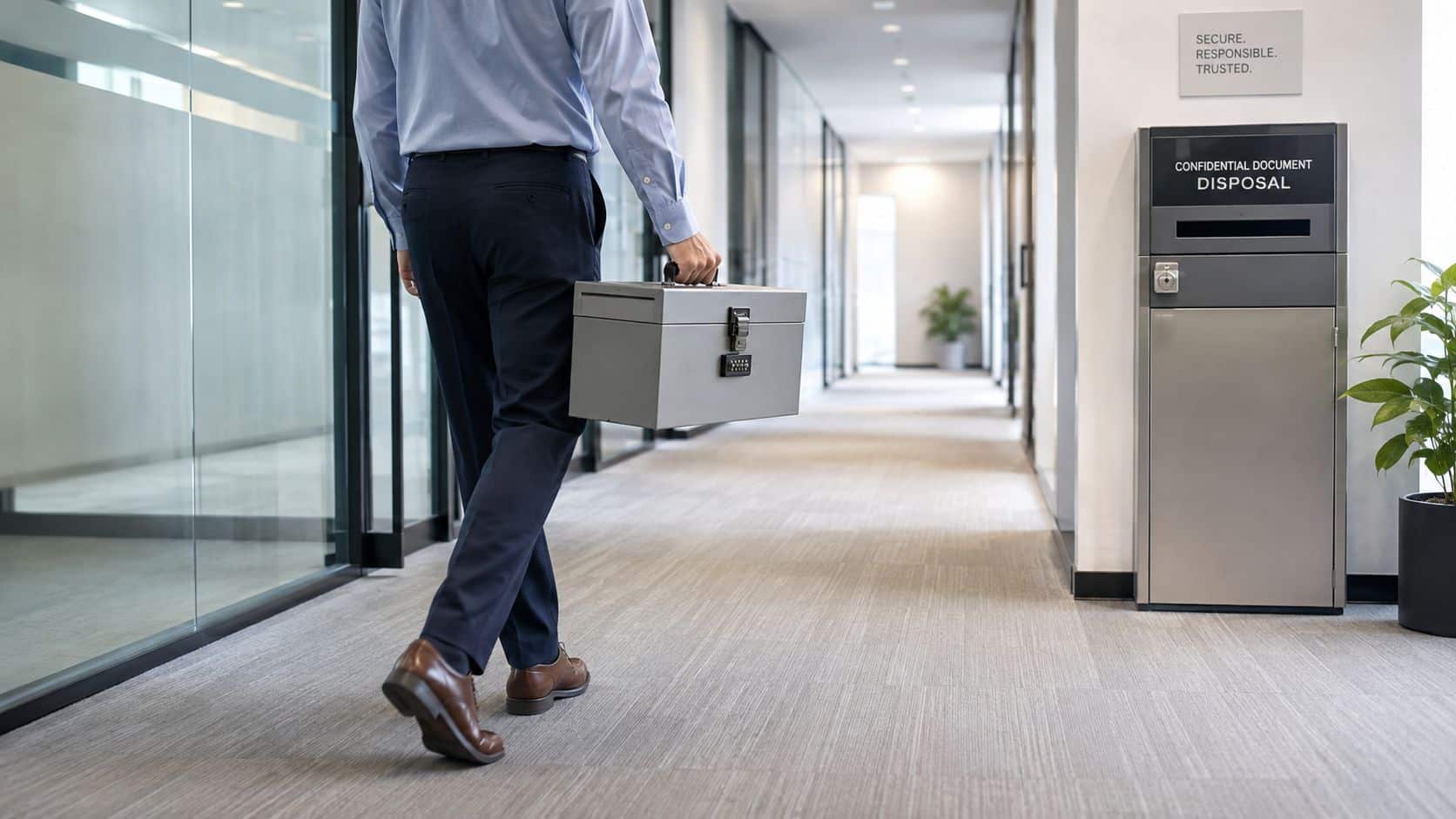
A sound rule is blunt, if a document would create trouble on a desk, it does not belong in an open bin.
Complementary Digital Practices for Document Protection
A locked cabinet helps, but it does not cover every loss. A fire, leak, or burglary can wipe out paper records even when the hardware held up, so a sensible setup also includes digital copies, handled with the same care as the originals.
Scan, encrypt, and back up with purpose
Start by scanning the documents that need to survive. Store those files in encrypted form, either in a secure cloud account or on a protected external drive, so a loss in one room does not become a total loss of the record. Practical guidance for sensitive files is clear, encrypt scanned documents before storage or transmission, encrypt email attachments, password-protect attachments with strong unique passwords, and avoid public Wi‑Fi when sending sensitive files (Inkit guidance).
The next problem is access. Digital copies still need limits, because the more people who can forward, sync, or duplicate them, the easier it is for records to leak. Classify first, then decide who needs access and how long they need it, instead of dumping everything into a shared folder and hoping the permissions stay tidy.
For home offices and small practices that rely on scans and email attachments, this cybersecurity note for North Shore users is useful background, especially where paper handling and online sharing overlap.
Avoid the copy problem
More tools do not automatically mean less risk. Shared folders, automatic forwarding, and casual syncing can spread sensitive documents farther than a paper file ever could, and once copies start multiplying, control gets messy. Periodic audits matter here. If a digital copy no longer serves a purpose, remove it after the physical record has been lawfully destroyed or archived.
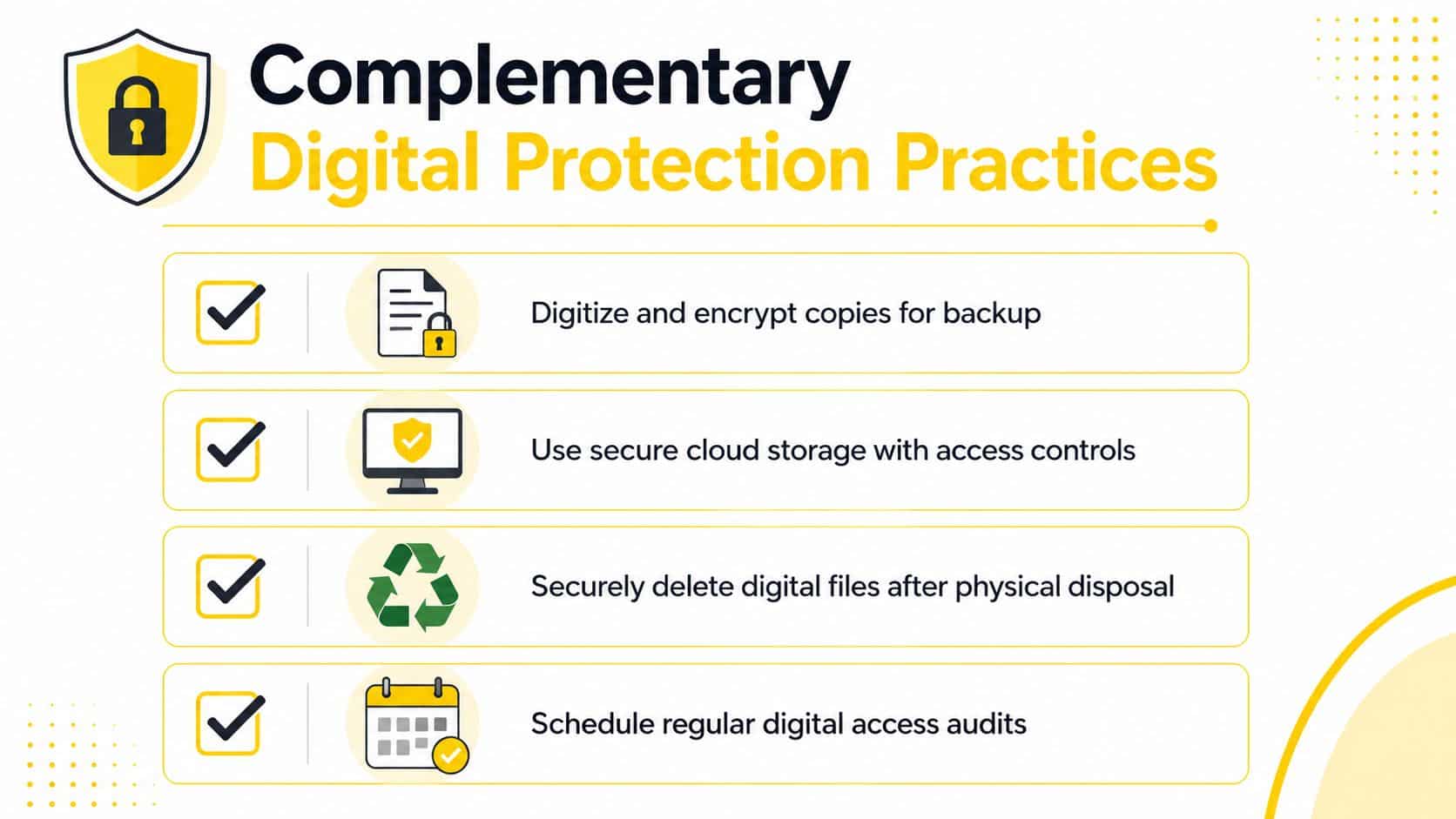
A mixed paper-and-digital system works best when the digital side is treated as backup and control, not as a free-for-all.
When to Call a Locksmith for Document Security
Some document problems can be handled with a better folder and a sharper habit. Others need hardware, layout, and access control expertise. If a new property has unknown spare keys, a filing cabinet lock feels loose, a safe needs anchoring to concrete, or a growing office needs a master key system that won't turn into key soup, that's the point where a locksmith's assessment becomes useful.
The jobs that usually need a professional
A locksmith can evaluate whether the current hardware protects the documents or just looks secure. That includes worn cabinet locks, desk locks, safe placement, and restricted key systems that stop unauthorised duplication. It also includes looking at the way the site works day to day, because the right lock on the wrong cupboard won't fix a poor access pattern.
For North Shore households and offices, Lock, Stock & Barrel Locksmiths is a mobile locksmith service based on Sydney's North Shore, operating since 2002, with NSW Police Master Licence No. 408 659 677 and membership in the Master Locksmiths Association of Australasia. It handles document-related security work through safes, cabinet locks, rekeying, and master key systems, which suits sites where the problem is a mix of physical security and key control.
What a proper assessment should cover
A useful assessment should look at the storage hardware, the keys in circulation, the way staff or family members access files, and whether the setup matches the sensitivity of the records. It should also consider whether the documents need better concealment, better anchoring, or better destruction controls once the retention period ends. In many cases, the right answer is a combination of two changes rather than one dramatic fix.
The biggest mistake is waiting until a key goes missing or a file disappears. By then, the weak point is already visible to everyone else. A controlled review before that happens usually costs less in stress, time, and risk.
If your documents are sitting in a cabinet, safe, or filing system that you don't fully trust, Lock, Stock & Barrel Locksmiths can assess the hardware, keys, and anchoring options on site across Sydney's North Shore. Visit Lock, Stock & Barrel Locksmiths to request a quote and organise a document security check for your home, strata property, or office.