- 24 Hour Emergency Services
- Servicing Sydney's North Shore
- View On Map

-
Mail Us On
info@lsblocksmiths.com.au
-
Make a Call
0411 700 072
- View On Map
- 24 Hour Emergency Services
- Servicing Sydney's North Shore
- View On Map
-
Mail Us On
info@lsblocksmiths.com.au
-
Make a Call
0411 700 072
- Contact Us
Office Door Lock Solutions for Sydney’s North Shore

Lock, Stock & Barrel Locksmiths
On August 7, 2026
A small office on Sydney's North Shore can run smoothly for years, then one lost key, one contractor handover, or one weekend fit-out turns the front door into the most important part of the building. A receptionist in Gordon might need after-hours access sorted before Monday. A practice manager in Hornsby might discover the wrong lever function was installed on a consulting room and everyone's been fighting the door ever since. That's why office door lock solutions are really about workflow, not just hardware.
At Lock, Stock & Barrel Locksmiths, the workbench conversation usually starts with the same question, what does this door need to do every day, and who needs to get through it without creating a security mess later? For North Shore offices, the answer depends on traffic, tenancy, compliance, and how many people still have keys floating around. The right choice often comes down to a mix of lock family, function, and key control, not a shiny catalogue picture.
The Australian business environment makes that practical view more important than ever. The ABS counted 2.5 million businesses nationally in 2022–23, and 90.9% were non-employing or small businesses with fewer than 20 employees, so access control for small offices and suites is everyday work, not a specialist corner case (ABS data referenced in the market report). On the security side, the ABS recorded 174,195 victims of unlawful entry with intent nationally in 2022, which is a sober reminder that door hardware is part of loss prevention, not decoration (ABS crime data referenced in the market report).
Why Office Doors Deserve More Thought Than a Spare Key
A Gordon accounting office can look secure on Friday afternoon and still be exposed by Saturday morning if the cleaner, the agent, and two former staff members all still have working keys. That's the part only seen after the weekend rekey. The lock isn't failing because it's old, it's failing because nobody designed the access around the way the office operates.
The real job of an office lock
A commercial door lock has to do three things at once. It needs to protect the room, let the right people in at the right time, and survive daily use without turning into a repair call every few months. For offices on the North Shore, that often means balancing a small number of doors against a messy mix of staff, contractors, cleaners, and strata stakeholders.
Practical rule: if more than one person can describe their own access to a door, the key system probably needs work.
The working habit at the bench is simple. First comes the office type, then the traffic level, then the risk profile, then the compliance check. That order matters because a single-suite solicitor's office, a multi-tenant suite in Pymble, and a retail-facing office with a back room all need different answers even if the doors look similar.
A lot of trade problems start when a buyer chooses by finish or price instead of by use. A polished lever set can look right in a reception area and still be the wrong answer if the door needs restricted key control. A heavy mortice body can be a sound choice and still become a nuisance if it's matched to the wrong workflow or door prep.
For a plain-English guide to reducing key drift in a business, the most useful starting point is the lock control side of the job, which is covered in key control tips for businesses. That sort of planning saves far more grief than swapping hardware after the fact.
The Four Lock Families Used on North Shore Offices
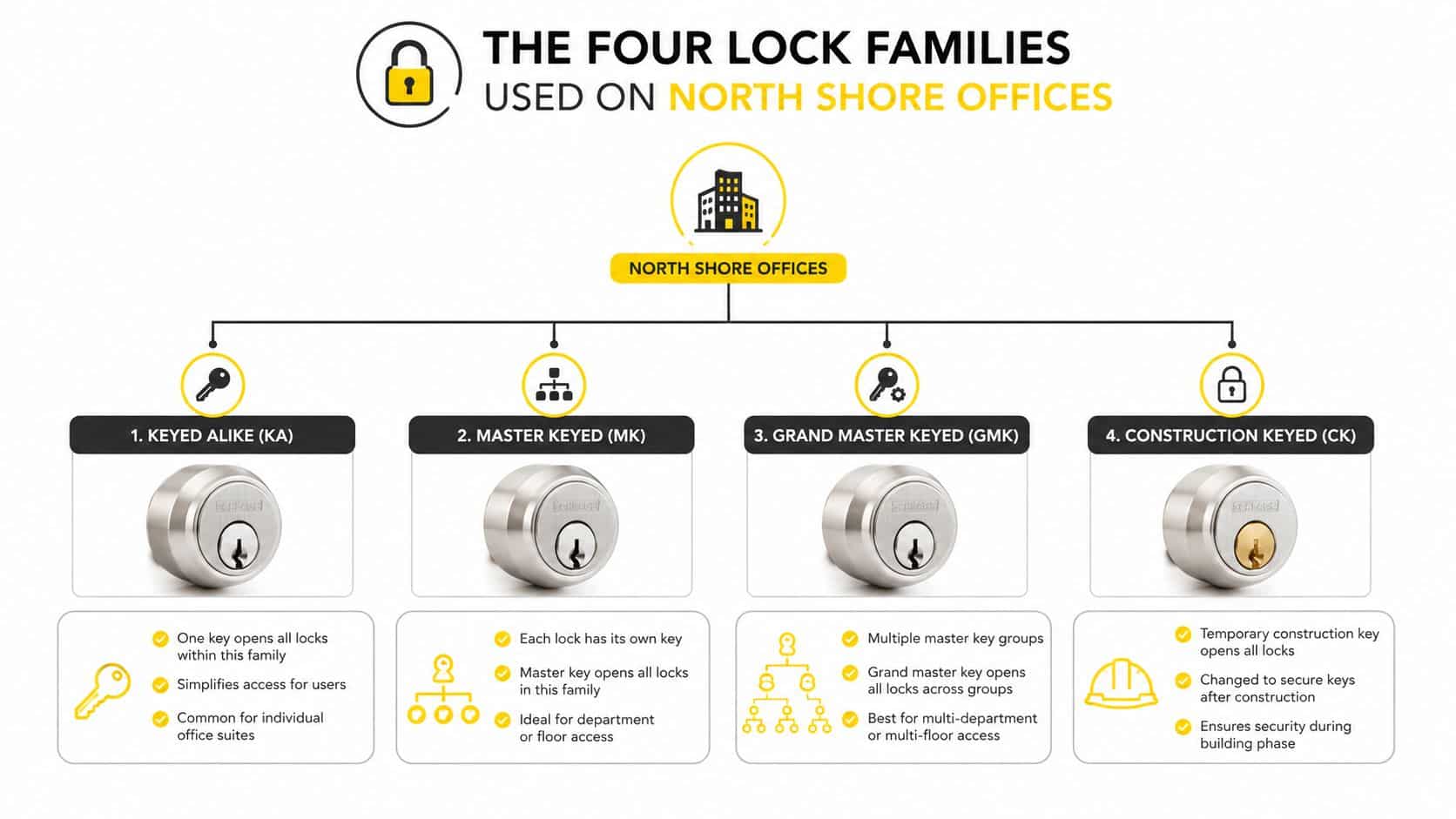
Mechanical locks are still the baseline
Mechanical office locks are still the everyday choice for a lot of small suites because they're straightforward, durable, and easy to service. Key-in-lever sets, mortice locks, and restricted-key cylinders are the common workhorses. In a Turramurra professional suite, that can mean one solid entry door with a proper cylinder and a simple internal function on smaller rooms.
The trade-off is obvious. Mechanical hardware is strong, but it depends on disciplined key control. If keys are copied freely or handed around casually, the security value drops quickly. That's why mechanical locks work best when they're paired with a proper key hierarchy.
Electronic locks suit shared access without constant rekeying
Electronic office locks replace some of the key churn with keypad codes, fobs, or swipe credentials. That suits shared doors, meeting rooms, and multi-user suites where staff changes are regular but the door itself doesn't need replacing. In a Hornsby shared office, a keypad entry system can make day-to-day movement easier without turning every departure into a rekey job.
The strength here is convenience with structure. The weakness is maintenance discipline, because batteries, credentials, and lock programming all need attention. If nobody owns those tasks, the convenience starts to unravel.
Smart locks add control, but only where the workflow needs it
Smart locks are the more connected version of the same idea. They can support credential management, audit trails, and remote control, which makes them useful in offices where access changes often or different people need different permissions. That can help in a St Ives agency with rotating contractors, a multi-door tenancy, or a site where access needs to change quickly.
The catch is that “smart” doesn't always mean the same thing at every price point. Some systems are mainly app-based access control, while others sit inside a broader networked security setup. The right question isn't whether the lock is smart, it's whether the building needs that layer of control.
Panic and bar hardware is about exit safety
Panic hardware and push bars belong on doors where safe exit matters more than everyday privacy. They're not just back-of-house fittings. They're part of the life-safety picture on exits and fire-isolated doors, where the door must behave properly under pressure and in an emergency.
A lower North Shore office with a rear escape door or a public-facing consulting space needs this thinking at the planning stage, not after the fit-out is finished. Wrong hardware here can create compliance trouble, not just inconvenience.
Lock Functions and Why the Wrong One Creates Daily Friction
A lot of office frustration comes from mixing up the function of the lock with the style of the door. Function is the lever behaviour, whether the outside lever is always free, locked by default, or toggle-lockable with a key. Once that clicks, the choice gets much simpler.
Matching function to room use
A reception door, a boardroom, a plant room, and a store room do not need the same lever behaviour. A passage function works where both sides should always be free. Privacy suits a room that only needs temporary locking from inside. Entry, storeroom, classroom, and office/classroom functions all change how the outside lever behaves, which is where the operational difference sits.
In a Hornsby medical suite, a storeroom function on a treatment room can create annoying lockouts and repeated key use. In a Pymble consulting office, a privacy function on the front entry can leave staff uncertain about whether the door is secured after hours. The wrong function doesn't just inconvenience people, it changes the security posture of the room.
| Function | Outside lever behaviour | Typical North Shore office door |
|---|---|---|
| Passage | Always free | Internal corridor doors, open work areas |
| Privacy | Locks from inside, no keyed outside control in normal use | Toilets, short-stay rooms |
| Entry | Outside locked, inside free | General office entry doors |
| Storeroom | Outside locked by default | Supplies room, records room |
| Classroom | Outside locked or toggle-lockable with a key | Training room, meeting room used by different staff |
| Office/classroom | Similar to classroom, for controlled shared use | Consulting room, shared professional suite |
Why the wrong function causes callbacks
The repair call often comes from friction, not failure. Staff keep turning the lever and nothing happens the way they expect. A room meant to stay open ends up needing a key, or a door meant to stay secure can be opened too easily.
A wrong lock function can make a perfectly good door feel broken.
That's why experienced installers look at the room's workflow before they touch the hardware. The door function should reflect who uses the room, how often, and whether it's a public edge, a shared area, or a staff-only space.
Master Key and Restricted Key Systems for Small North Shore Offices
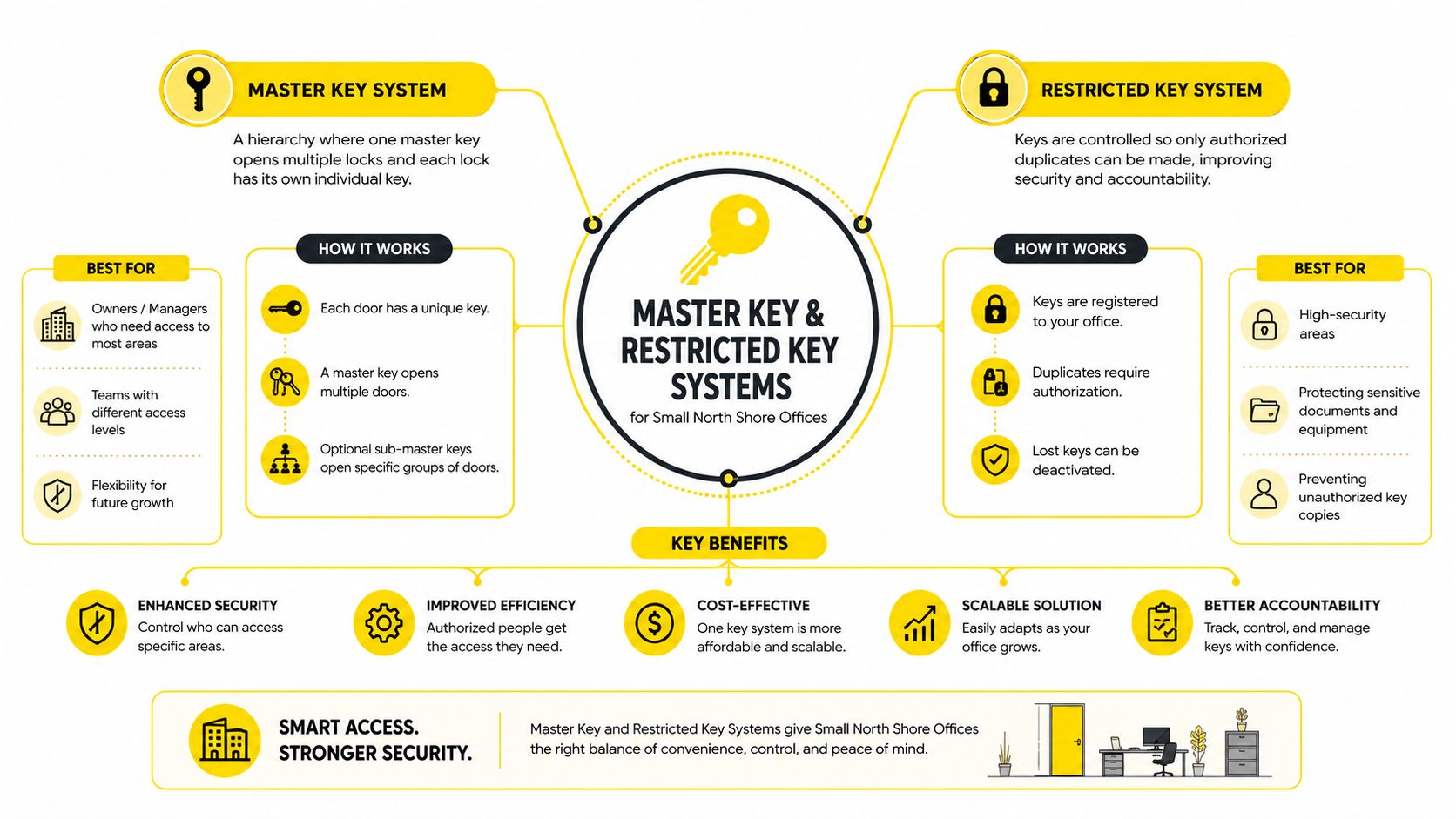
A master key system is less about status and more about control. In a small Gordon accounting firm, for example, one person may need access to the whole suite, while individual staff only need their own rooms or storage areas. A proper hierarchy keeps that tidy instead of handing out a single key that opens everything.
How the hierarchy works
The structure is simple. A manager key can open all assigned doors. A sub-master key can open a grouped set of rooms. Individual change keys only open one room or one area. That separation matters when a practice grows, a room gets repurposed, or a tenant changes.
Restricted-key systems take the control a step further. The key profile is protected so unauthorised copying is blocked, and replacement keys are cut only through the issuing locksmith. That matters in offices where keys circulate between tenants, cleaners, agents, and contractors, because uncontrolled copying is where key drift starts.
The practical benefit is auditability. A Wahroonga multi-room practice can see who should have access, who does have access, and where the system needs adjustment after a handover. A St Ives agency with rotating contractors can keep access tighter without replacing every lock each time staff move on.
For a deeper example of how a managed key system supports office access, see the earlier master key system success stories. The value is not in complexity, it's in clarity.
Trade note: if no one can say who is authorised to copy a key, the system is already leaking control.
The same thinking fits lease handovers. A proper key register, a defined issuing process, and immediate rekeying at change of tenant keep the office from drifting into shared-access chaos. That's the difference between a tidy office and one where everyone has a story about who still “might” have a key.
Matching Office Type and Risk Profile to the Right Hardware
A solo professional suite, a shared office, and a retail-facing office all need different answers because their risk profile isn't the same. The right hardware follows the building's movement pattern, not the brochure description.
Solo professional suites
A single-accountant suite in Killara or a psychologist's rooms in Gordon usually benefits from a durable key-in-lever entry function with a restricted-key cylinder. The access pattern is predictable, the door count is low, and key control matters more than fancy features. Mechanical hardware earns its keep here because it's simple to use and straightforward to maintain.
Multi-tenant shared offices
A shared suite in Pymble or Wahroonga tends to need either a master key hierarchy or an electronic access solution. Staff come and go, rooms get reallocated, and the front door may need different access at different times of day. A rekey every time someone leaves would be poor process, not good security.
Retail-facing offices with a back area
A retail frontage with a staff-only rear section needs more separation. The public-facing side may call for a controlled entry function, while the back room may need storeroom behaviour or a separate staff entry. If the escape route is part of that layout, panic hardware has to be considered in the door set, not added later as an afterthought.
A straightforward way to decide is to start with the question, who needs access daily, who needs access sometimes, and who should never have it without a clear record? Once that's answered, the hardware choice usually narrows quickly.
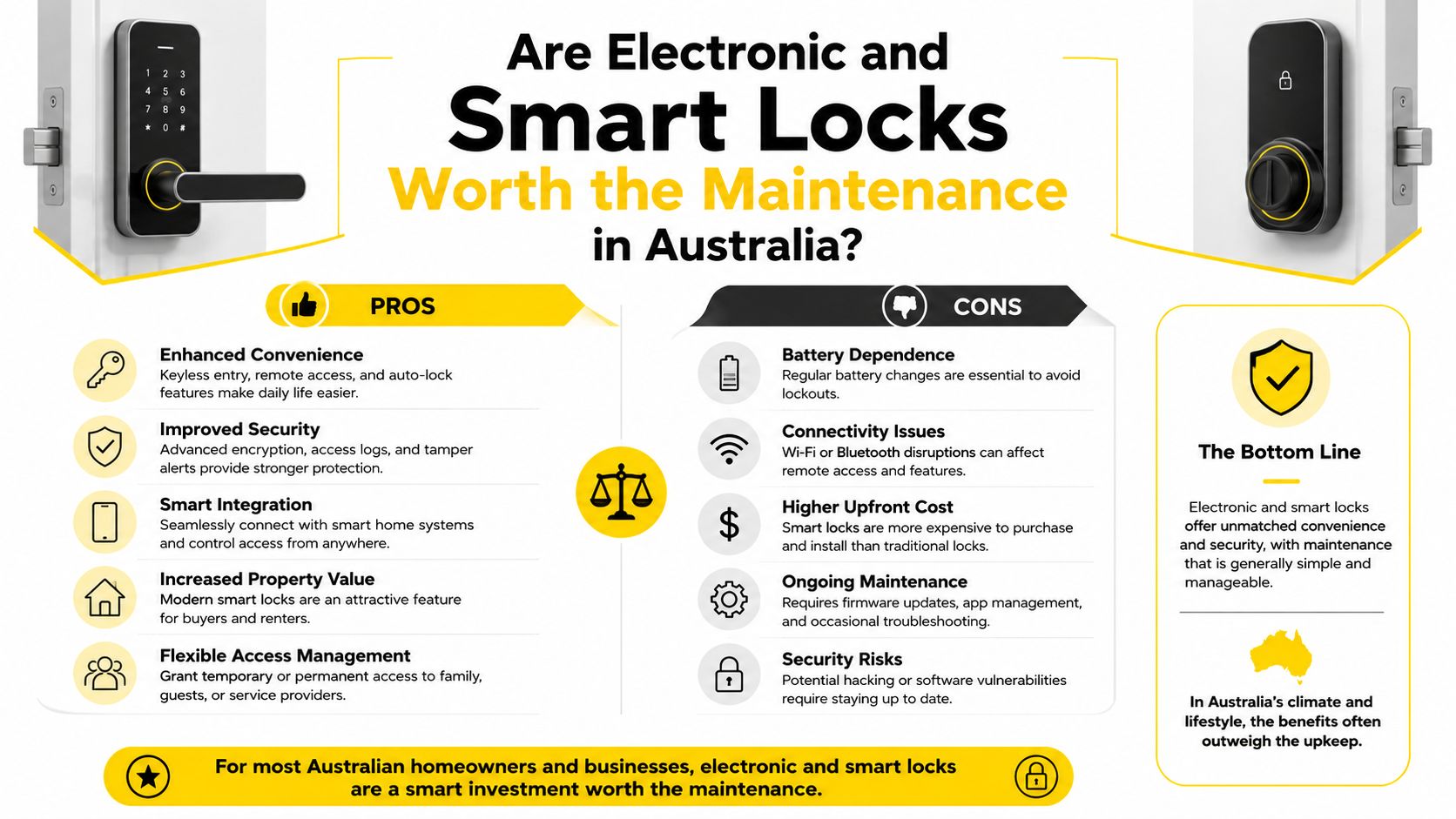
Are Electronic and Smart Locks Worth the Maintenance in Australia
Electronic and smart locks can solve real office problems, but they're not automatically better than mechanical hardware. The right question is whether the extra convenience pays for the extra attention they need.
Where electronics earn their place
A multi-tenant site with frequent staff changes, a shared reception point, or multiple doors often benefits from credential-based access. Remote entry control, time-based access, and easier revocation can all save time where rekeying would otherwise become a routine burden. For that kind of site, the flexibility is the point.
Where mechanical systems still win
A single-suite practice in a North Shore shopping strip usually doesn't need a networked lock just to protect one entry door. Mechanical restricted-key cylinders still set a sensible benchmark for durability and forced-entry resistance on that sort of opening. They also avoid battery replacement, software setup, and the service dependency that comes with connected systems.
Electronic locks add their own chores. Batteries need replacing, credentials need managing, and some systems depend on network availability. During Sydney storms or a power interruption, the office manager still needs a plan for how staff get in or out without improvising at the door.
The maintenance question most buyers skip
The best fit often comes down to tolerance for upkeep. If the office can manage batteries, credentials, and periodic checks, smart access can be worthwhile. If not, a well-specified mechanical system is usually the calmer option.
A connected access-control setup, such as the kind described in access control system installation, makes sense where audit trails and central control matter. It's less attractive when the site is small enough that the simplest solution is also the most reliable.
Compliance, Insurance and Lease Handover Essentials
Lock choice doesn't stop at the door leaf. For offices, compliance and paperwork matter just as much as the cylinder.
The National Construction Code framework continues to require that exits can generally be operated without a key, code, or tool in normal escape situations, so some lock-and-bar combinations don't belong on egress doors. That's why fire-isolated and exit doors need to be assessed as part of the whole assembly, not treated like ordinary internal doors. Australian standards such as AS 4145 and related hardware benchmarks are part of how commercial fittings are selected and checked in practice, which is why specifiers and locksmiths pay attention to them.
Lease handover habits that prevent headaches
At change of tenant, someone needs to own the key register. That should include who received keys, which doors they open, and what was changed at handover. If cylinders are rekeyed, that change should be recorded along with any updated issue list for staff, cleaners, and agents.
Strata managers and landlords care about this because uncontrolled key circulation creates access risk long after the old tenant has left. Insurers care because a documented handover looks very different from a vague promise that “the keys were all returned.”
A tidy handover file doesn't need to be complicated. It needs to show what was issued, what was recovered, and what was changed. That record becomes part of the building's security story, not just an admin folder.
A Practical North Shore Checklist and How to Get a Quote
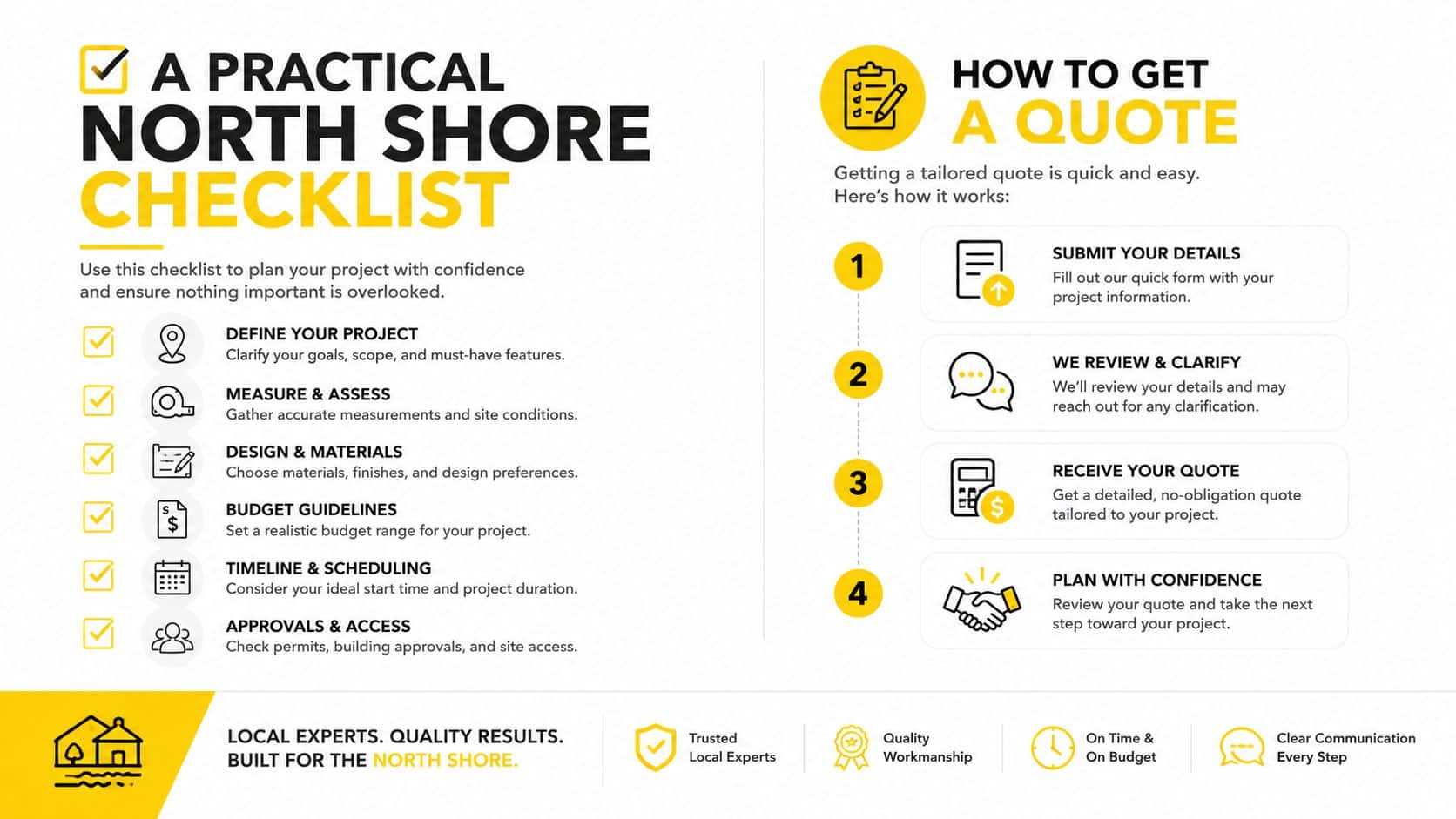
Before calling for a quote, a North Shore office manager can save time by checking a few basics.
- Door use: note whether the door is an entry, internal room, staff-only area, or exit door.
- Current function: confirm whether the lever is passage, privacy, entry, storeroom, classroom, or office/classroom.
- Traffic pattern: count who uses the door every day, and who only needs temporary access.
- Key control: list who currently holds keys and whether any are unaccounted for.
- Compliance items: flag any exit doors, fire doors, or strata conditions that need checking.
- Handover records: keep the key register, rekey notes, and any tenant turnover paperwork together.
A proper onsite quote should inspect the entire door assembly, not just the lock face. The cylinder, chassis, latch or bolt, strike, hinges, and door prep all affect how the system performs. If one part is out of alignment, the best lock body in the world won't fix the door's daily behaviour.
Lock, Stock & Barrel Locksmiths handles commercial lock installs, rekeys, master key work, and access-control related hardware for North Shore offices, and it also provides local service coverage across Turramurra NSW, along with nearby commercial areas. For office managers, landlords, and strata contacts, the useful next step is a written quote based on the actual door, not a guess from the parts shelf.
For a practical assessment of your office doors, get a written quote from a locksmith who can look at the full assembly, the key control, and the compliance side together. Lock, Stock & Barrel Locksmiths can help with office lock selection, rekeying, master key planning, and commercial hardware work across Sydney's North Shore.