- 24 Hour Emergency Services
- Servicing Sydney's North Shore
- View On Map

-
Mail Us On
info@lsblocksmiths.com.au
-
Make a Call
0411 700 072
- View On Map
- 24 Hour Emergency Services
- Servicing Sydney's North Shore
- View On Map
-
Mail Us On
info@lsblocksmiths.com.au
-
Make a Call
0411 700 072
- Contact Us
Replacement Safe Key: A Complete Guide for 2026

Lock, Stock & Barrel Locksmiths
On August 17, 2026
You're standing in front of a wall safe in a North Shore home, the passports are needed tonight, and the key has disappeared. Perhaps it was left in a kitchen drawer, lent to a family member, or worn down until it no longer turns cleanly. A replacement safe key sounds like a quick copy, but safe work rarely follows the same path as an ordinary house key.
The immediate question is whether access is needed today or whether a properly authorised factory key can be ordered. Those are different jobs, with different evidence, tools and waiting periods. The right choice depends on the safe's brand, serial number, key code, age and whether the manufacturer still holds usable records.
When You Need a Replacement Safe Key in Sydney
You need the passports for an early flight, the wall safe key has vanished, and the safe will not open. On the North Shore, the same problem appears during an estate handover, a strata changeover or a search for business records. The key might be missing, bent, worn smooth or broken in the lock. Because safe keys often sit in drawers for years, their condition is usually discovered only when access becomes urgent.
A house key can often be copied from a usable original. A safe key requires more care because it controls valuables, identity documents and records. Australian industry guidance treats safe keys and keys marked MASTER, GMK or MK as security-sensitive items. Identification and authorisation are required before duplication, as outlined in the Australian locksmith code of practice.
Two decisions happen at once
First, decide whether the safe must be opened today or whether the household, strata office or business can wait for a documented replacement key. An urgent entry visit and an ordered key are different jobs. The first focuses on gaining access without avoidable damage. The second depends on accurate safe details, available records and approval from the person responsible for the safe.
Then consider what happened to the missing key. If it was lost away from the property, another person may still be able to use it. Changing the lock can remove that risk immediately when the safe is open. If the safe remains closed and the key code is available, a supplier may arrange a factory replacement, subject to verification and surviving manufacturer records.
Practical rule: A replacement safe key is a controlled process, not a simple retail copy. Start by identifying the safe and confirming who has authority to request access.
Older safes in Turramurra, Wahroonga and nearby suburbs can take longer to resolve. Imported or discontinued models may have limited Australian records, require an overseas factory key or use a profile that is no longer supported. For that reason, arrange immediate entry and planned key replacement separately, even when both began with the same missing key.
Identifying Your Safe and Finding the Key Code
Before calling a supplier or locksmith, collect the safe's identifying details. A photograph of the door alone rarely gives enough information to cut a replacement safe key. Guessing the key profile can waste time and may damage the lock.
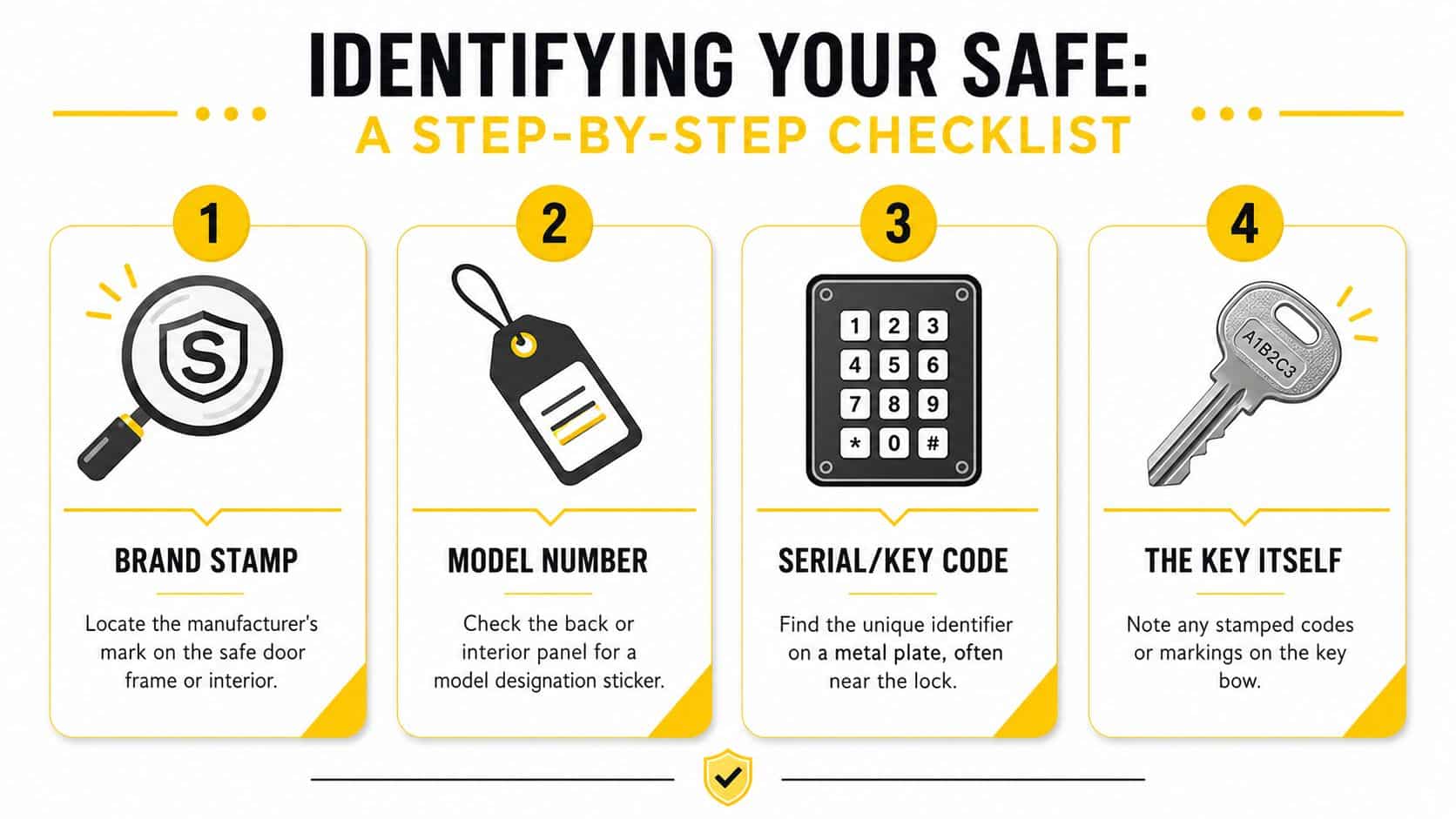
A five-minute identification check
Find the brand. Check the safe door, lock escutcheon and inside the door frame for a manufacturer's name or badge. Photograph the mark and surrounding hardware clearly.
Locate the model. Inspect the back, internal panel, door edge and any removable cover plate. The model may appear on a sticker or metal plate rather than the front.
Record the serial number. Look near the lock, on the door frame, behind a cover or on the original paperwork. This number connects the physical safe with the supplier's records.
Look for a key code. Check any metal plate, card wallet, key tag or paperwork supplied with the safe. If one original key remains, photograph both sides and any stamped characters on its bow.
Document the condition. Photograph the keyway, lock face, hinges and door without forcing them. A broken key, damaged cylinder or missing cover can change the recommended solution.
Australian safe suppliers note that without a serial number, the factory-order route may not be available. The safe may still be opened by a locksmith, but a replacement key cannot be treated as a blind key-cutting job. For a Sydney homeowner or strata manager locked out today, this distinction matters. Gather the details while arranging access, rather than waiting for an ordered key before addressing the immediate problem.
Older safes may have incomplete records, discontinued profiles or manufacturer-specific key codes. Imported models can also require information held overseas. That is why clear photographs, the serial number and any surviving paperwork should be sent with the enquiry.
If the safe or lock is obsolete, compare replacement choices with this guide to choosing a residential safe before committing to a new unit.
Your Three Replacement Options Side by Side
Three routes cover most replacement safe key enquiries in Sydney: the manufacturer, an authorised dealer and a mobile locksmith. None is automatically the right answer. The best option depends on whether the safe is open, whether ownership documents exist and whether the key must be factory-matched.
Manufacturer supply
The manufacturer or its Australian replacement-key programme is the natural choice when the brand, model, serial number and key code are clear. The supplier can check its records and, where supported, arrange a key made for that safe. The drawback is that paperwork and production come before delivery, and old records may no longer exist.
An authorised dealer
A dealer can be useful when the safe was purchased through a local retailer or installer. The dealer may help verify the product, assemble the request and explain whether a replacement lock set is available. This route suits owners who have purchase documents but aren't comfortable dealing with an overseas manufacturer directly.
A mobile locksmith
A mobile locksmith is generally the practical route for a safe that must be accessed promptly. The locksmith can verify the site, assess the lock and discuss non-destructive entry where appropriate. If the safe remains open, a lock change may be more sensible than waiting for a duplicate key, because the old lost key can be made unusable.
Older imported safes in Turramurra and Wahroonga can expose the difference between these routes. A manufacturer may technically recognise the brand, while the local supply chain has little stock or no current code record. A locksmith may not produce a factory key for a discontinued model, but can still provide an on-site assessment and identify whether a compatible lock replacement is realistic.
Comparing your replacement safe key options
| Option | What they need from you | Typical lead time | Best for |
|---|---|---|---|
| Manufacturer | Brand, model, serial number, key code, ID and proof of purchase | Varies by programme and factory availability | A supported safe with complete records |
| Authorised dealer | Product details, ownership evidence and purchase history | Varies by supplier and order pathway | Owners who need help lodging a verified request |
| Mobile locksmith | Safe identification, site access and proof of authority | On-site response depends on availability | Urgent entry, damaged locks or lock changes |
A key-only request can fail when the model is obsolete, the code is missing or records have been deleted. A lock change can succeed where a factory order cannot, but it must be selected for the safe and installed correctly rather than treated as a universal replacement.
Proving Ownership the Australian Way
A replacement safe key request starts with authority, not the key blank. Suppliers typically require photo ID and proof of purchase before processing the request. They need to confirm that the person seeking access has a legitimate connection to the safe, particularly where the safe is in a shared office, rental property or strata building.
Gather the evidence before lodging the request
Prepare documents that establish identity, ownership and control:
- Photo ID: A current Australian driver licence or another accepted identity document.
- Proof of purchase: An invoice, receipt, retailer record or installation paperwork.
- Safe details: Brand, model, serial number and key code, where available.
- Authority to act: Written approval from the owner, strata corporation, employer or property manager when another person owns the safe.
- Property connection: Documents explaining the transfer of an inherited safe or one supplied with a property.
A missing receipt does not automatically end the enquiry. Second-hand and inherited safes often have incomplete records, especially after a change of ownership. A current utility bill, settlement paperwork or statutory declaration may help explain the connection, but the supplier or locksmith decides which evidence it will accept.
The key code may be missing as well. Provide clear photographs of the safe, lock face, identification plate and any paperwork. These details can help the supplier determine whether the model is supported, although they cannot replace proof of authority.
Shared-office safes require a clear approval trail. If the original business owner has left, the current director, site manager or property owner may need to authorise the work in writing. Strata managers should record who approved the request, where the safe is located and who will receive the new key.
A reasonable provider should explain what it needs and why. Identity and ownership evidence are normal requirements. An unexplained demand for unrelated personal information deserves clarification.
Assembling the documents before lodging the request reduces avoidable delays. If the safe is already open, keep the existing key and records together. If the key is lost and access is urgent, a lost key replacement service can verify authority before changing access.
Costs Timelines and When a Lock Change Beats a Key
A factory replacement key and an on-site lock change address different problems. The right choice depends on whether the safe is open, whether its key code can be traced and whether a missing key might still be used. For a locked safe needed today, an ordered key is rarely the immediate solution.
Australian replacement-key programmes may quote 2 to 8 weeks for common requests, while some requests can take up to 30 days and may not be guaranteed if records have been deleted, according to the supplier guidance noted earlier. Overseas factory orders can take three months or longer, particularly when the serial number is unavailable or the model is old. Confirm the lead time before paying, and ask what happens if the manufacturer cannot verify the code.
Price also needs context. Business-hours lock changes may cost about A$70 to A$200 per lock, while after-hours call-outs can be around A$150 to A$350 or more, based on Australian locksmith pricing guidance. Rekeying is commonly about A$30 to A$60 per lock plus call-out. A safe lock may need a different assessment from a domestic door lock, so these figures are a guide, not a guaranteed quotation. A locksmith should confirm whether entry, parts and replacement keys are included.
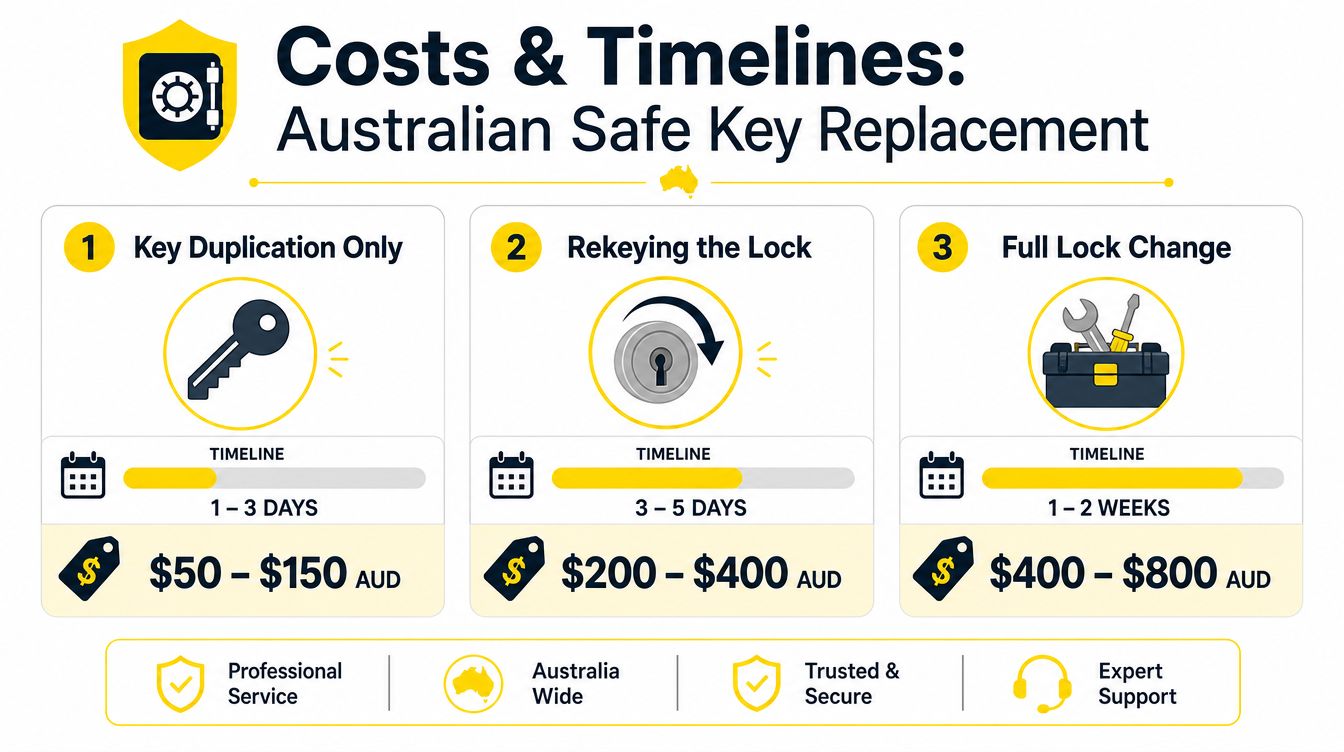
The decision that saves the most trouble
If the safe is open, changing the lock often makes practical sense. It removes the old key from the access arrangement and avoids waiting for a factory that may no longer hold the code. It is also a cleaner option when the lock is worn, the key cannot be accounted for or the safe has moved to a new household or business.
If the safe is locked and the contents are needed now, arrange an on-site assessment rather than waiting for an ordered key. A mobile locksmith can discuss entry options, then explain whether the lock should be repaired, replaced or left in place while a documented replacement-key request continues.
The key-cutting cost guide explains why a safe-key enquiry can involve more than cutting metal. Identification, authority checks, entry, lock replacement and future key custody may all affect the work and final cost.
Legal Safety and Key Control Considerations
A safe key becomes a key-management issue as soon as more than one person relies on it. In a home, that may mean deciding who holds the working key and where a genuine spare is stored. In a strata building, office or retail site, the owner also needs a record showing who authorised the replacement and who received access.
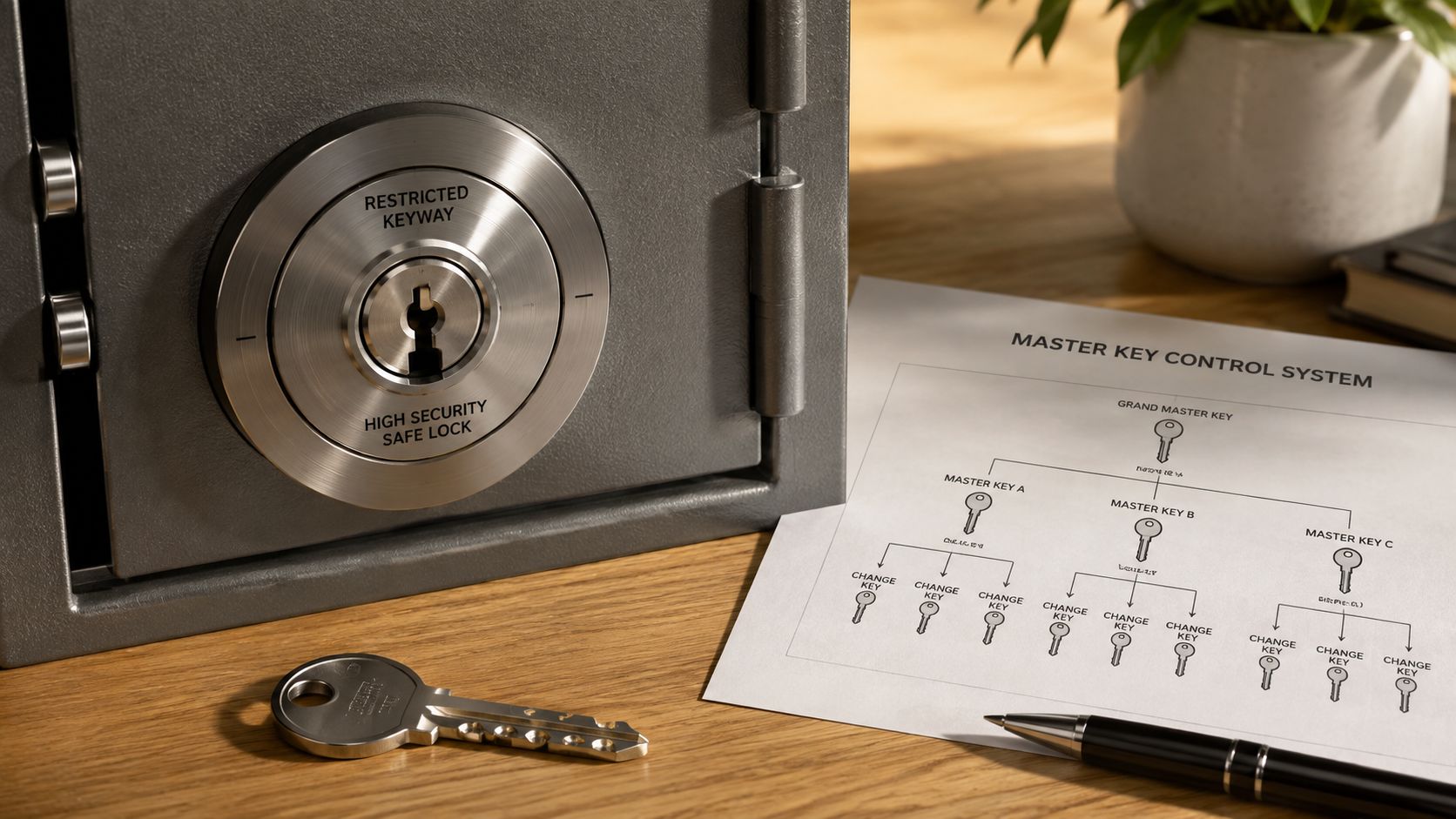
Restricted and master-key systems make informal duplication especially risky. Australian security practice expects specialised cylinders and keying arrangements to follow the applicable specification and Australian standards. NSW educational facility door-hardware guidance shows how keying decisions can sit within broader building governance rather than being treated as an isolated hardware purchase.
Keep the spare outside the access point
Storing a spare key inside the safe defeats the purpose of having a spare. A better arrangement is controlled custody outside the safe, with access limited to the people who need it. A key safe can provide controlled access to stored keys without distributing physical keys widely, and Australian locksmith suppliers position key safes for homes, businesses and emergency services. Relevant guidance is available from Australian key-safe providers.
For a shared site, a basic key register should record:
- The key identity: Safe location, lock description and any restricted or coded identifier.
- The authorised holder: The person or role permitted to use it.
- The approval: Owner, strata or business authorisation for issue and replacement.
- The custody location: A secure off-site or controlled-access storage point.
- The return or cancellation: Whether a lost key was recovered, replaced or invalidated by a lock change.
ACT protective-security guidance requires local programming, restricted access and management software capable of assigning key allocation to specific people. The ACT key-safe guidance illustrates the wider principle: modern key control is a governance task, not merely a hardware purchase.
Your Next Steps on the North Shore
A person locked out today shouldn't begin by waiting for a factory order. The sensible first call is a mobile locksmith for verified entry and, if the safe can then be opened, an assessment of whether changing the lock is safer than pursuing a replacement key.
For planned work, photograph the brand, model, serial number and key code now. Keep proof of purchase with the safe records, decide who is authorised to hold a spare and ask the manufacturer or dealer whether the model remains supported.
Lock, Stock & Barrel Locksmiths operates as a mobile service across Turramurra, Hornsby, Gordon, Killara, St Ives, Pennant Hills, Thornleigh, Berowra, Pymble and Wahroonga. The business holds NSW Police Master Licence No. 408 659 677 and is a member of the Master Locksmiths Association of Australasia. For urgent access or a planned replacement safe key job, call for an assessment or request a written quote.
Lock, Stock & Barrel Locksmiths provides mobile safe opening, lock replacement and key-cutting assistance for homeowners, strata managers and small businesses across Sydney's North Shore. Visit Lock, Stock & Barrel Locksmiths to request a quote for a planned replacement safe key job, or call when access is needed urgently.