- 24 Hour Emergency Services
- Servicing Sydney's North Shore
- View On Map

-
Mail Us On
info@lsblocksmiths.com.au
-
Make a Call
0411 700 072
- View On Map
- 24 Hour Emergency Services
- Servicing Sydney's North Shore
- View On Map
-
Mail Us On
info@lsblocksmiths.com.au
-
Make a Call
0411 700 072
- Contact Us
Deadlock Installation in NSW: A Homeowner’s Guide

Lock, Stock & Barrel Locksmiths
On August 13, 2026
You're standing at the door with a new deadlock in the box, a drill on the bench, and a nagging doubt about whether it's the right job for the weekend. That's the sensible place to start, because deadlock installation isn't just about drilling a hole and tightening screws, it's about matching the lock to the door, the door to the property type, and the property type to the rules around it.
A deadlock sits on the door as a deliberate barrier, not a springy latch that catches by itself. That simple difference is why deadlocks have stayed relevant for so long, from 19th-century lock innovation through to modern external doors in Australian homes and apartments, with the Chubb brothers' early 1800s work and Linus Yale Jr.’s 1861 pin-tumbler breakthrough forming part of the lineage that still matters today essential deadlock history. For NSW owners, tenants, and strata managers, that history is useful because it explains why the hardware is still treated as a baseline security control, not a novelty.
The decision isn't whether a deadlock looks strong. It's whether the door is timber or another material, whether the lock is a mortice deadlock or a surface-mounted deadlock, and whether the property is owner-occupied, leased, or under strata control. A useful installation guide starts there, before any hole saw touches the door.
When a Deadlock Makes Sense and What You're Taking On
A lot of people buy the lock first and ask the right questions later. They get home with a deadlock in one hand, a handle set already on the door, and the usual weekend thought, “How hard can it be?” The answer depends on whether the lock is meant to sit inside the door as a mortice unit or mount on the surface, and on whether the door sits in a house, a rental, or a strata building.
The lock type changes the job
A mortice deadlock is the cleaner-looking option, but it asks more from the installer. The body sits inside the door, so the cut-out, face bore, edge bore, and strike all need to line up properly or the bolt binds and the key feels wrong. A surface-mounted deadlock is more forgiving in layout, but it still has to be set square and tested properly, otherwise the bolt can catch or only partly engage.
Practical rule: if the door already has a knob or lever set, the deadlock has to work with that hardware, not fight it.
That's why the choice of lock and the choice of door matter together. The wrong backset, the wrong thickness, or the wrong door material can turn a straightforward install into a repair job. For a plain-English overview of how deadbolts differ from other locks, the Lock, Stock & Barrel team's guide on deadbolts and their place in a door security setup is a sensible companion read before anyone starts cutting timber.
The property type can decide the whole answer
Owner-occupied houses are the simplest case. A renter or strata resident has more moving parts, because the legal and practical question comes before the screwdriver. A deadlock might be the right security choice, but it still has to fit the tenancy agreement, the owners corporation rules, and the door's role in escape and access.
A competent homeowner can often treat this as a mechanical project. A tenant or strata lot owner usually has to treat it as a permissions question first. That's not red tape for the sake of it, it's what keeps a tidy upgrade from becoming a dispute over the door later.
Tools and Materials Worth Laying Out Before You Start
A good deadlock job starts on the bench, not at the door. The installer needs the deadlock kit with its template, a tape measure, pencil, combination square, drill, drill bits, a 54 mm hole saw for the face bore, a 25 mm bit for the edge bore, a chisel, screwdriver set, masking tape, safety glasses, and something to patch up minor mistakes if the timber tears a little.
The common temptation is to reach for a spade bit because it's lying around and it seems faster. That shortcut usually leaves a rough, ugly bore that chews the edge of the hole and makes the lock sit badly, especially on a door where the face needs a clean round cut. A hole saw is slower to set up, but it gives the cleaner geometry the lock body expects.
What matters and what can wait
- Tape measure and square: used to keep the centreline true across both faces of the door, which matters more than people think when the handle set is already installed.
- Hole saw and drill bits: the face bore and edge bore need the right diameter, not just “close enough”.
- Masking tape and safety glasses: tape helps protect the finish around the cut, and the glasses are essential.
- Chisel and screwdriver: the chisel trims the recess for the faceplate, and the screws should be driven by hand for final tightening so the timber doesn't strip.
The deadlock kit's template does a lot of the layout work, but only if the door thickness matches what the lock expects. For a standard residential timber door, the usual thickness sits in the 35 to 45 mm range, and the tailbar and fixings depend on that fit. If the door is outside that range, the hardware choice needs a closer look before anything is drilled.
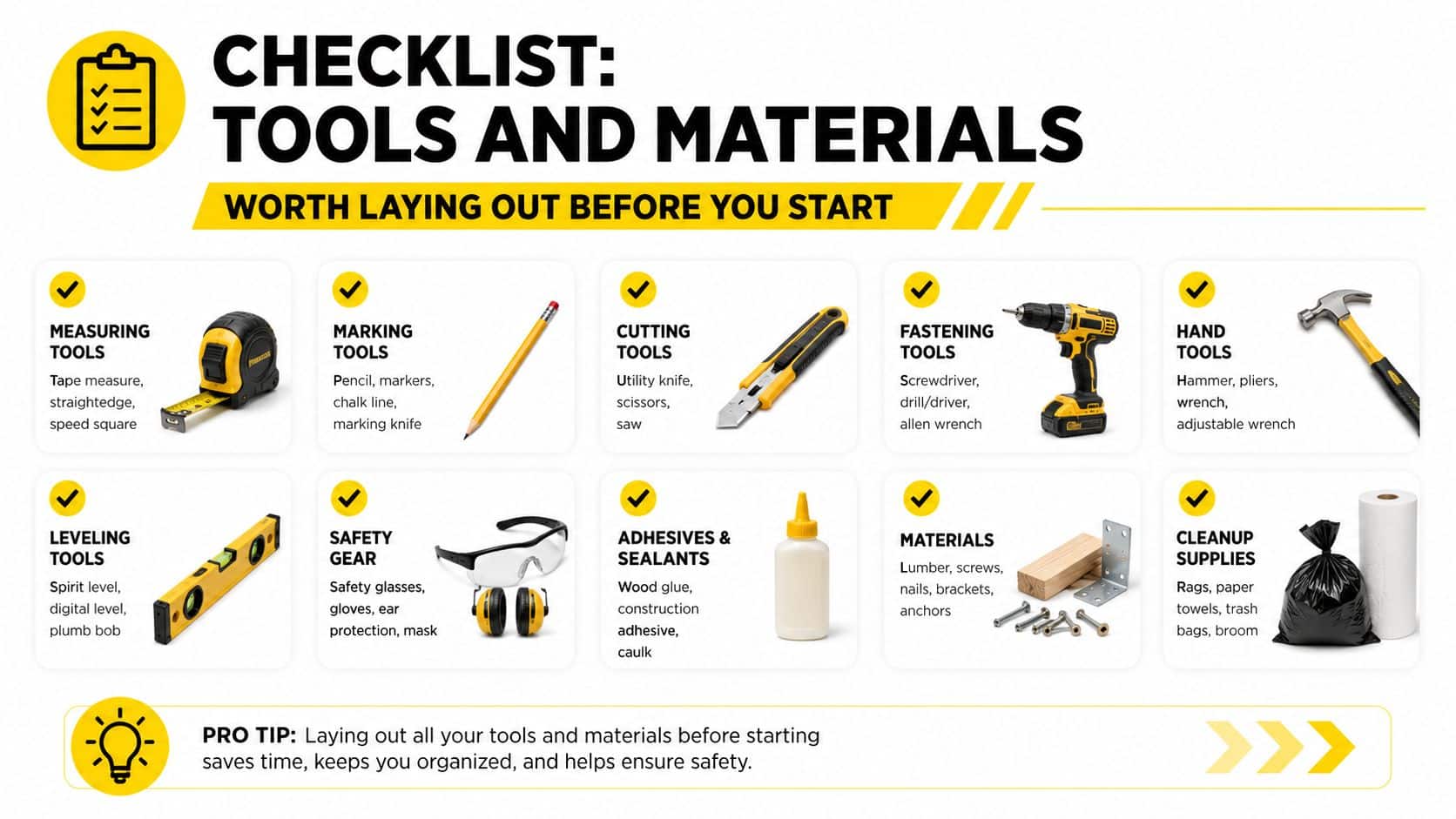
Consumables matter too. A little wood filler, touch-up paint, and patience can hide minor scuffs and keep the finished job from looking rushed. Skipping those small repairs is how a decent installation ends up looking like a weekend experiment.
Measuring, Marking, and Drilling the Door
A deadlock that sits wrong on the door will cause grief later, even if the hardware itself is fine. On a typical residential setup, the lock usually goes about 200 mm above the existing handle, far enough to keep clear of the spindle path and the latch assembly. That spacing saves time on the day, and it saves rework when the bolt starts binding after the fact.
A rental or strata door adds another layer. In NSW, the person fitting the lock still has to respect the property rules and the tenancy or strata approval process, so the cleanest job is often the one that is allowed as well as well drilled. If the installation is part of a mortice lock installation, follow the property's approval path before a hole saw ever touches the timber mortice lock installation.
Mark the door before the drill comes out
Start by squaring a centreline across both faces of the door. Set the template on that line, then match the backset to the lock body, usually 60 mm or 70 mm for common mortice-style deadlocks in Australian residential work mortice deadlock installation guide. If the backset clashes with the existing knob or lever set, the bolt can foul the spindle or sit too close to the door edge and bind.
A good layout still depends on the door itself. Thin, swollen, or uneven timber can throw the measurements off, and a template cannot fix a door that is already out of shape. Check the swing, the latch position, and the edge clearance before you commit to the first cut.
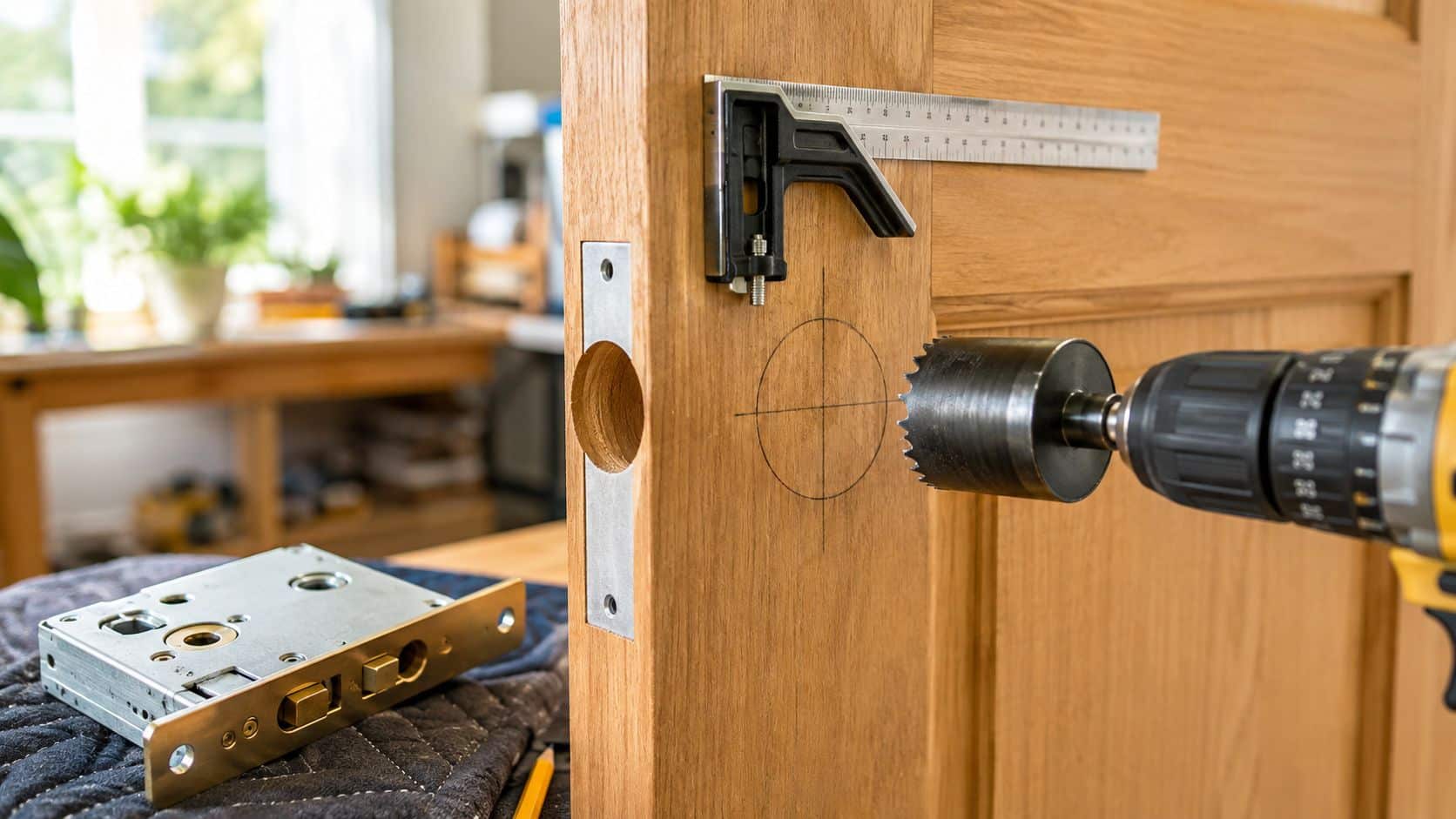
The best order is face bore first, then edge bore. A clean 54 mm face bore gives the main body its seat, and the 25 mm edge bore takes the bolt path. Keep the saw flat, use a pilot hole, and stop if it starts wandering, because once the cut drifts off square the lock begins life with a misalignment problem.
The test is not whether the hole is “close”. The test is whether the lock body sits square without being forced into place.
Fit the body, not the mistake
Once the bores are done, the faceplate recess gets chiselled flush with the edge of the door so the lock body sits flat. That part matters because a proud faceplate changes the way the bolt travels and can make the keep feel wrong even if the drilling was tidy. Then the body goes in, the screws are driven home by hand, and the installer checks that the handle and deadlock do not interfere with one another.
The finished fit should feel deliberate, not strained. If the timber splinters around the bore, that usually means the bit was wrong, the saw wandered, or the door was never suited to that lock in the first place. Either way, the fix is to stop, clean up the layout, and tune the fit before moving on.
Fitting the Strike Plate and Testing the Bolt
A lot of weekend installs go wrong here. The lock body may be in, the screws may be tight, and the bolt still doesn't seat properly because the strike plate wasn't treated as a real part of the job. A deadlock only does its job when the bolt enters the keep cleanly and fully, not when it just brushes the opening.
Close, mark, and cut the jamb properly
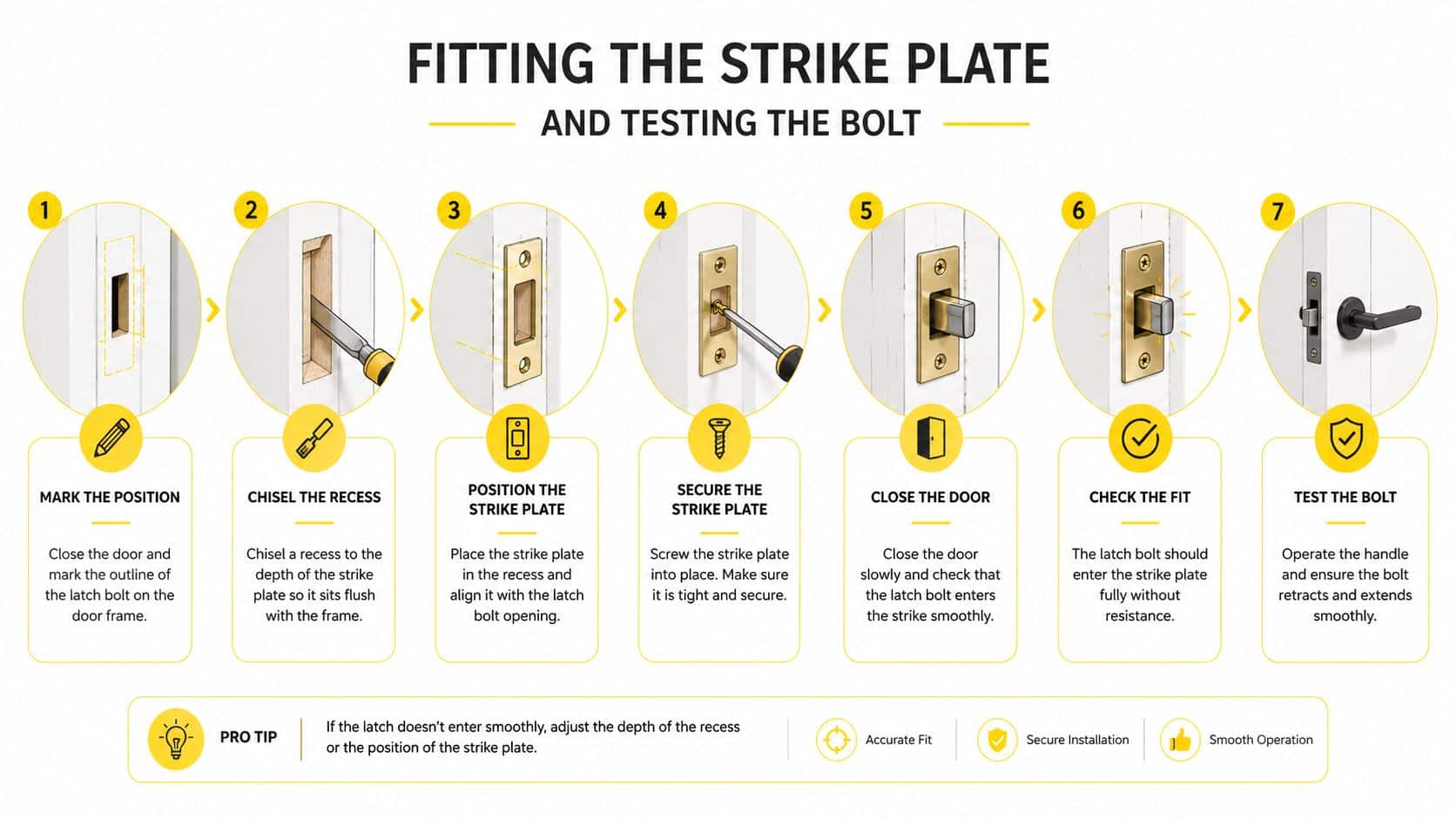
With the lock body fitted but before final tightening, close the door gently and mark where the bolt meets the jamb. That mark gets transferred to the centre of the strike recess, then the jamb is chiselled to the correct depth so the strike sits flush. Pilot holes should be drilled before the screws go in, and the screws need to bite into solid timber, not just the jamb surface.
For the actual fixing, screw length matters. Security guidance commonly recommends screws of three inches or longer for strike plates so they can anchor into the structural stud rather than only the jamb deadbolt strike-plate guidance. That extra bite helps resist kick-in force and keeps the keep from loosening over time.
Test it with the door open, then closed
The simplest test sequence is the one many people skip. With the door open, the key should turn freely and the bolt should throw without binding. With the door closed, the bolt should enter the strike cleanly and the door should lock without being forced shut deadbolt installation check.
If the key feels hard, the strike is probably too proud or the recess is misaligned. If the bolt catches the lip of the keep, the mark was off centre or the body is sitting skewed. If the bolt only partly enters, the jamb depth or keep position needs adjustment before the job is finished.
Timber moves too. A lock that behaves perfectly in one season can start to bind in another because the door shifts with weather and use. That isn't proof of a bad lock, it's a reminder to re-check alignment as part of normal maintenance.
NSW Rules Every Homeowner and Tenant Should Know First
A deadlock can be a straightforward job on the tools and still be the wrong move under NSW property rules. Who owns the door, who controls the building, and whether the lock still lets people out fast from inside all matter before anyone marks a drill hole. Generic DIY guides often skip that part, which is how a neat install turns into a tenancy dispute or a strata complaint.
Owner-occupied houses are the simplest case
An owner-occupied house usually gives the clearest path. If the door is part of your own home and the deadlock does not affect safe exit, the main work is choosing the right hardware and fitting it properly. Even then, the installer still needs to allow for door thickness, the existing handle set, and the finish, because some doors will show drill damage if the job is rushed.
Rentals and strata need permission first
A tenant in NSW should get written landlord consent before altering external door hardware. Swapping or adding a lock without that consent can breach the tenancy agreement. The same caution applies where a strata scheme controls the door or part of the entrance, because the owners corporation can control changes to common property, and some unit entry doors that look private still sit under shared rules.
There is also the exit path to think about. Any extra lock must still let people get out quickly from inside, because a deadlock should add security without trapping the people behind it. NSW Fair Trading's broader child-safety rules show that residential hardware is treated as compliance territory, not just a convenience matter, with child-resistant window safety devices mandatory from 1 March 2018 in applicable dwellings where a child aged less than 10 years may reside or visit, and with windows 2 metres or more above the outside ground level subject to opening limits of no more than 12.5 cm unless a compliant barrier is installed NSW Fair Trading child-safety rules.
A rental, a strata building, or a fire-sensitive entry is the point where the phone call comes before the drill.
When the Smart Call Is a Licensed Locksmith
Some deadlock jobs are tidy DIY work. Others are the kind of job that looks simple until the timber splits, the backset doesn't match, or the old handle set has already drifted out of alignment. The smart call usually happens when the door is older, the thickness is unusual, the lock is higher-security, or the building rules make the door more than just a piece of timber.
Compare the practical trade-offs
A homeowner with a standard timber door, a matching template, and a clear property-rights position can usually get through the job with patience. A tenant in a rental or a strata resident dealing with common property should slow down and get approval before touching the door. If the existing hardware is already out of square, the deadlock install becomes part fitting job, part correction job.
A licensed locksmith brings measured templates, the right backset options, and the experience to spot a jamb that's going to bind before it does. Lock, Stock & Barrel Locksmiths, based on Sydney's North Shore, handles this kind of work on site, along with rekeying and related lock installation and maintenance, which matters when a new deadlock has to match the keys already in use around the house or premises locksmith cost guide. That sort of matching saves rework, especially in homes with more than one external door.
The cost trade-off isn't “DIY versus trade” in the abstract. It's whether a drilled mistake, a misaligned strike, or a lock that won't quite throw cleanly is worth the extra labour to fix later. In most homes, a neat installation is cheaper than a repair, and a repair is cheaper than replacing a damaged door.
Wrapping Up and Getting the Right Help on the North Shore
The two things that matter most are simple. Measure twice before cutting, and check the property rules before touching a rental or strata door. After that, treat the strike plate as part of the job, not the last loose end to sort out later.
For homeowners on Sydney's North Shore, the Upper North Shore, Hills District, and Lower North Shore, a mobile locksmith can take the uncertainty out of the install, especially when the door is older or the hardware needs rekeying as well as fitting. A clean deadlock job should feel smooth in the hand, firm in the frame, and sensible on paper.
Lock, Stock & Barrel Locksmiths fits and services deadlocks across Sydney's North Shore, along with related lock and safety hardware for homes, strata sites, and small businesses. If the door needs measuring, the strike needs tuning, or the property rules need a careful read before anyone drills, visit Lock, Stock & Barrel Locksmiths and ask for a quote or call-out.