- 24 Hour Emergency Services
- Servicing Sydney's North Shore
- View On Map

-
Mail Us On
info@lsblocksmiths.com.au
-
Make a Call
0411 700 072
- View On Map
- 24 Hour Emergency Services
- Servicing Sydney's North Shore
- View On Map
-
Mail Us On
info@lsblocksmiths.com.au
-
Make a Call
0411 700 072
- Contact Us
Keypad Entry System: A Guide for Sydney Homes

Lock, Stock & Barrel Locksmiths
On July 24, 2026
You've got a front door that's tired of spare keys, sticky notes for codes, and the odd late-night call because someone's locked out again. That's usually the moment a keypad entry system starts making sense. For a Sydney homeowner, a strata manager, or a small business owner, it's less about gadgets and more about getting reliable access without handing out metal keys all over the place.
A keypad entry system opens a door when the right code, card, or token is presented at a numeric pad. In practice, that can mean a simple mechanical lock, a battery-powered electronic lock, a wired controller, or a networked access system that records who came through and when. The right choice depends on the door, the frame, the level of use, and how much management the property needs.
The broader market tells the same story. The global door entry systems sector was valued at USD 10.6 billion in 2024 and is forecast to reach USD 16.9 billion by 2030, implying an 8.1% CAGR over the period, which helps explain why code-based entry has moved into the mainstream for homes and buildings alike. The historical roots go back a long way too, with the modern numeric keypad lineage often dated to 1844 and Jean-Baptiste Schwilgué's key-driven calculator prototype, showing this isn't a passing trend but a long-evolved interface for controlled access. For Australian homes and businesses, that matters because access control is now part of everyday security, not a niche add-on. Door entry systems market overview and history of the numeric keypad.
Why More North Shore Properties Are Swapping Keys for Codes
A typical North Shore property tells the story. A homeowner has tradies coming and going, the cleaner needs regular access, and someone still has to keep track of who has which key. A small business owner has staff turnover, and every lost key means more work. A strata committee gets tired of chasing old residents for returns, then paying to cut fresh keys for the next move-in.
A keypad entry system cuts through that mess by replacing the physical key with a code or credential at the door. It's become mainstream because it matches how people manage access now, especially where occupants change, keys get copied, or different people need different levels of entry. That shift lines up with the wider growth in door-entry systems, but the day-to-day reason is simpler, fewer keys to manage and fewer surprises when someone leaves.
The key point is that the door doesn't have to be “smart” in a flashy way to be useful. Even a basic keypad lock gives a home or business a cleaner access process than a pocket full of spare keys, as long as the hardware suits the door and the use case.
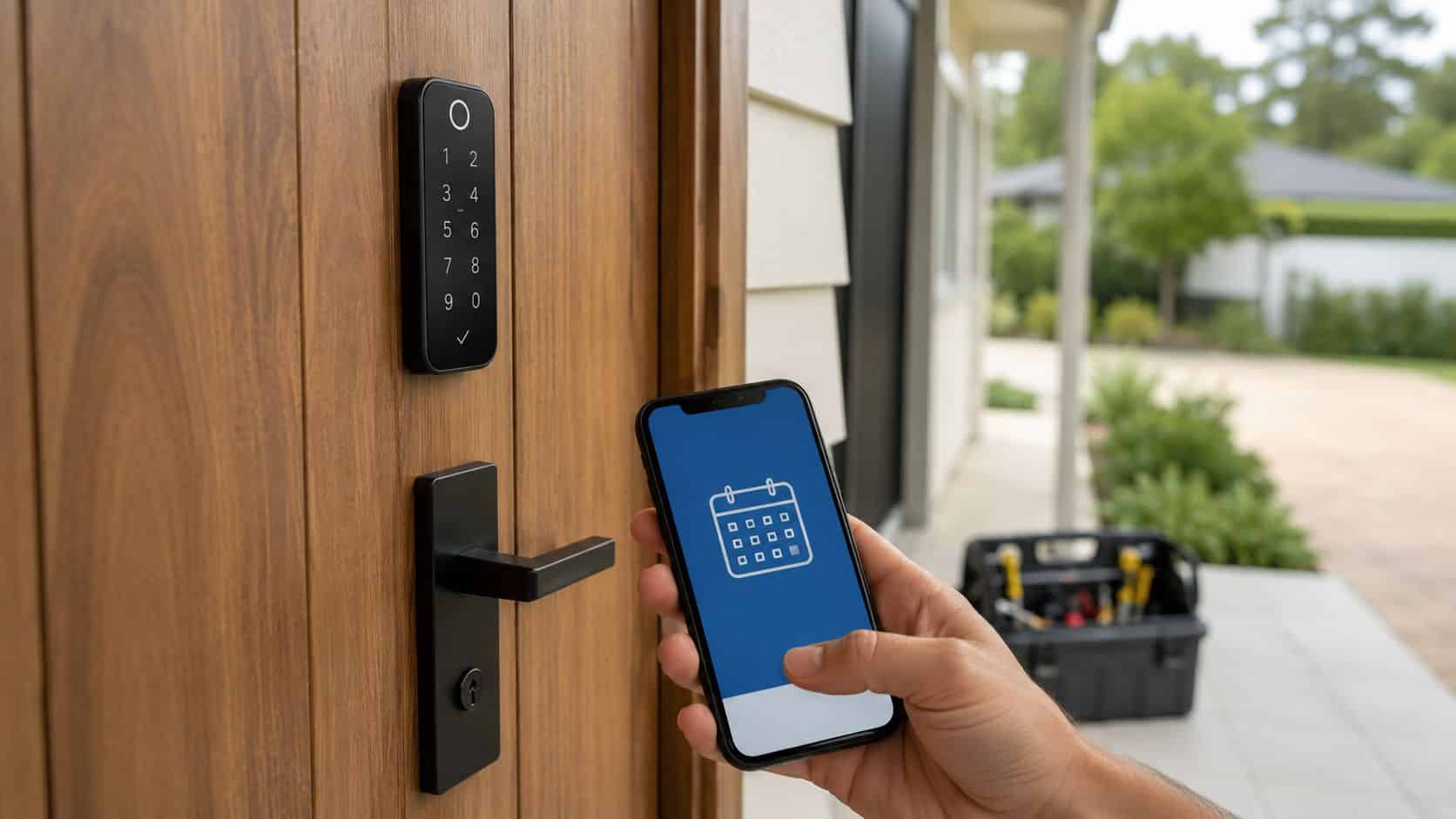
What people are really buying
At the simplest level, the buyer is choosing between control and convenience. A code can be changed, deleted, or shared without physically collecting keys. That matters for rentals, busy households, and any site where access changes often.
Practical rule: If a property needs access changes more than a couple of times a year, codes usually beat spare keys for management.
The phrase “keypad entry” can also cover more than one kind of hardware. Some units are self-contained locks, some are access controllers tied to an electric strike or maglock, and some are part of a broader system with logs and remote admin. That's why it helps to treat the keypad as the front end of the system, not the whole answer.
The Main Types of Keypad Entry Systems Explained
The first decision is usually how much infrastructure the door should carry. Some properties only need a simple lock. Others need a small access-control setup that talks to power, a strike, or a network. The hardware family matters more than the marketing name on the box.
From simplest to most capable
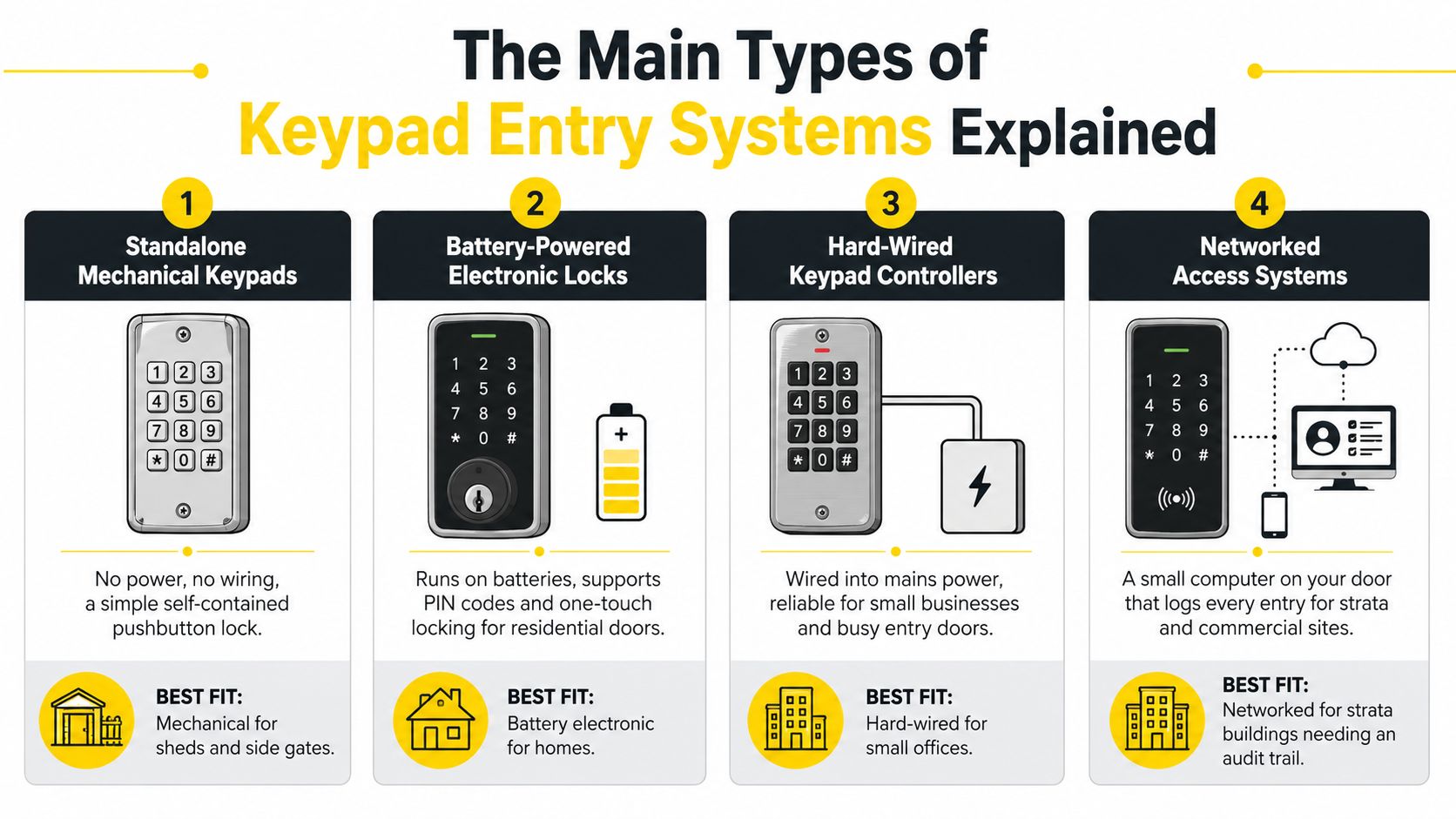
A standalone mechanical keypad is the bluntest option. It needs no power and no wiring, so it suits sheds, side gates, and low-risk access points where simplicity matters more than logging. Think of it as a self-contained deadbolt with a brain, useful when the door only needs a code and nothing else.
A battery-powered electronic lock sits higher up the ladder. It runs on batteries, handles PIN access, and is often the everyday residential choice because it gives keyless convenience without a full wiring job. For a family entry door, it's the option many recognise as “a smart lock”, even though a key benefit is just cleaner access.
A hard-wired keypad controller connects into mains-powered equipment and is better suited to busy doors, small offices, and entry points that need dependable daily use. This starts to behave less like a lock and more like part of the building's access system.
A networked access system is the most capable form. It's a small computer on the door, or close to it, and it can log entries, support multiple users, and give strata or commercial sites more oversight.
There's also a practical split between PIN-only keypads and systems that add cards or proximity credentials. Cards and fobs usually cost more because the system has to manage extra credential types and often more administration. The right choice depends on whether the site wants simple code entry or tighter user control. A deeper comparison of digital options sits in this guide on digital locks and how they work.
Matching the system to the door
Mechanical units make sense where wiring would be overkill. Battery locks suit homes that want a cleaner life without major door works. Wired controllers suit higher-use doors. Networked systems belong where someone needs auditability, not just convenience.
For readers weighing hardware styles against smart-lock features, the practical distinction is covered well in this mechanical lock versus smart lock comparison.
Keypad Entry Versus Traditional Keyed Locks in Real Use
A keyed lock still has one major advantage, nobody has to remember a code. That sounds small until the door is being used by a child, a cleaner, a tradie, or an older relative. A traditional key also works without batteries, apps, or a controller, which is why good keyed hardware still has a place on many Australian doors.
Where keypad entry earns its keep
A keypad system shines when people come and go. Instead of cutting keys, a homeowner can issue a code. Instead of collecting keys after a staff change, a business can delete access. Instead of rekeying a whole building every time the occupant list changes, a strata manager can manage credentials more cleanly.
The downside is that codes can be shared. Once a code spreads too far, the system starts losing the control advantage that made it attractive in the first place. Battery failure or power loss can also become an issue on some electronic systems, so the door still needs the right backup plan and hardware choice.
Codes are easy to issue, but they're just as easy to over-share if no one manages them properly.
Which user gets the most benefit
A homeowner usually wants convenience first. That usually points to a battery-powered keypad lock or a solid mechanical keypad for secondary access points.
A small business wants basic access control without endless key cutting. A wired keypad controller often fits that need better than a pure residential smart lock.
A strata building wants a trace of who entered and when, or at least a cleaner way to manage changing residents and contractors. That's where a networked system starts to earn attention, because a basic keyed lock can't do that job well.
Practical rule: If the property needs records, code changes, or user control, keyed hardware alone stops being enough.
Installation and Wiring Considerations Before You Commit
The biggest mistake is buying a keypad unit first and checking the door later. On older North Shore homes, that usually ends in awkward returns, extra door prep, or a lock that looks fine online but doesn't suit the actual door build. A proper site check sorts out the door type, the backset, the latch style, and whether the frame can handle the hardware.
What decides wired versus wireless
Wired systems need cable runs, a suitable power path, and enough space for the controller and any related gear. That's no issue on some commercial doors, but it can be a poor fit on older homes where the wiring path is messy or the door details don't suit a retrofit.
Battery-powered keypad locks avoid much of that. They're often the cleaner answer when the door needs a straightforward upgrade and the owner doesn't want a bigger installation job.
The core question isn't “smart or not smart.” It's whether the door is ready for that level of hardware. A locksmith checking the site will look at the door material, the frame condition, the latch alignment, the need for drilling, and whether the chosen system will leave the door closing properly after fitment.
Questions worth asking before purchase
- Will the door need drilling or core work? Some doors can take a keypad cleanly, others need preparation that changes the cost and complexity.
- Is there a cable path for a hard-wired system? If not, the installation plan may be wrong from the start.
- Does the lock suit the door's thickness and hardware layout? A mismatch here creates trouble later.
- Will the user still be able to get in if the setup changes? Backup access matters more than flashy features.
A proper access-control installation brief should also cover the bigger picture, especially where a door is part of a gate, office entry, or strata entry set-up. A local installer's access control system installation page should spell out the kinds of fitment questions that matter before drilling starts.
Security Risks and How a Good Keypad System Handles Them
The common risks are not mysterious. On a used keypad, the buttons can show wear patterns or smudge marks. A weak factory code left in place can become a weak point. Shared codes can drift well beyond the people who should know them. And some people forget to lock the door behind them.
What actually helps
Longer codes make guessing harder and reduce the value of watching someone punch in a familiar pattern. Auto-lock timers help when someone leaves in a hurry and assumes the door latched properly. Tamper alerts matter on better systems because they tell the owner or manager when someone has been messing with the unit.
Networked systems bring another advantage, audit logs. If the building needs to know who came through, logs give the manager something a plain key never will. That's useful on strata or commercial sites where accountability matters more than convenience alone.
The key is to match the mitigation to the risk. Smudge marks are a clue to use better code habits and sturdier hardware. Shared codes call for tighter admin. Forgotten locking calls for a system that helps close the door on its own.
A good keypad doesn't make poor habits disappear. It just gives the owner better tools to manage them.
NSW and Strata Compliance Essentials for Keypad-Controlled Doors
Compliance comes before convenience on any door that matters for safe exit. In Australian building practice, keypad entry systems are commonly assessed against the National Construction Code's performance requirements for safe egress and accessible operation, which means the door still has to let people get out in an emergency without needing a key or special knowledge. If the hardware turns a compliant exit into a fiddly barrier, the upgrade has missed the point. National Construction Code guidance on keypad access control
What that means on the ground
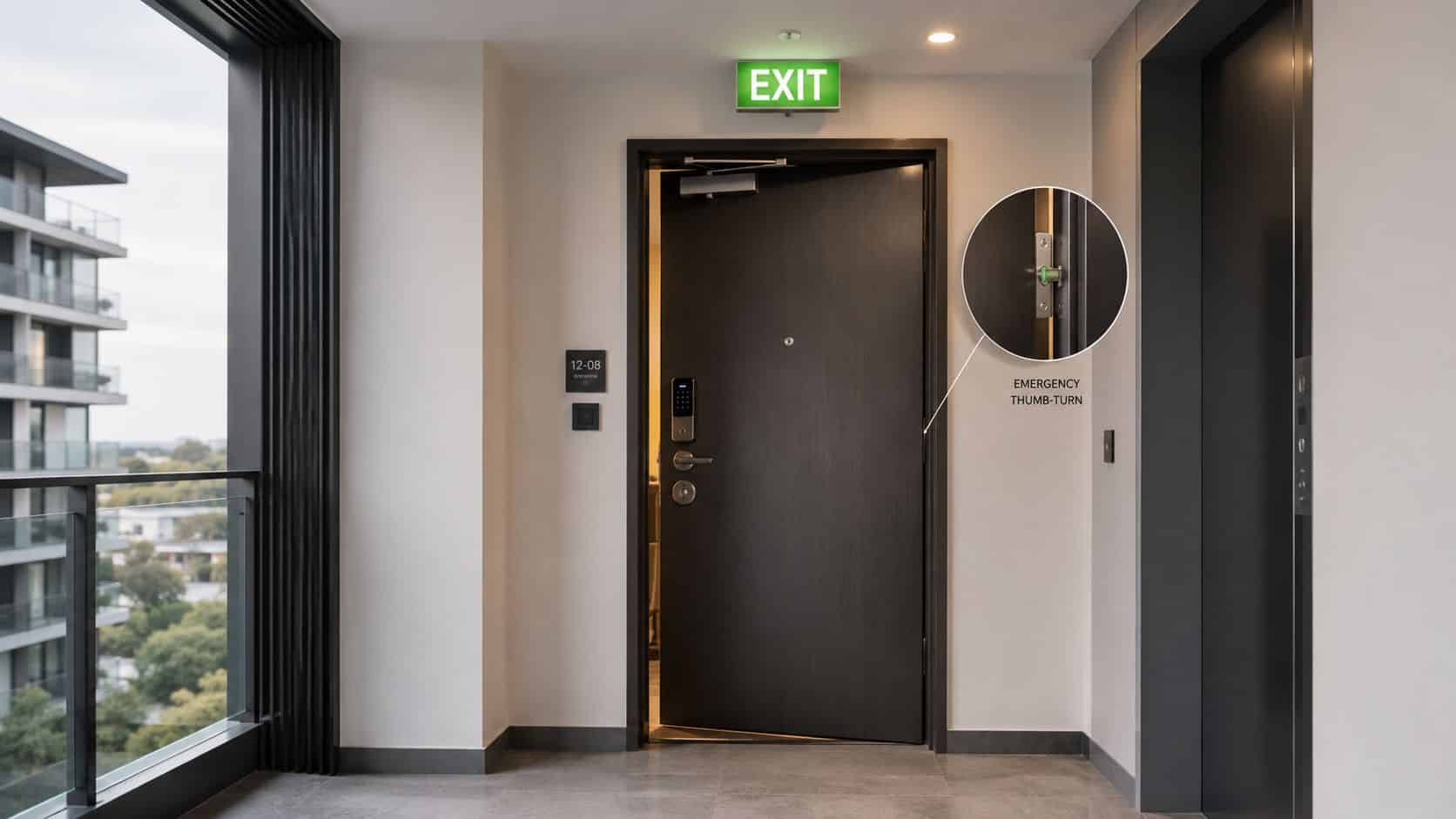
A keypad-controlled door should not trap occupants if something goes wrong. That matters on unit entry doors, fire-rated doors, and any point where the door's life-safety role is bigger than its security role. Hardware choice must fit the door classification, not just the owner's preference for code entry.
Strata adds another layer. Common-property doors usually sit under by-laws and building rules, so the committee or manager may need to approve hardware changes before anyone drills or replaces the lock. A sensible setup often keeps a mechanical override or an emergency method of entry in place, because the building still needs a practical way in if the electronic side fails.
The questions to settle first
Before any install on a strata or apartment door, someone should confirm three things. First, whether the door can still open safely from the inside. Second, whether the hardware suits the fire or life-safety classification. Third, whether the strata committee has signed off on the change.
If those answers are shaky, the shiny keypad is the wrong purchase.
Cost and ROI Thinking for a Keypad Entry System
Cost depends on the system family, the door prep, the wiring, and the management needed after installation. A mechanical keypad is usually the simplest proposition. A battery-powered electronic lock adds features and convenience. A hard-wired controller or networked system brings more capability, but also more setup and administration.
What drives the price
The biggest cost drivers are usually hardware tier, whether the door needs modification, whether cabling is required, and whether the system is part of a wider access-control upgrade. A rental property with frequent turnover may value code changes more than a homeowner with one front door. A commercial site may care more about logs and user control. A strata building may need the whole thing to work across multiple users and rules.
The return tends to come from avoided hassle rather than glamour. Fewer locksmith callouts for lost keys. Less rekeying when tenants or staff change. Faster handover when a property turns over. Cleaner access administration for shared sites.
ROI is often quiet, not dramatic. The gain comes from fewer key problems and less admin, not from some magical security leap.
The best budget conversation with a locksmith usually starts with the door and the use case, not the brand. That keeps the recommendation grounded in the actual job the hardware has to do.
Choosing a Local Locksmith or Installer on the North Shore
A good installer on the North Shore should know the difference between a neat retrofit and a headache. That starts with a proper site assessment, not a quick quote off a product photo. The locksmith should look at the door, frame, fixings, access method, and whether the hardware matches how the property is used.
What to check before booking
- Membership and licence: A current NSW Police Master Licence and membership in the Master Locksmiths Association of Australasia are sensible checks for any installer working on access hardware.
- Local coverage: Mobile service matters across Turramurra, Pymble, Wahroonga, Hornsby, Gordon, Killara, St Ives, Pennant Hills, Thornleigh, and Berowra, because the right installer should be able to assess the site, not just sell the gear.
- Product advice: The locksmith should explain whether the job suits a mechanical keypad, a battery lock, a wired controller, or a networked system.
- Door-first thinking: The site assessment should come before drilling, not after the hardware is already bought.
Lock, Stock & Barrel Locksmiths, a mobile North Shore locksmith business, provides product advice and a curated catalogue of reputable lock and hardware brands, along with after-hours support across Sydney's North Shore. That matters because the right recommendation on a keypad entry system is usually the one that fits the door and the way people use it, not the one with the most features on the box.
The practical question is simple. Will the installer leave the property with a system that suits the door, the users, and the compliance requirements, or just a keypad and a receipt?
Call Lock, Stock & Barrel Locksmiths on Sydney's North Shore for a keypad entry system quote or site assessment, and ask for the hardware option that suits your door rather than a one-size-fits-all lock. A direct call or quote request is the fastest way to get the job sized properly. A CTA for Lock, Stock & Barrel Locksmiths.